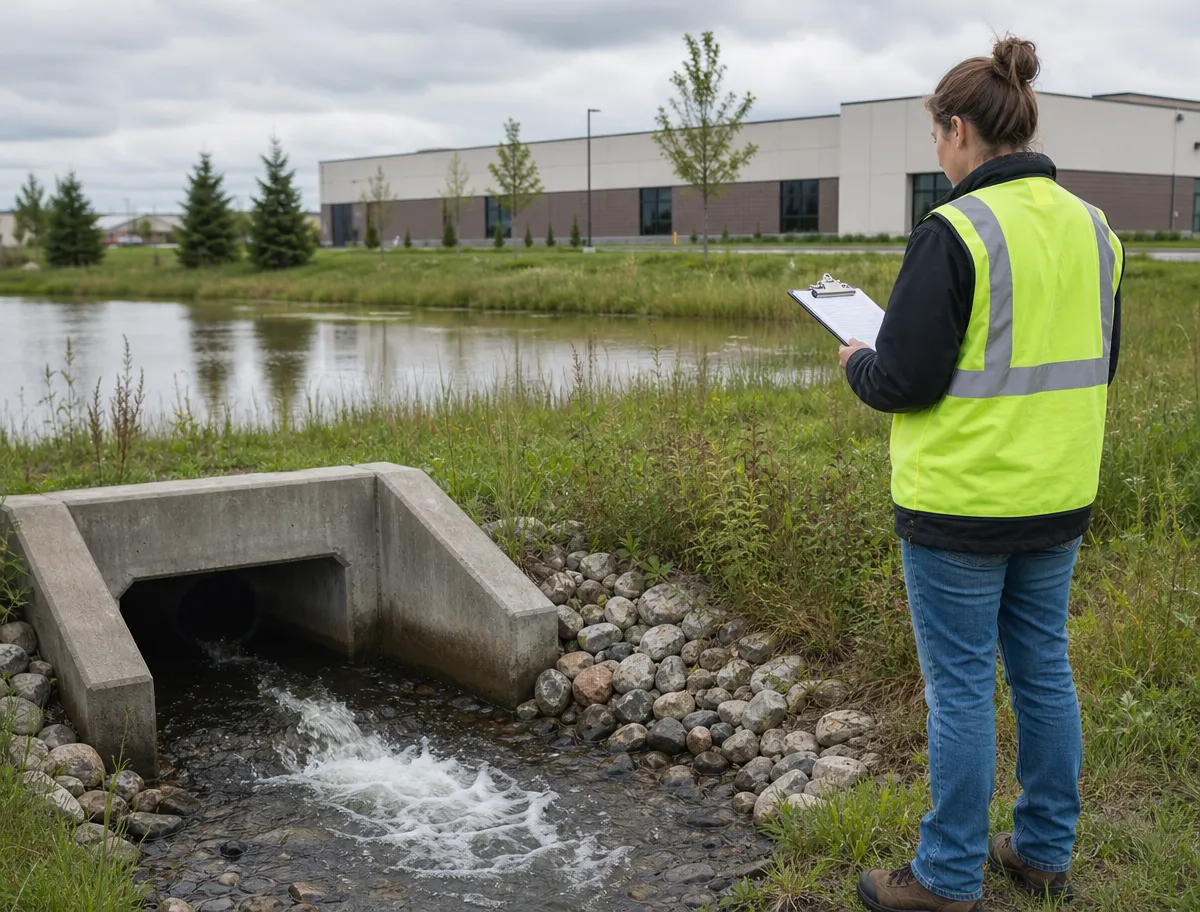
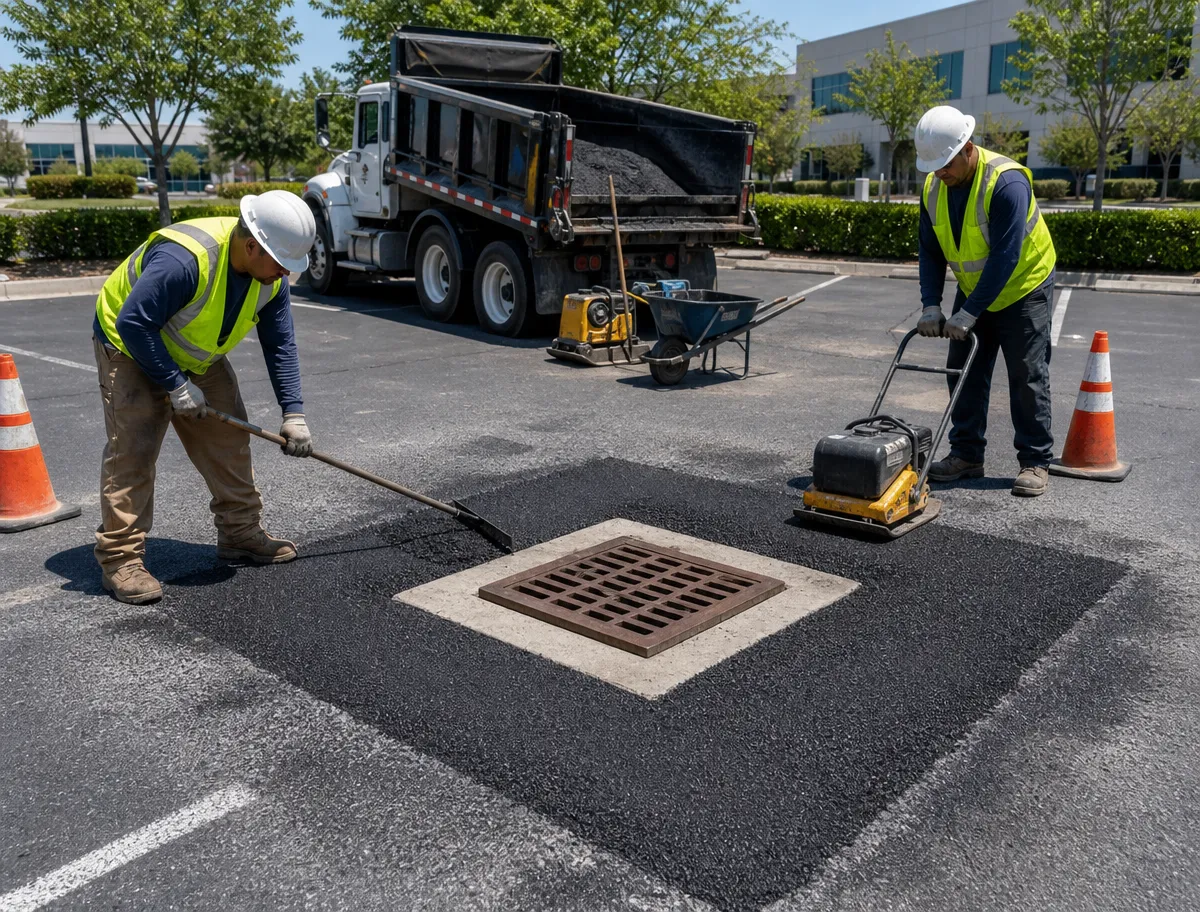
Quick Answer: Commercial catch basins in Northeast Ohio should be inspected at least twice a year, in spring after snowmelt and in late fall after leaf season, and cleaned annually at minimum. Properties with heavy tree coverage, high traffic, or proximity to high-litter businesses often need quarterly service instead. A vacuum truck removes sediment, debris, and silt during each visit; technicians cannot enter the storm sewer itself under Ohio EPA regulations. Skipping cleanings lets sediment fill basin capacity, block outfalls, and cause flooding or structural damage. Empire Paving builds custom cleaning schedules for Northeast Ohio commercial properties.
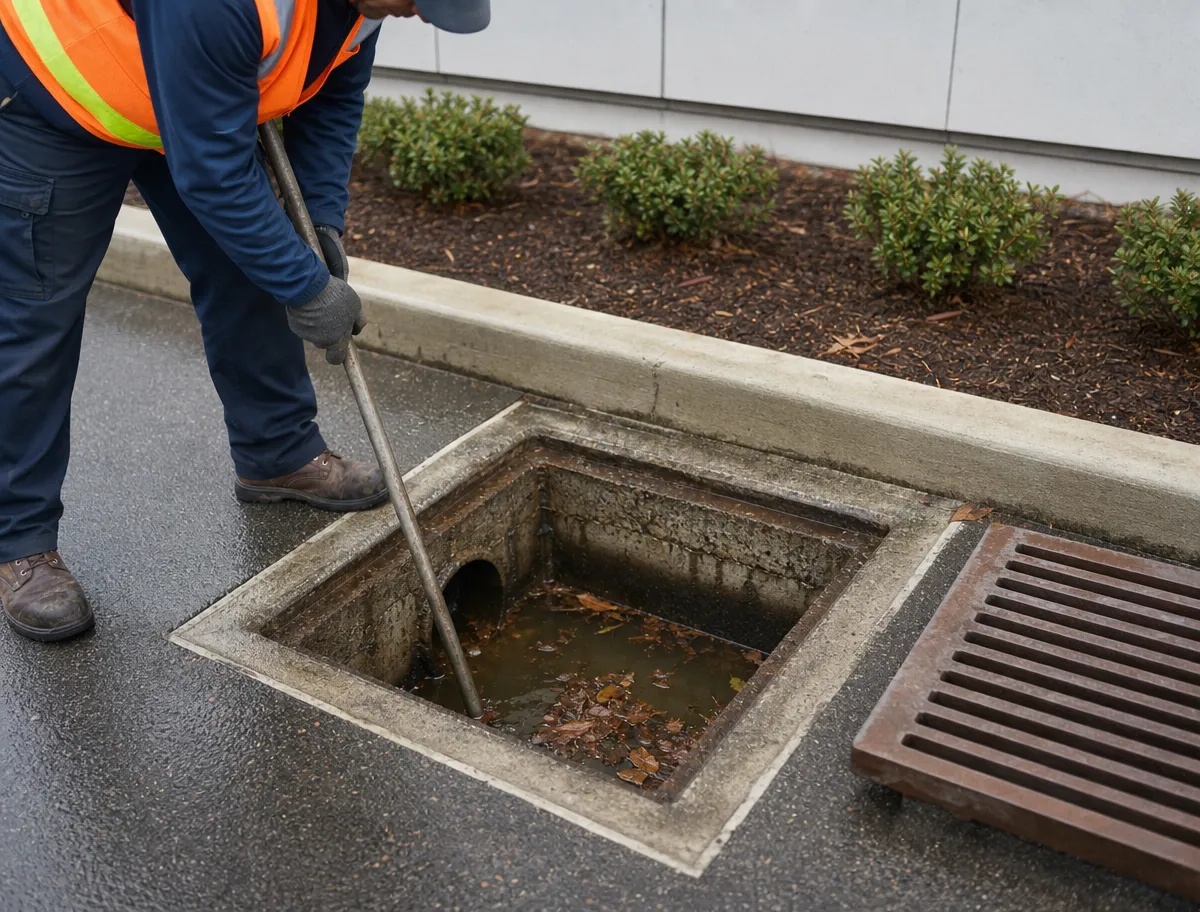
What Are the Key Takeaways for a Commercial Catch Basin Cleaning Schedule?
- Catch basins require cleaning when water pools for more than 30 minutes after rainfall stops.
- Sunken or heaved asphalt within 2–4 feet of the basin frame signals immediate repair needs.
- Cracked frames, broken grates, and visible gaps create vehicle hazards and trip risks.
- Regular catch basin maintenance protects commercial properties from adverse weather effects and drainage failures.
What Does a Catch Basin Cleaning Schedule Involve?
A commercial catch basin cleaning schedule involves routine inspection, sediment removal, and debris clearing to keep storm water moving off Northeast Ohio parking lots and roadways. Rooftops, drive lanes, and industrial surfaces all shed sediment, debris, pollutants, and petroleum residue into storm drain systems. That material has to come out on a set timeline rather than after a complaint arrives. Property owners who skip this step face slow-draining pavement, standing water, and long-term surface damage.
A structured catch basin cleaning schedule commercial property managers can rely on typically follows these steps:
- Inspect each basin for sediment depth, debris buildup, and grate condition.
- Vacuum or extract accumulated sediment before it reaches the storm main.
- Flush connecting pipes to confirm free flow between basins and outfalls.
- Document findings for compliance and future maintenance planning.
- Schedule the next cleaning based on site conditions and seasonal debris load.
What Happens If a Catch Basin Never Gets Cleaned?
Storm mains gradually clog, and catch basins begin overflowing during moderate rainfall. Outfalls then discharge pollutants directly into receiving waters, a problem that draws enforcement action for property owners holding NPDES permits. Northeast Ohio sites with heavy tree cover or industrial runoff see this failure sequence accelerate — a pattern the Northeast Ohio Regional Sewer District also flags as a stormwater compliance risk.
Who Handles Commercial Catch Basin Cleaning in Northeast Ohio?
Contractors experienced in storm drainage maintenance offer commercial catch basin cleaning, servicing, and installation to shield properties from adverse weather effects across the region. Cities such as Cleveland maintain their own infrastructure through the Cleveland Division of Water Pollution Control, underscoring how seriously the region treats basin upkeep. Empire Paving supports this work with a 15-person team equipped to handle parking lot drainage maintenance for Northeast Ohio commercial sites, HOAs, and asset managers.
How Often Should Commercial Catch Basins Be Cleaned?
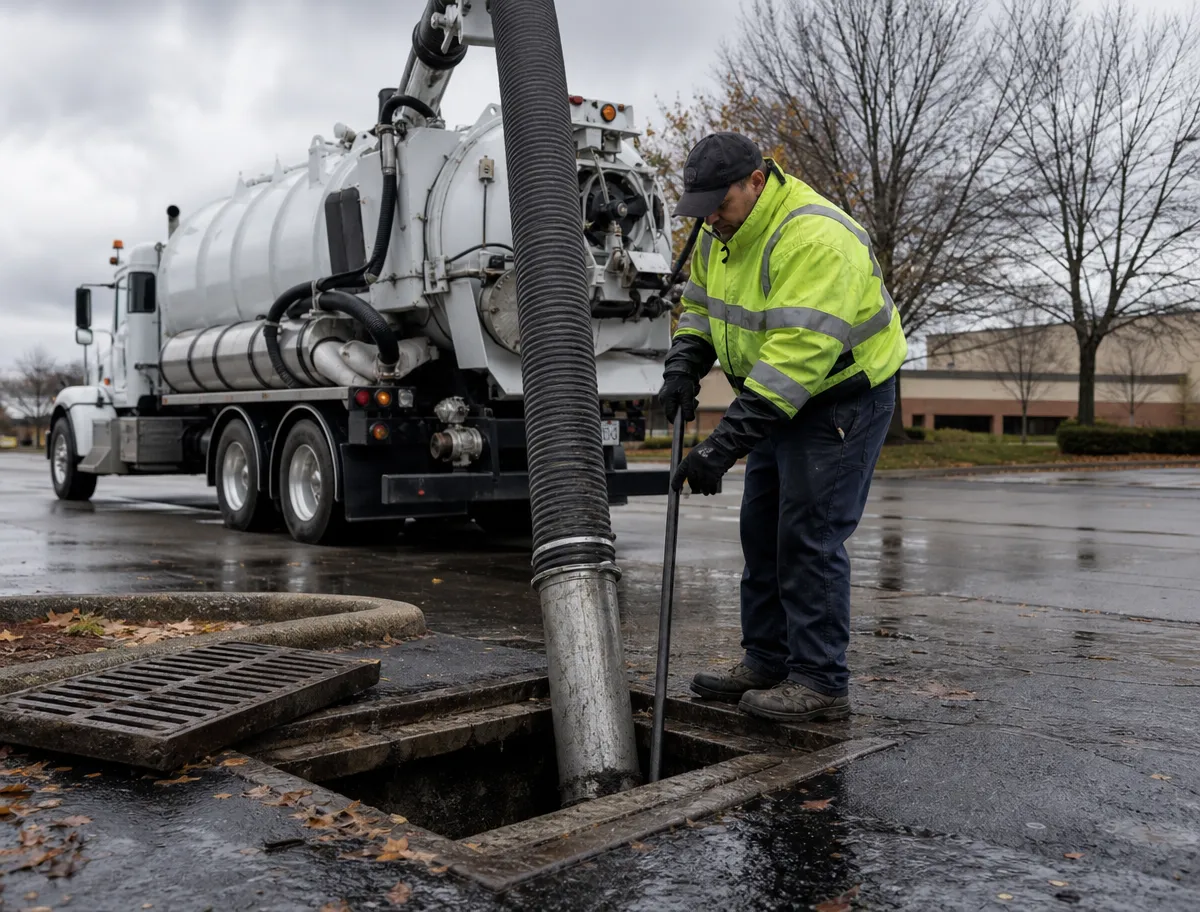
Twice a year marks the minimum standard for commercial properties across Northeast Ohio. A catch basin cleaning schedule commercial property managers can rely on centers on two fixed windows: spring and late fall. Skipping either one leaves storm drainage vulnerable exactly when regional weather patterns put it under the most strain.
Why Does Spring Cleaning Matter So Much?
Spring cleaning clears out what winter left behind. Months of snow removal operations deposit salt, sand, and grit into the drainage system. All of that material settles at the bottom of the basin. Left in place through summer storms, the buildup restricts flow and raises the odds of standing water across parking lots and access drives.
What Does the Late-Fall Cleaning Accomplish?
The second cleaning, scheduled before freezing temperatures set in, protects the system from a different threat. Debris that lingers into winter does not just sit there — it locks in place once ice forms. A basin entering the cold season already partially blocked stays blocked until spring. Freeze-thaw cycling common throughout Northeast Ohio makes that damage worse over time.
Frame settlement is the clearest evidence of this cycle at work. Freeze-thaw activity accelerates settlement around the basin frame. A structure sitting slightly low in October can fail outright by March. Property owners who treat cleaning as a once-a-year task often discover the deeper cost later, in cracked frames, sunken asphalt, or full reconstruction bills.
A reliable maintenance calendar follows this sequence:
- Schedule the first cleaning in early spring, after snow removal season ends.
- Inspect the basin frame and grate for settlement or gaps during that visit.
- Schedule the second cleaning in late fall, ahead of the first hard freeze.
- Document findings each visit to track wear before it becomes structural failure.
Empire Paving serves commercial properties throughout Northeast Ohio with cleaning programs built around this regional climate, not a generic national timeline.
Need a Catch Basin Cleaning Schedule for Your Property?
Empire Paving builds twice-yearly (or quarterly) cleaning programs for Northeast Ohio commercial properties. Contact Empire Paving to schedule your catch basin cleaning and stay ahead of storm season.
What Are the Steps to Clean a Catch Basin?
Five sequential steps define proper catch basin service for Northeast Ohio commercial properties: inspection, sediment removal, network flushing, camera verification, and documentation. Skipping any step leaves storm drainage vulnerable to backup during the region’s heavy spring rains and freeze-thaw cycles. A structured catch basin cleaning schedule commercial properties can rely on follows this order every time, regardless of lot size or basin count.
- Inspect the basin and grate. Technicians check for sediment depth, debris buildup, and structural condition before touching any equipment.
- Remove accumulated sediment and debris. Vacuum trucks extract sludge, leaves, and grit trapped at the basin bottom, restoring full water capacity.
- Hydro-jet the connected storm mains. Professional service pairs basin cleaning with high-pressure jetting of storm mains, clearing sediment throughout the entire connected drainage network rather than just the visible basin.
- Run a NASSCO-certified camera inspection. Certified inspection documents line condition after cleaning, giving property managers a verified record rather than a guess.
- Compile compliance documentation. Providers generate environmental compliance paperwork and NPDES permit support, referencing standards outlined in Ohio EPA’s rainwater and land development guidance, so property owners meet regulatory requirements without chasing records after the fact.
Why Does Hydro-Jetting Matter After Basin Cleaning?
Sediment does not stop at the basin frame. It travels downstream into connected storm mains, where it hardens and restricts flow over time. Hydro-jetting clears that buildup mechanically, protecting the full drainage system rather than treating symptoms at a single access point.
Who Handles Catch Basin Cleaning for Commercial Properties?
Water management for business properties calls for a different scope than residential service. Commercial catch basin work involves multiple basins, connected storm mains, and documentation obligations tied to permits. Providers built for these properties combine cleaning, camera verification, and compliance paperwork in a single visit, rather than treating each task separately.
Facility managers overseeing parking lots, HOA boards responsible for shared drainage infrastructure, and asset managers protecting property value all depend on this sequence. Each step builds on the last — sediment removal without hydro-jetting leaves the sewer and storm drain system compromised, and cleaning without documentation leaves compliance gaps exposed during audits or storm events.
When Should You Increase Cleaning Frequency?
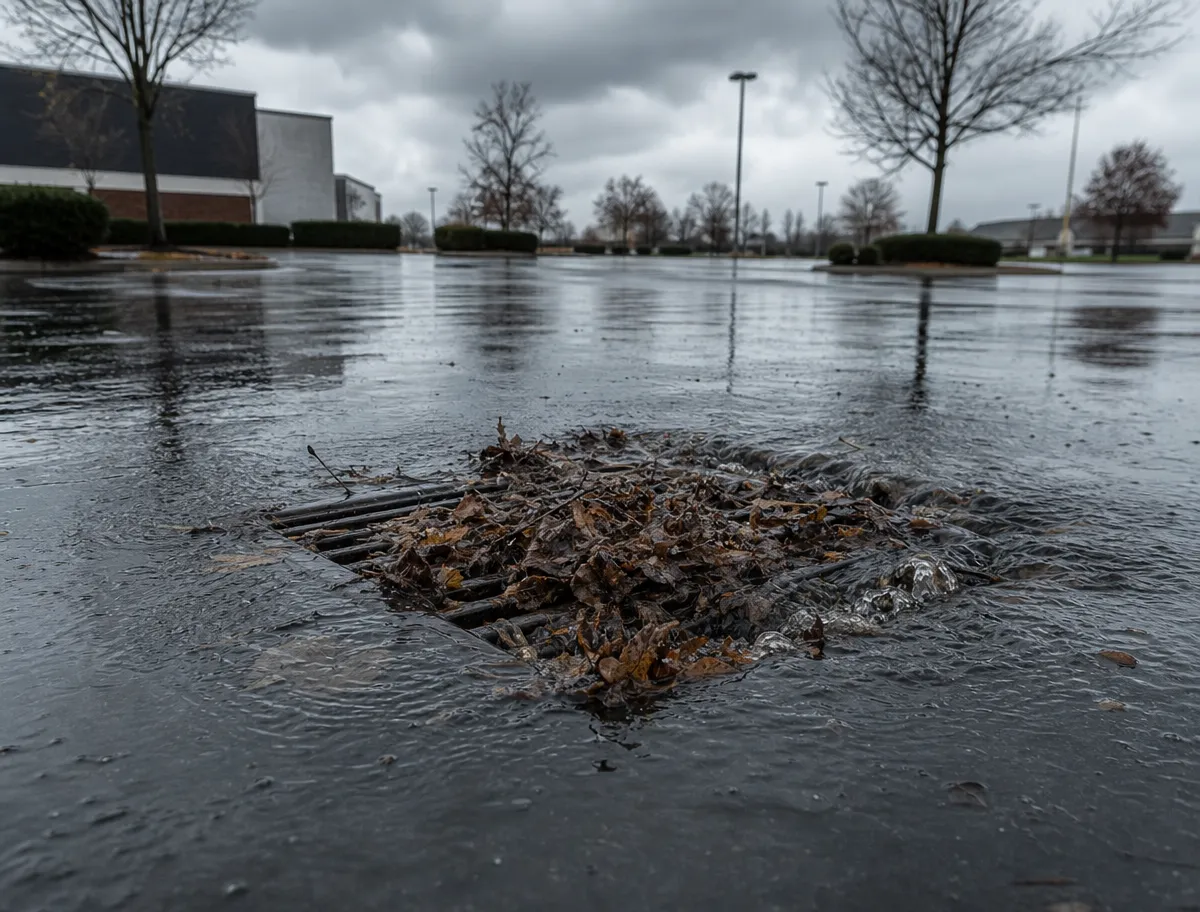
Properties with heavy tree coverage, expansive paved surfaces, or high daily vehicle traffic need cleaning beyond the standard twice-yearly minimum, especially as part of routine commercial parking lot maintenance. A catch basin cleaning schedule commercial property owners rely on should shift to quarterly service once any of these conditions apply. Northeast Ohio’s mix of wooded office parks, retail centers, and dense parking fields makes this adjustment common rather than exceptional.
Leaf litter and organic debris build up fast near tree-lined lots, especially through autumn months when regional foliage drops heavily. Large impervious surfaces — expansive asphalt or concrete lots — funnel more runoff and sediment into fewer basins, accelerating clogging. Facilities with constant delivery trucks or customer traffic also generate more debris tracked into drainage systems. Each factor compounds the others, so a property with two or more should move to quarterly inspections rather than waiting for a visible problem.
What Signs Mean a Basin Needs Attention Right Away?
Standing water lingering more than 30 minutes after rainfall stops points to a basin already struggling with capacity. Facility managers should treat this as an immediate service trigger, not a wait-and-see situation. Left alone, that pooled water erodes surrounding pavement and undermines the sub-base beneath it.
Can Pavement Condition Signal a Hidden Basin Problem?
Sunken or heaved asphalt within a few feet of the basin frame often means the sub-base has settled underneath, a sign worth checking alongside broader storm drain installation conditions on the property. This settlement typically develops before surface cracking becomes obvious, so early inspection catches it before repair costs climb.
Routine attention to these basins keeps commercial landscapes and infrastructure operating efficiently and helps properties stay compliant with local drainage regulations.
What Mistakes Should You Avoid With Maintenance?
Three mistakes cause the most damage to Northeast Ohio commercial properties: ignoring visible frame damage, skipping spring inspections, and abandoning cleaning altogether. Each one turns a manageable repair into a costly emergency. Property managers who avoid these errors protect both their pavement and their liability exposure.
A cracked or broken basin frame left unaddressed becomes more than a maintenance item. It creates a vehicle hazard in the parking lot and a trip hazard for pedestrians walking near the grate. Waiting to repair visible damage invites injury claims and vehicle damage complaints that a timely fix would have prevented.
Why Does Skipping the Spring Inspection Matter So Much?
Northeast Ohio’s freeze-thaw cycles shift and settle basin frames over winter months. A property that delays its scheduled inspection risks letting minor settlement turn into full basin reconstruction, a far more expensive undertaking than routine repair.
What Happens When Catch Basins Never Get Cleaned?
Neglected basins allow sediment and debris to block connected storm mains entirely. Blocked mains cause basins to overflow and outfalls to discharge pollutants into receiving waters. For properties holding an NPDES permit under the Ohio EPA Stormwater Program, that failure exposes owners to enforcement action.
A disciplined catch basin cleaning schedule commercial properties can rely on avoids all three pitfalls at once. Consistent scheduling reflects the same standard Empire Paving clients expect from a dependable Northeast Ohio paving partner: proactive, documented, and built to protect infrastructure before small problems become expensive ones.
Frequently Asked Questions
How Often Should Commercial Catch Basins Be Cleaned in Northeast Ohio?
Commercial properties require inspection and cleaning at least twice yearly, in spring and late fall. This schedule addresses freeze-thaw cycling that accelerates frame settlement and sediment buildup throughout the year.
What Does Commercial Catch Basin Cleaning Actually Involve?
A vacuum truck removes accumulated sediment, debris, and silt from the basin. Technicians cannot enter the storm sewer itself under Ohio EPA regulations, so cleaning focuses on the basin structure and the connecting lines that feed it.
What Signals That a Catch Basin Needs Cleaning Sooner Than Scheduled?
Water pooling for more than 30 minutes after rainfall stops signals an immediate cleaning need for Cleveland, OH commercial properties and beyond. Sunken or heaved asphalt within 2–4 feet of the basin frame also indicates required repair.
What Happens If a Commercial Catch Basin Is Never Cleaned?
Storm mains gradually clog, and catch basins begin overflowing during moderate rainfall. Outfalls then discharge pollutants into receiving waters, exposing properties with NPDES permits to enforcement action and risking structural damage to the surrounding pavement.
Who Performs Commercial Catch Basin Cleaning in Northeast Ohio?
Empire Paving handles commercial catch basin cleaning, servicing, and installation with a 15-person team. They serve Northeast Ohio commercial sites, HOAs, and asset managers needing parking lot drainage maintenance.
TL;DR — Catch Basin Cleaning Schedule at a Glance
- Inspect and clean commercial catch basins at least twice a year — spring (post-snowmelt) and late fall (post-leaf season).
- Increase to quarterly service for properties with heavy tree cover, expansive pavement, or high traffic.
- Professional cleaning uses vacuum trucks to remove sediment, debris, and silt — technicians cannot enter the storm sewer itself under Ohio EPA regulations.
- Neglected basins clog storm mains, cause flooding, and risk NPDES compliance violations and structural damage.
- Standing water over 30 minutes after rain or sunken asphalt near a basin frame signals it’s time for immediate service.
- Ready for a dependable schedule? Request a free catch basin cleaning quote from Empire Paving today.
Related Resources
Explore more Empire Paving services and guides for Northeast Ohio commercial properties:
- Catch Basin Construction & Installation Services
- Commercial Paving Services in Akron, OH
- Commercial Parking Lot Maintenance in Cleveland, OH
- Parking Lot Pothole Liability in Ohio
- Commercial Parking Lot Maintenance Checklist
- Commercial Asphalt Repair in Cleveland, OH
Get a Free Catch Basin Cleaning Quote
Maintaining a consistent catch basin cleaning schedule protects your Northeast Ohio property from costly drainage failures and extends the lifespan of your paving infrastructure. Regular maintenance prevents sediment accumulation, reduces flooding risks, and preserves the structural integrity of your parking lots and driveways. Contact Empire Paving today for a free catch basin cleaning quote and keep your drainage system ready for Ohio’s variable weather conditions.
About Empire Paving
Empire Paving is a full-service asphalt paving and sewer contractor serving commercial properties, HOAs, and asset managers throughout Northeast Ohio, including Cuyahoga and Summit counties. From catch basin cleaning and storm drain installation to parking lot paving and maintenance, Empire Paving’s 15-person team delivers proactive, documented infrastructure care built for the region’s freeze-thaw climate.