Quick Answer: Commercial sewer line repair in Cleveland, OH typically starts with a CCTV camera inspection to confirm what is actually wrong before any digging begins. Depending on the pipe’s condition, contractors use trenchless CIPP lining for cracked-but-intact pipe, targeted spot repair for isolated damage, or full open-cut excavation for collapsed sections. Permitting and scheduling usually take 2 to 4 weeks, while the physical repair itself is typically completed in 1 to 3 days, and tenants can often remain open with proper phasing.
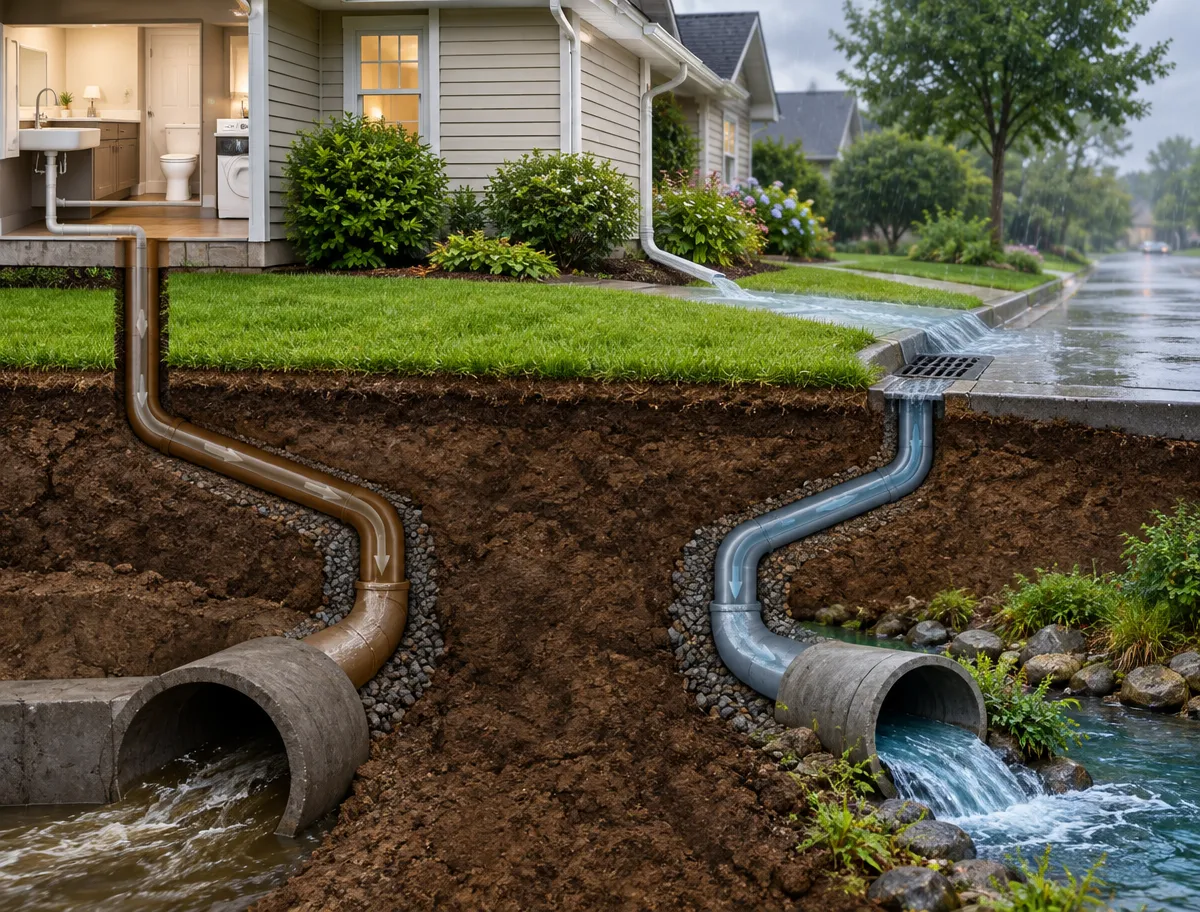
Commercial sewer line repair in Cleveland, Ohio addresses failures caused by aging infrastructure, combined sewer overload, and freeze-thaw cycles common to Northeast Ohio properties. Heavy rain or rapid snowmelt overwhelms combined systems, backing sewage into cracked or weakened laterals. Facility directors need prompt diagnosis and repair to prevent business disruption, structural damage, and costly emergency shutdowns affecting daily operations.
What Should You Prepare Before Sewer Repair?
Preparation starts with documentation, not demolition. Property managers overseeing commercial buildings in Cleveland, Ohio, gain the most from repair visits when they arrive ready with records and clear expectations. Three factors drive most sewer failures across the city: aging infrastructure, a combined sewer design that channels stormwater and wastewater through the same pipes, and Northeast Ohio’s harsh seasonal weather. Documenting when problems started, and whether they follow heavy rain or snowmelt, helps technicians diagnose faster.
What records should a facility director gather first?
Facility directors should compile any prior plumbing reports, maintenance logs, and photos of visible damage like standing water or ceiling stains. This history narrows the diagnostic window and speeds up commercial sewer line repair Cleveland OH scheduling considerably.
How can property managers confirm a contractor is qualified?
Before signing off on work, confirm that technicians are fully licensed and insured. This credential check protects the property and limits liability exposure during excavation or lining work.
Follow these steps before repair day:
- Gather maintenance history and recent utility bills showing usage spikes.
- Photograph affected areas, including basements, parking lots, or utility rooms.
- Verify licensing and insurance documentation from the contractor.
- Clear access points around cleanouts and exterior sewer lines.
- Confirm the contractor can mobilize a response team quickly.
Empire Paving maintains a workforce of 15 employees available for assessment and scheduling, allowing commercial sewer contracting projects to move from inspection to repair without unnecessary delay. Choosing the right contractor can feel overwhelming given the number of options in the region. Property managers should weigh credentials, documented experience, and communication style before committing. That careful vetting, paired with organized records, sets the stage for a smoother repair process from the first phone call.
How Do You Diagnose Cleveland Sewer Line Damage?
Diagnosis starts with identifying the two forces that stress underground pipe networks across Cuyahoga County commercial properties: seasonal freeze cycles and stormwater volume. Property managers who understand these patterns catch failures early. A cracked joint becomes a flooded basement or a shut-down parking structure. Skipping this step risks costly emergency excavation later, often during the worst possible week for business operations.
A proper inspection follows a defined sequence rather than guesswork.
- Review the property’s pipe age and material history before scheduling a CCTV camera inspection.
- Schedule inspection immediately after a hard freeze or a major thaw, since Cleveland’s repeated freeze-thaw cycles crack buried pipes and heave joints out of alignment.
- Check for backup timing tied to heavy rainfall, since Cleveland’s combined sewer system exceeds treatment capacity during intense storms or rapid snowmelt.
- Document every crack, misalignment, or root intrusion found along the line’s full length.
- Compare findings against the building’s square footage, since careful evaluation matters on every job regardless of size.
What Are the Warning Signs of a Failing Sewer Line?
Slow drains across multiple fixtures, gurgling toilets, and recurring backups after storms signal trouble beneath a Cleveland property. Soggy patches in parking lots or landscaped areas often point to a leaking lateral line. Facility directors who track these patterns build a maintenance record that speeds up future diagnosis.
Why Does Timing Matter for Sewer Inspections in Cleveland?
Timing determines what an inspection actually reveals. Checking a line right after a freeze or a heavy rain event captures the exact stress conditions that cause failure. Commercial sewer line repair Cleveland OH providers built on a reputation for trusted, reliable service across Northeast Ohio bring that seasonal awareness to every diagnostic visit, giving property managers confidence in the accuracy of the findings.
Which Repair Method Fits Your Property?
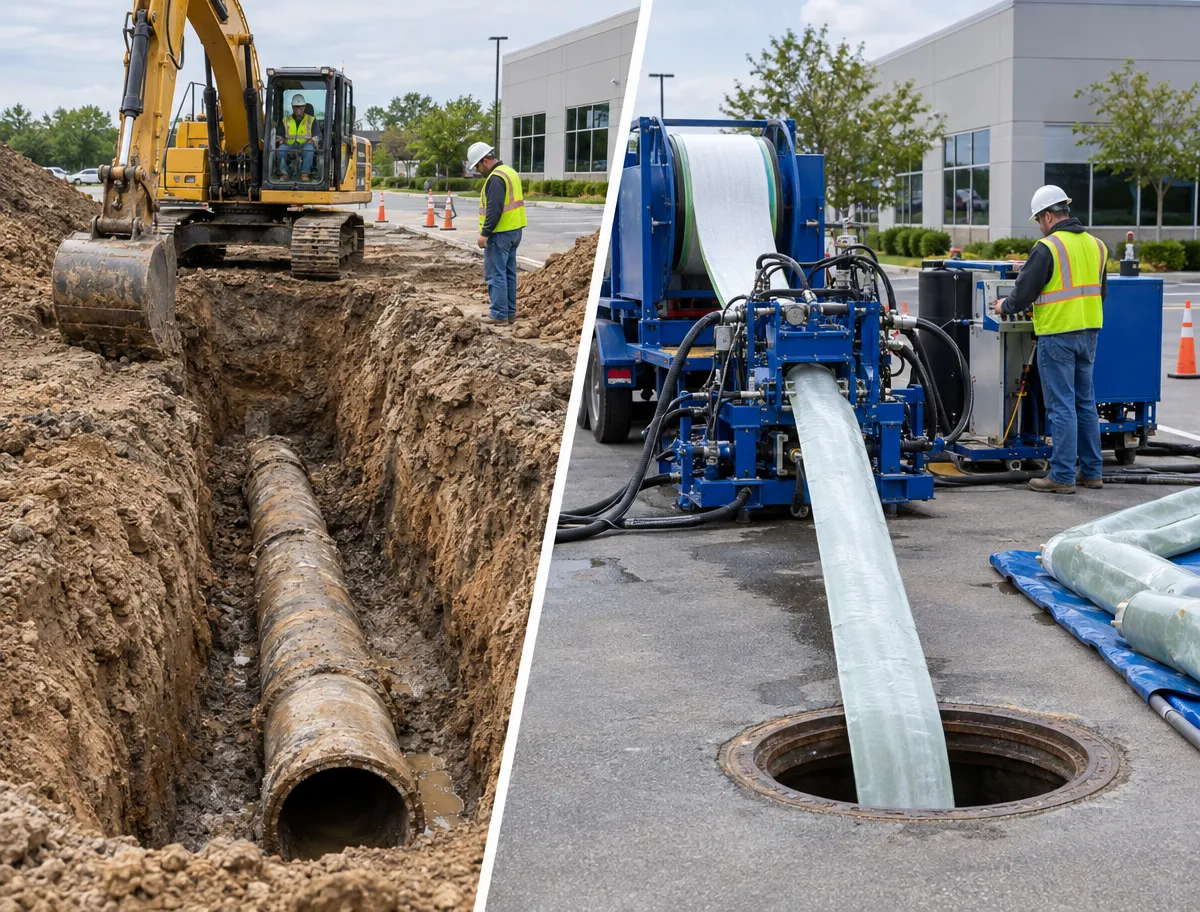
Cleveland commercial properties generally have three paths for a failing sewer line: trenchless CIPP lining, a targeted spot repair, or traditional open-cut excavation. The right choice depends on pipe condition, site layout, and how much disruption a business can absorb. Commercial sewer line repair Cleveland OH projects increasingly favor trenchless methods when circumstances allow. Excavation still serves cases lining cannot fix.
Cured-in-place pipe (CIPP) lining restores a deteriorated pipe from the inside out, following industry practices such as the NASSCO CIPP lining guidelines. A resin-saturated liner is inserted into the existing line, inflated against the interior wall, and cured to form a jointless, seamless new pipe within the old one. This method suits commercial facilities, property managers, and municipal systems dealing with cracked, root-infiltrated, or offset-joint lines, since no full excavation is required.
For smaller, isolated defects — a single cracked joint or a short section of root intrusion — a targeted spot repair can address the specific problem area without lining or excavating the entire run. Spot repair is often the fastest and least disruptive option when the rest of the pipe is structurally sound.
Is trenchless repair right for every commercial sewer problem?
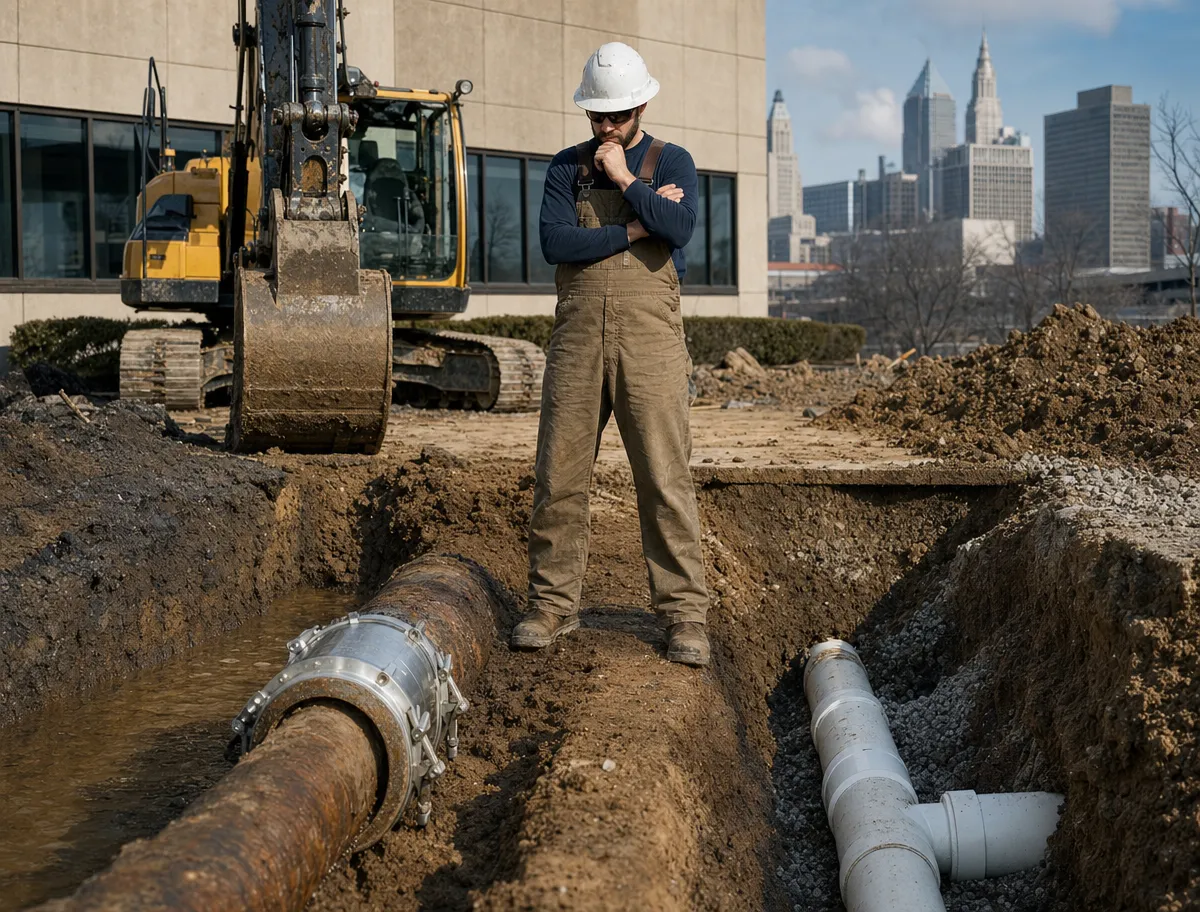
Not always. Severely collapsed pipes or lines with major structural shifts may still need excavation to access and replace the damaged section. Facility directors should have a CCTV camera inspection completed first to confirm pipe condition before committing to any method.
| Factor | Trenchless (CIPP) / Spot Repair | Traditional Excavation |
| Surface disruption | Minimal | Significant |
| Pipe damage severity | Cracks, root intrusion, joint offsets, isolated defects | Full collapse, severe misalignment |
| Site restoration needed | Rarely | Yes |
When excavation becomes unavoidable, the surface restoration matters just as much as the pipe repair itself. A smooth, professional paving finish separates capable contractors from the rest, protecting parking lots and walkways from uneven patchwork that invites future liability. Property owners should confirm before work begins how the contractor plans to restore sidewalk, landscaping, or concrete disturbed during the dig.
Selecting an experienced provider for whichever method fits the property translates directly into dependable, measurable results. Fewer callbacks, less downtime, and a repair built to last.
📞 Ready for a Professional Assessment? Not sure whether your property needs CIPP lining, spot repair, or full excavation? Empire Paving’s Cleveland crew can confirm the right fix with a CCTV inspection and a free, no-obligation quote.
How Does The Repair Process Unfold?
A structured sequence of diagnosis, repair, and surface restoration defines how commercial sewer line repair Cleveland OH projects move from emergency call to finished parking lot. Facility directors overseeing Cleveland properties need a process that limits downtime and protects tenants, customers, and daily operations. Sewer failures rarely wait for convenient hours, which is why crews serving commercial properties in Cleveland offer 24-hour availability that never sacrifices quality or speed for the sake of a fast response.
The steps below outline how a commercial sewer repair project typically progresses once a crew arrives on-site in Cleveland:
- Confirm the emergency call and dispatch a response team without delay, regardless of time of day.
- Assess the affected sewer line and surrounding sidewalk to determine the scope of excavation needed.
- Execute the repair with a focus on keeping the overall project simple, smooth, and stress-free for on-site facility staff.
- Backfill the excavation area and prepare the surface for restoration work.
- Repave the parking lot, driveway, or access road disturbed during the repair with commercial paving restoration, delivering quality work from the ground up.
Does sewer repair include fixing the parking lot afterward?
Yes. Surface restoration is treated as part of the same project scope, not a separate service call. Once sewer work concludes in Cleveland, crews return parking lots and driveways to full function. Commercial properties avoid a second disruption.
Can large commercial properties count on this process at scale?
Experience serving businesses with everything from residential driveways to full commercial parking lots supports handling large-scale, sewer-related surface restoration across Cleveland facilities. That range of project size gives facility managers confidence that both the underground repair and the sidewalk above it receive the same level of care.
What Permits Does Commercial Sewer Repair Require in Cleveland?
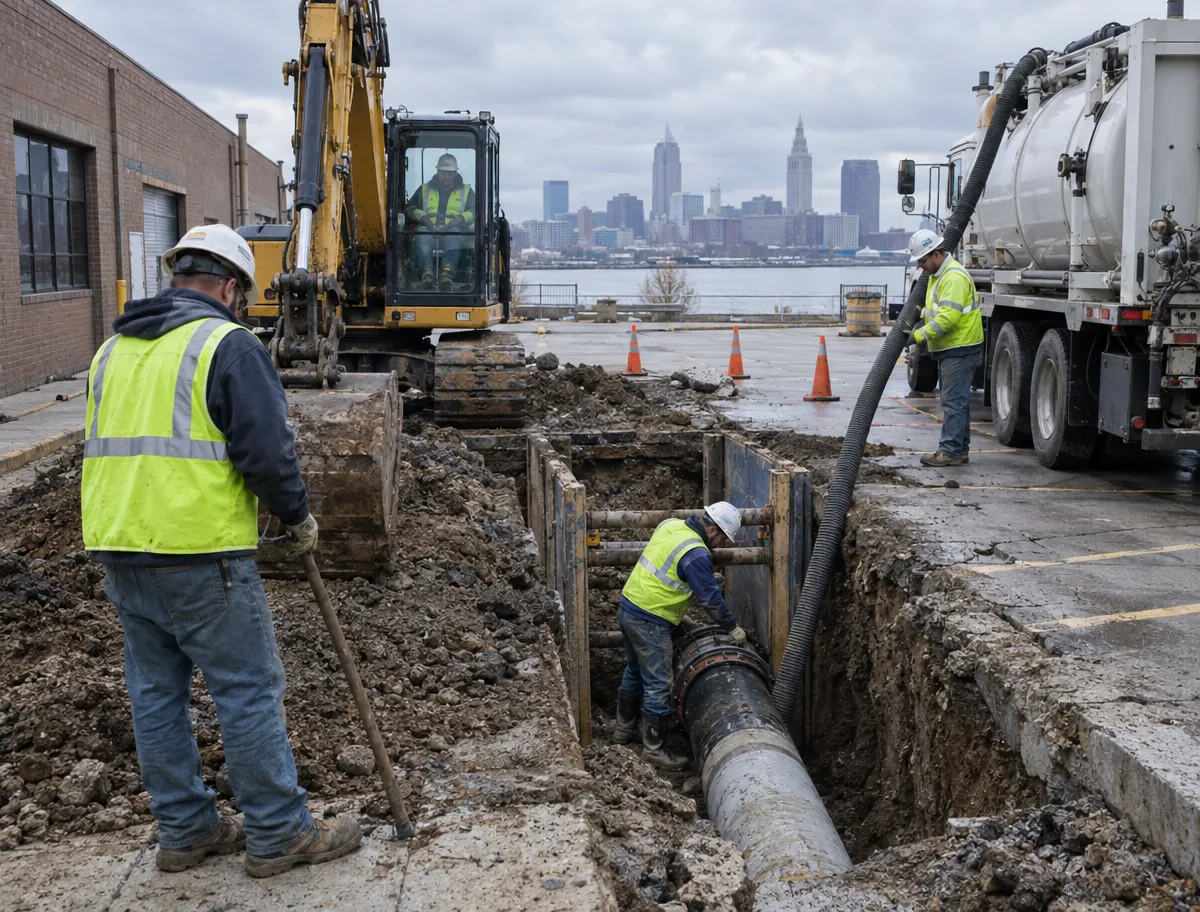
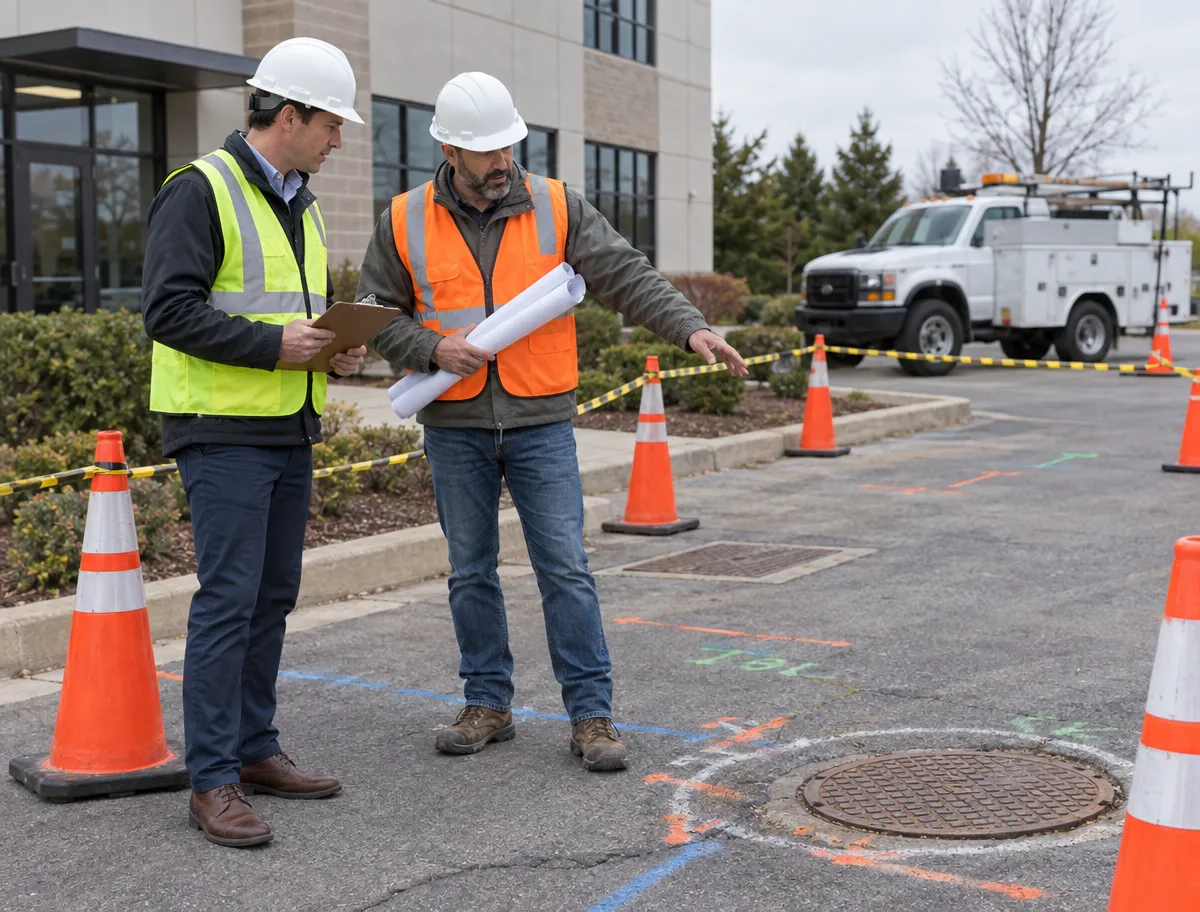
Commercial sewer line repair in Cleveland involves more regulatory steps than a routine paving job. Before any excavation begins, Ohio law requires an Ohio 811 utility locate request so crews can mark buried gas, electric, water, and telecom lines near the work area. Depending on project scope, contractors may also need to confirm compliance with the Northeast Ohio Regional Sewer District’s code of regulations and secure a City of Cleveland sewer connection permit from the Division of Water Pollution Control before connecting to or altering a lateral tied to the public system.
Larger commercial projects — particularly those involving new discharge points or industrial wastewater — may also fall under the Ohio EPA’s Permit-to-Install program. Any open-cut excavation must also follow OSHA’s trenching and excavation safety standards to protect crews and the public. Empire Paving handles this permitting process directly as part of every commercial project scope, drawing on years of experience with Cleveland’s aging commercial sewer infrastructure.
For most commercial properties in Cleveland, permitting and scheduling take roughly 2 to 4 weeks from the initial site assessment to the start of work, depending on the permits required and utility locate turnaround. Once work begins, the physical repair itself — whether CIPP lining, spot repair, or excavation — is typically completed in 1 to 3 days. With advance notice and phased scheduling, tenants and customers can often remain on-site and operational throughout the project.
What Mistakes Delay Commercial Sewer Repairs?
Delays start when property managers overlook early warning signs. Slow drains, gurgling fixtures, or damp patches near a foundation signal trouble in a sewer system that keeps a commercial property healthy and operating without disruption. Waiting on those symptoms turns a manageable fix into an emergency that closes bathrooms, disrupts tenants, and stalls business operations.
A second common error involves the choice of contractor. Property managers who hire crews without regional expertise or genuine commitment to the project often face rework, missed timelines, and inflated costs. Reliable commercial sewer line repair in Cleveland, OH depends on a team that understands local soil conditions, municipal codes, and the pace commercial tenants require.
How can property managers vet a sewer repair contractor?
Credentials matter. Contractors recognized within the regional construction industry — through trade publication features or established reputations — tend to deliver more consistent results. Look for documented industry standing rather than promises alone.
Why does prioritizing speed over quality cause delays?
Rushed repairs frequently fail inspection or reopen within months, forcing a second round of excavation and downtime.
Avoid these common pitfalls:
- Ignoring slow drains or odor complaints until service stops entirely
- Selecting a contractor based on price alone, without checking regional experience
- Overlooking a company’s documented reputation or industry recognition
- Assuming quick turnaround always means quality workmanship
Contractors that genuinely prioritize client needs, rather than shortcuts, prevent these setbacks before they start.
Frequently Asked Questions
What causes most commercial sewer line damage in Cleveland?
Aging infrastructure, Cleveland’s combined sewer system, and Northeast Ohio’s harsh seasonal weather drive most failures. Heavy rain and rapid snowmelt overload combined systems, backing sewage into cracked or weakened laterals.
What records should property managers gather before a repair visit?
Property managers should compile prior plumbing reports, maintenance logs, and photos of visible damage like standing water or ceiling stains. This documentation narrows the diagnostic window and speeds up scheduling.
How quickly does Empire Paving respond to commercial sewer emergencies?
Empire Paving’s 15-person team provides 24/7 emergency response for commercial sewer line repairs throughout Cleveland. They also offer free estimates so property owners understand costs upfront.
How long does commercial sewer line repair take in Cleveland?
Permitting and scheduling for a commercial sewer line repair project in Cleveland typically take 2 to 4 weeks, depending on the approvals required. Once permits are in hand, the physical repair itself is usually completed in 1 to 3 days.
Can tenants stay open during commercial sewer line repair?
In most cases, yes. With proper scheduling and phased work, commercial tenants can typically remain open throughout a sewer line repair project, minimizing disruption to daily business operations.
TL;DR — Commercial Sewer Line Repair in Cleveland, OH at a Glance
- Cleveland’s combined sewer system overloads during heavy rain and rapid snowmelt, causing infrastructure failures.
- Aging infrastructure and Northeast Ohio’s harsh weather patterns drive most sewer line damage across the region.
- A CCTV inspection determines whether CIPP lining, spot repair, or full excavation is the right fix.
- Permitting and scheduling typically take 2 to 4 weeks, with the physical repair usually finished in 1 to 3 days.
- Empire Paving’s 15-person team delivers 24/7 emergency response and handles permitting for commercial sewer line repairs throughout Cleveland.
- Next step: Contact Empire Paving for a free, no-obligation commercial sewer assessment in Cleveland, OH.
Related Resources
- Sewer Line Installation & Repair Services
- Cleveland, OH Service Area
- Commercial Asphalt Repair in Cleveland, OH
- Commercial Parking Lot Maintenance in Cleveland
- Industrial Asphalt Paving in Cleveland, OH
Get a Free Commercial Sewer Assessment
Commercial sewer line failures rarely happen on a convenient schedule, but a clear diagnostic process, the right repair method, and proper permitting keep a Cleveland property’s downtime to a minimum. Empire Paving’s Cleveland crew brings 24/7 emergency response, in-house permit handling, and experience with the aging commercial sewer infrastructure common across Northeast Ohio to every project. Contact Empire Paving today for a free, no-obligation quote on commercial sewer line repair in Cleveland, OH.
About Empire Paving: Empire Paving provides commercial paving, sewer, and utility contracting services throughout Cleveland and Northeast Ohio, including Cuyahoga and Summit counties. Our 15-person team offers 24/7 emergency response and handles the full permitting process for commercial sewer line repair projects, backed by free estimates. Contact us today to schedule a commercial sewer assessment.