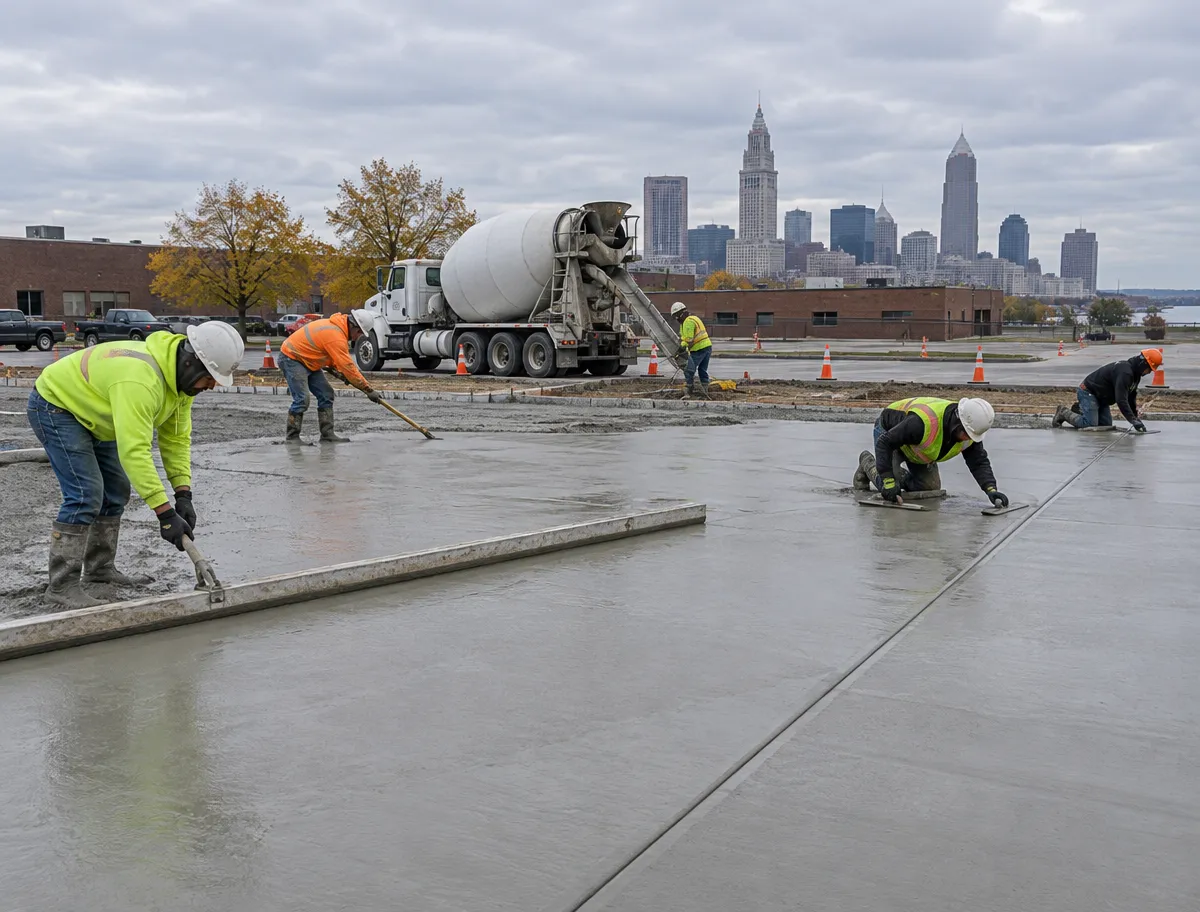
Quick Answer: Sewer line installation for a commercial property in Ohio follows a set sequence: scope the project with a camera inspection, secure local sewer connection and plumbing permits under Ohio EPA and municipal rules, notify OHIO811 before digging, install the pipe by open-cut excavation or trenchless methods, then pass inspection and testing before backfill and pavement restoration. Budgets depend on connection distance, depth, soil conditions, installation method, and pipe material, so firm pricing requires a site assessment. Hiring one contractor for permits, excavation, installation, and paving restoration keeps the schedule tight and avoids costly handoffs between separate vendors.
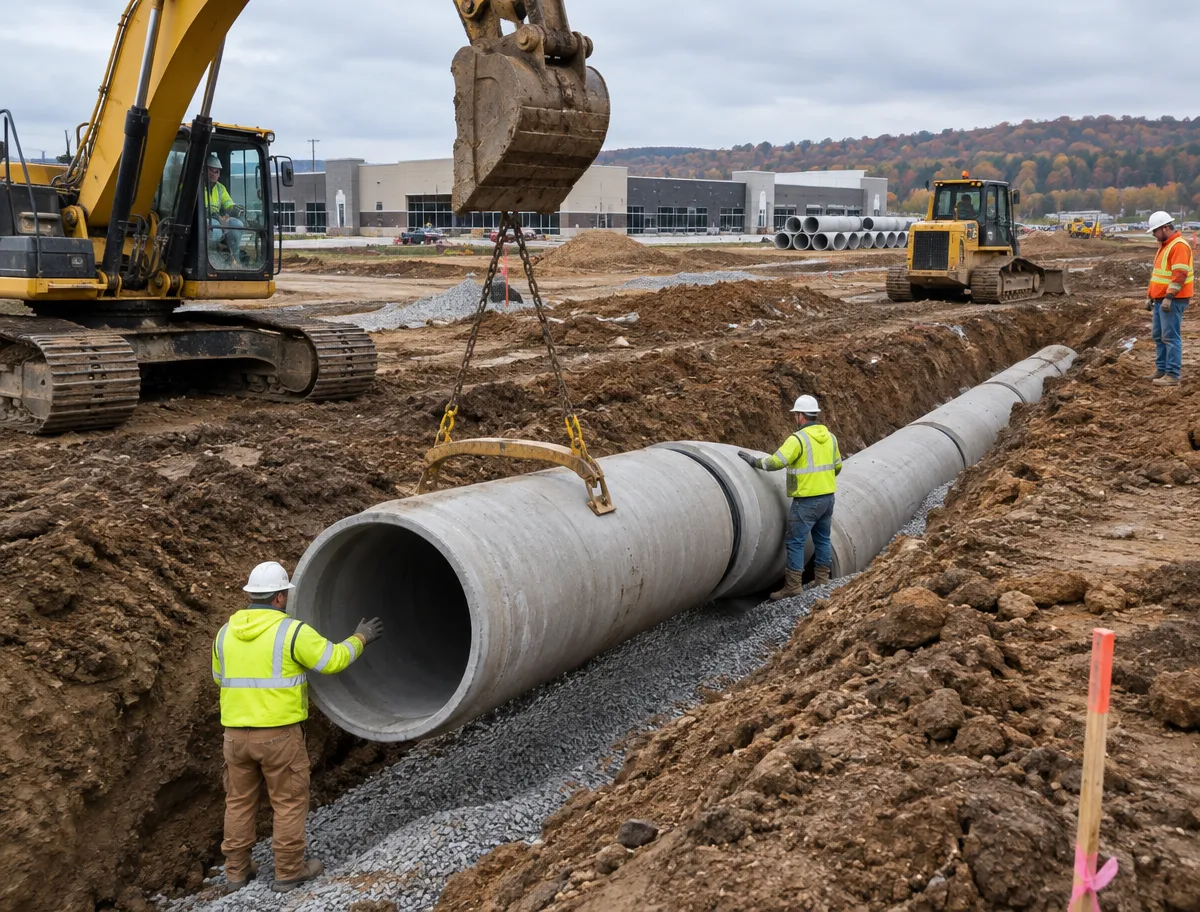
Commercial sewer line installation in Ohio requires municipal permitting, engineering review, and inspection before backfill, with timelines and budget varying by project scope and site conditions. Empire Paving manages permits, excavation, and commercial sewer line installation and repair efficiently to keep your commercial project on schedule and within budget from start to finish.
Commercial sewer line installation in Ohio requires municipal permits, engineered plans, and inspections before excavation begins. Budgets for parking lot projects vary significantly based on scope; contact Empire Paving for more information. Empire Paving, serving Northeast Ohio, guides property owners and contractors through permitting, scheduling, and cost planning for utility installations.
What Are the Key Takeaways for Ohio Commercial Sewer Projects?
- Ohio commercial sewer installations require permits from local health departments and municipal authorities before excavation begins.
- Empire Paving completes sewer line conversions from septic systems to municipal connections with modern materials and techniques.
- Professional sewer line replacement costs vary based on depth, soil conditions, and distance to municipal connection points.
- Complete sewer line replacement provides permanent solutions when existing systems reach end of service life or sustain extensive damage.
What Does Commercial Sewer Line Installation Involve?
Sewer line installation commercial property Ohio projects generally begin with converting an aging septic system to a public or municipal connection. This conversion counts among the more significant undertakings a property owner faces, demanding careful planning and specialized expertise from the outset. Skipping that planning stage risks costly delays and rework once excavation starts.
Ohio property owners sometimes face this decision involuntarily. When a municipality installs a new sanitary sewer main within 200 feet of a building, the owner may receive a formal order to connect. Ignoring that order creates compliance headaches and potential fines, so early coordination with an experienced contractor matters.
When Does a Sewer Line Need Full Replacement Instead of Repair?
Full replacement becomes the practical choice once a line reaches the end of its service life or sustains damage beyond what a spot repair can fix. At that point, patching only delays the inevitable and adds expense over time. Complete replacement offers commercial property owners a permanent fix rather than a temporary patch.
What Installation Methods Are Available for Commercial Properties?
Contractors typically choose between two approaches, matched to site conditions and budget:
- Traditional excavation: Involves digging a trench along the full pipe route, offering direct access for inspection and repair.
- Trenchless installation: Uses minimally invasive techniques to install or replace pipe with limited surface disruption.
Selecting the right method depends on soil conditions, existing sidewalk, and how much operational downtime a property can tolerate. Empire Paving supports Ohio commercial property owners navigating these installations, coordinating commercial asphalt paving restoration once sewer work concludes so parking lots, drives, and walkways return to full function without lingering disruption.
Planning a commercial sewer connection in Northeast Ohio? Empire Paving handles permit coordination, excavation, pipe installation, and pavement restoration under one contract. Request a free commercial sewer installation consultation today.
How Do You Scope a Commercial Sewer Project?
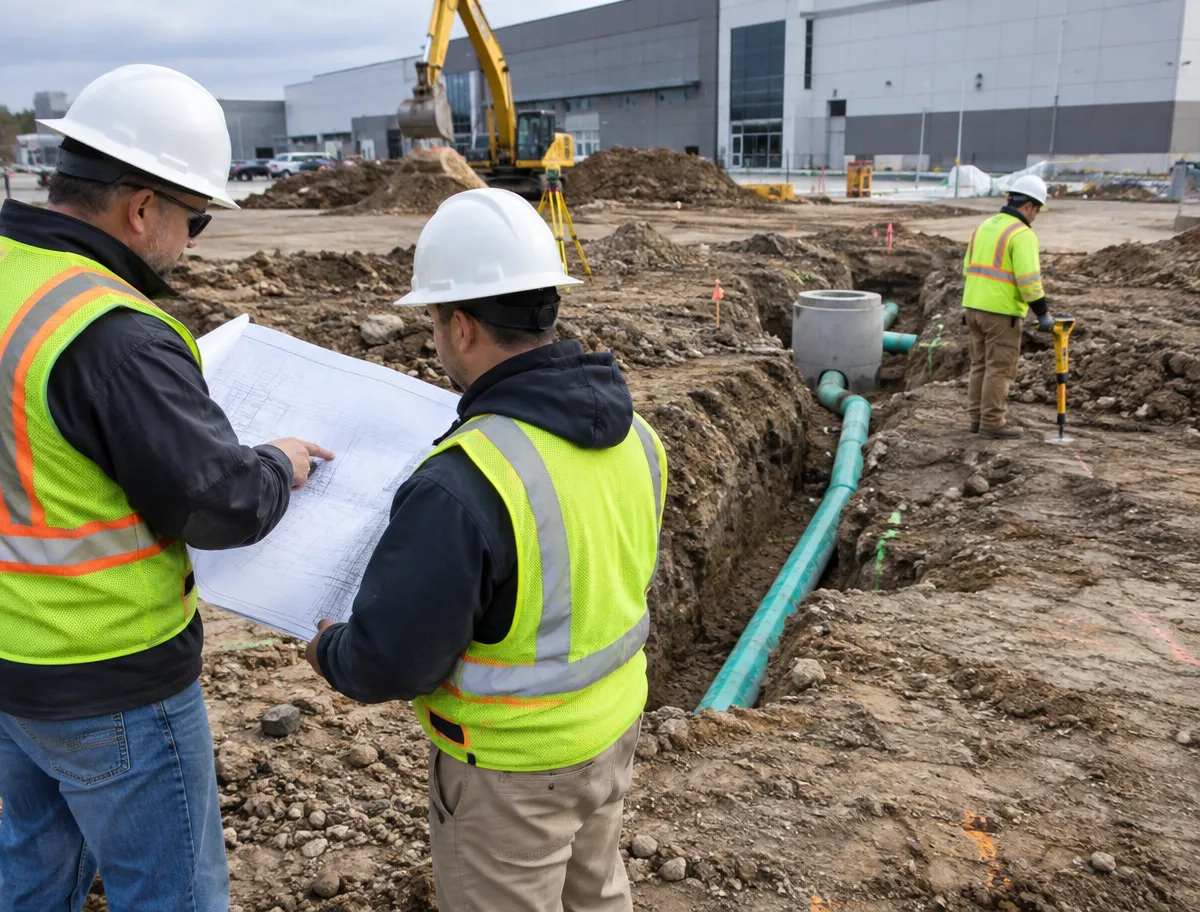
Scoping starts with a full understanding of the project before any contractor search begins. Property owners across Ohio who skip this step often face delays, budget surprises, or mismatched contractor bids. A clear scope answers three questions: what needs to be replaced or connected, what site conditions exist, and what timeline the property can absorb.
Sewer line installation for commercial property in Ohio involves more moving parts than a typical residential job. Parking lot layouts, existing utility conflicts, and municipal connection requirements all shape the project’s real size. Getting this picture right, before requesting quotes, keeps the bidding process honest and comparable.
What Should Be Included in a Sewer Project Scope?
A complete scope documents the condition of the current system, the distance to the municipal connection point, and any restoration work the site will need afterward. It also identifies whether the project involves a septic-to-municipal conversion or a straightforward main line upgrade. These details determine which permits apply and how long the work will realistically take. Sites that also need storm drain installation or new catch basins should fold that work into the same scope.
Who Handles the Technical Assessment?
Licensed contractors typically manage every phase of a replacement project. Work begins with a camera inspection to assess the existing line’s condition. From there, the process moves through permit acquisition, installation, testing, and complete property restoration.
Regardless of whether the existing system is outdated septic infrastructure or a newly required municipal tie-in, selecting a contractor capable of managing this full sequence is critical to a stress-free outcome. Empire Paving works alongside Ohio property owners and general contractors to align paving and site restoration with these sewer scope requirements from the earliest planning stages.
What Permits and Ohio EPA Approvals Apply?
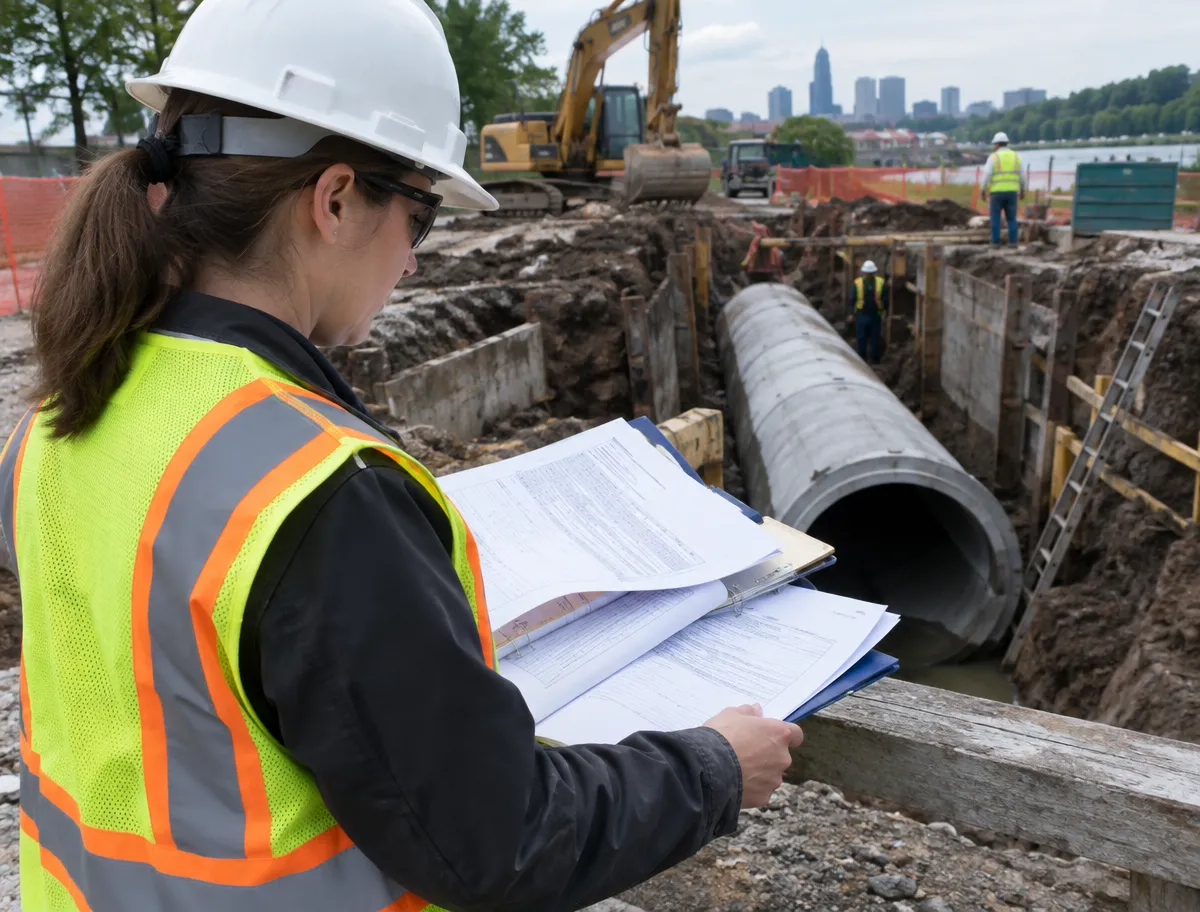
Federal and state law set the baseline for every sewer connection project in Ohio. Discharge activity falls under the Federal Water Pollution Control Act and its state counterpart, the Ohio Water Pollution Control Act, as codified in the Ohio Revised Code. At the federal level, those rules are carried out through the US EPA National Pollutant Discharge Elimination System (NPDES) permit program. These statutes exist to protect water quality. They apply whether a project involves a single retail building or a multi-tenant office park.
Approval requirements do not stop at the state line. Ohio EPA discharge authorizations also govern how connected systems operate at the municipal level. Communities including Rocky River, Bay Village, Westlake, and Fairview Park each function under Ohio EPA permit terms that dictate how new connections tie into existing infrastructure. A developer working across several Northeast Ohio municipalities should expect distinct local requirements layered on top of state rules, not a single uniform process. On-site plumbing and building work must also meet the codes adopted by the Ohio Board of Building Standards, which certifies the local building departments that review commercial plans.
Who handles the permitting process on a commercial project?
Licensed contractors typically manage permit acquisition as one stage within a larger scope of work. That scope runs from an initial camera inspection assessing the existing line, through permitting, installation, testing, and final property restoration. For a facility manager, this sequencing matters: skipping steps, or hiring a crew unfamiliar with local approval chains, risks delays that ripple through a project timeline.
Property owners planning a sewer line installation commercial property Ohio project should confirm early which agency issues the operative permit for their site. Consider these factors before selecting a contractor:
- Whether the project falls under a municipal discharge authorization or a broader Ohio EPA permit
- Documentation the contractor provides for camera inspection, permit filings, and testing results
- Restoration standards required by the local municipality after installation
Before any trench opens, Ohio law also requires an excavation notice through OHIO811’s Call Before You Dig service at least 48 hours in advance, excluding weekends and legal holidays, so buried utilities can be located and marked.
Empire Paving works alongside contractors and property teams across Ohio to keep surface restoration, paving, and site access aligned with the permitting timeline, reducing costly rework once underground work concludes.
What Installation Methods and Budget Should You Plan For?
Two proven paths exist for sewer line installation on commercial property in Ohio: traditional open-cut excavation and trenchless installation. The right choice depends on site conditions, access constraints, and the budget available for the project. Facility managers and developers across Northeast Ohio weigh these factors before breaking ground.
Traditional excavation remains the standard for sites with clear access and fewer underground obstructions. Open-cut trenches 5 feet deep or more must be protected under OSHA trenching and excavation safety standards, which affects shoring, equipment, and crew time. Trenchless methods suit tighter urban lots, properties with existing landscaping or sidewalk to preserve, or sites where digging a full trench would disrupt business operations. Ohio property owners planning main line upgrades should discuss both options with a licensed contractor before finalizing project scope.
Material selection matters just as much as method. Modern piping materials installed by licensed contractors are built to last 50 to 100 years, a lifespan that changes the long-term math for commercial owners. A higher upfront investment in quality materials often costs less over decades than repeated repairs on an aging line.
When does replacement make more financial sense than repair?
Replacement becomes the practical decision once a line reaches the end of its service life or damage exceeds what repair can reasonably fix. Patching a failing system repeatedly drains budget without solving the underlying problem. Complete replacement offers a permanent solution instead of a cycle of temporary fixes.
What should Ohio property owners budget for before installation begins?
Budgeting should account for site conditions, chosen installation method, and material grade, since each factor shifts total project cost. Sites requiring trenchless work may carry different pricing than open excavation, depending on soil and depth.
| Factor | Consideration |
|---|---|
| Installation method | Excavation vs. trenchless, based on access and disruption tolerance |
| Material lifespan | Modern materials rated for 50-100 years |
| Repair vs. replace | Replacement favored once repair costs approach replacement value |
Empire Paving works alongside contractors serving Ohio commercial properties to plan surface restoration once installation is complete, from asphalt patching over utility trenches to concrete sidewalk and curb repair.
How Do You Choose the Right Installation Partner?
Contractor selection determines whether a commercial sewer project finishes on schedule or turns into a costly disruption. For Ohio property owners weighing a septic-to-public conversion or a main line upgrade, the choice of partner remains the deciding factor in a smooth, stress-free outcome. Site conditions, permitting timelines, and equipment needs vary across the state. The right team must handle complexity without missing a step.
Scale matters here. A commercial-grade sewer line installation project for an Ohio office park, retail center, or industrial facility demands enough trained personnel to keep crews on multiple phases at once. Empire Paving fields a team of 15 employees, sized to manage inspection, excavation, and restoration work without stalling a job site waiting on labor.
What Should a Contractor Handle From Start to Finish?
A qualified partner manages the full sequence as one coordinated process, not a series of disconnected handoffs. That sequence typically includes:
- Camera inspection to assess existing line condition
- Permit acquisition through local and state authorities
- Installation using methods suited to the site
- Testing to confirm the new line meets standards
- Complete restoration of sidewalk, landscaping, and surface areas
Why Does Coordination Matter for Commercial Property Ohio Projects?
Gaps between phases cost time and money. When one team owns inspection through restoration, commercial property Ohio owners avoid scheduling conflicts between separate vendors and reduce the risk of rework. Empire Paving serves Ohio businesses with that same coordinated approach, traveling to job sites across the region, including Summit County commercial properties, to keep utility installations on track.
Frequently Asked Questions
What permits does commercial sewer line installation in Ohio require?
Projects require municipal permitting, engineering review, and inspection before excavation begins. Empire Paving’s 15-employee crew manages permits, excavation, and installation to keep projects on schedule and within budget.
What factors affect the budget for commercial sewer line installation?
Budgets depend on distance, depth, and pipe material, similar to how parking lot projects range widely in cost based on scope. Empire Paving guides property owners through cost planning for these utility installations.
What installation methods do contractors use for commercial sewer lines?
Contractors choose between traditional excavation, which digs a trench along the full pipe route, and trenchless installation, which uses minimally invasive techniques with limited surface disruption. The choice depends on soil conditions, existing sidewalk, and downtime tolerance.
Do you have to contact OHIO811 before digging for a commercial sewer line?
Yes. Ohio law requires excavators to notify OHIO811 at least 48 hours before digging, excluding weekends and legal holidays, so underground utilities can be marked. On a commercial sewer project, the contractor typically files the ticket and keeps it current until excavation is finished.
What trench safety rules apply to commercial sewer excavation?
Federal OSHA rules require a protective system such as sloping, shoring, or a trench shield for trenches 5 feet deep or more unless the excavation is entirely in stable rock. Trenches 20 feet deep or more need a protective system designed by a registered professional engineer.
TL;DR — Commercial Sewer Line Installation in Ohio at a Glance
- Commercial sewer installation in Ohio runs from camera inspection and scoping through permits, excavation, pipe installation, testing, and pavement restoration.
- Permits come from the local sewer authority and building department, layered on Ohio EPA and federal Clean Water Act requirements.
- Notify OHIO811 at least 48 hours before digging, and follow OSHA protective-system rules for trenches 5 feet or deeper.
- Budget depends on connection distance, depth, soil, installation method, and pipe material; modern pipe can last 50 to 100 years.
- Next step: Request a free commercial sewer installation consultation from Empire Paving for a site-specific scope and quote.
Related Resources
- Commercial Sewer Contractor Services
- Paving and Site Contractor in Cleveland, OH
- Parking Lot Paving Cost in Ohio
- Asphalt Patching Cost in Ohio
- Commercial Asphalt Repair in Cleveland, OH
- Asphalt Overlay vs. Full Replacement for Commercial Lots
Get a Free Commercial Sewer Installation Quote
Commercial sewer line installation in Ohio demands careful attention to permitting requirements, budget planning, and professional execution. Understanding the regulatory landscape, securing necessary approvals, and working with experienced contractors ensures your project meets code standards while protecting your investment. Proper planning at every stage, from initial assessment through final inspection, delivers reliable infrastructure that supports your commercial operations for years to come. Empire Paving handles the full scope, from permit coordination and excavation to pipe installation and pavement restoration, so one contractor owns your entire project. Contact Empire Paving today for a free, no-obligation quote.
About Empire Paving: Empire Paving is a Northeast Ohio commercial paving and site contractor serving Cuyahoga and Summit Counties. Its 15-person team delivers asphalt paving, concrete work, and sewer services, including sewer line installation, storm drain installation, and catch basin construction, with permit coordination and pavement restoration handled under one contract.