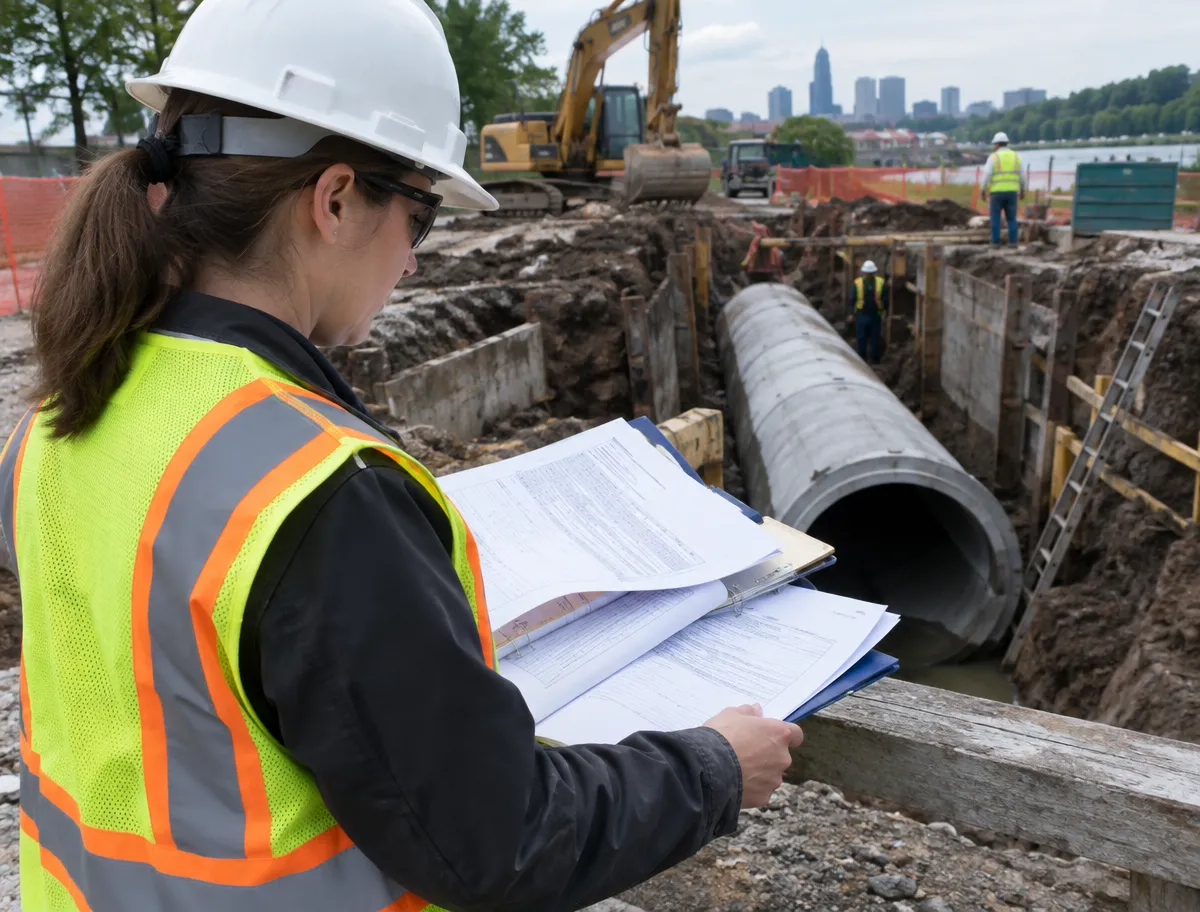
Quick Answer: The sewer line vs storm drain difference comes down to where the water goes. Sanitary sewer lines carry wastewater from sinks, toilets, and drains to a treatment plant for cleaning before release. Storm drains and catch basins carry rainwater and snowmelt directly to local streams and rivers, untreated. Connecting the wrong fixture to the wrong system — like a sump pump tied into the sanitary sewer — is an environmental violation in Ohio that can trigger fines. Homeowners in Cuyahoga and Summit counties should know which system serves each drain before doing any plumbing work.
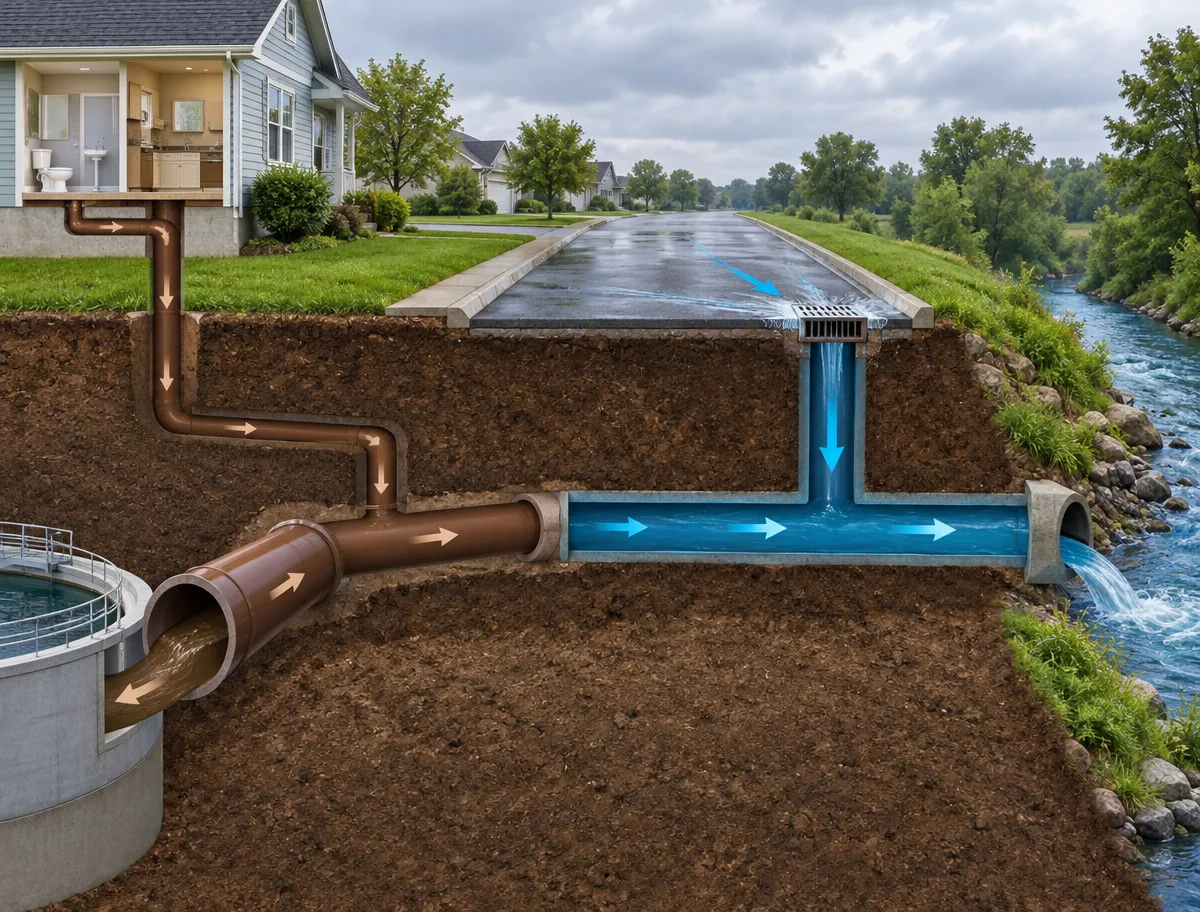
Every property connects to two separate underground drainage networks, and mixing them up causes more than a maintenance headache — it can mean a code violation. Sanitary sewer lines carry wastewater from bathrooms, kitchens, and floor drains to a treatment plant. Storm drains and catch basins move rainwater and snowmelt off pavement and lawns, discharging it — untreated — into nearby creeks, rivers, and Lake Erie. For homeowners and property managers across Northeast Ohio, understanding the sewer line vs storm drain difference isn’t just useful background. It determines which pipe a plumber should open, which repairs need a municipal permit, and whether a routine fix like a sump pump discharge line is even legal.
What Is the Fundamental Difference Between a Sewer Line and a Storm Drain?
A sanitary sewer line is a dedicated pipe system that carries wastewater from a property’s plumbing fixtures to a treatment plant, where it’s cleaned before being released back into the environment. A storm drain (and the catch basins that feed it) is a separate system built to move rainwater and snowmelt off roofs, driveways, and streets and send it, without any treatment, into the nearest creek, river, or storm sewer outfall.
That separation matters because storm sewers were never designed to handle sewage, and sanitary sewers were never sized to handle a heavy rainstorm. In a handful of older sections of Cleveland, the two pipes were originally built as a single combined system, which is part of why the EPA’s combined sewer overflow guidance exists — during heavy rain, a combined system can overflow and discharge untreated sewage directly into a waterway.
What Connects to Each System?
Knowing what’s supposed to feed each system is the first step toward spotting a wrong connection on your own property:
- Sanitary sewer: toilets, sinks, showers, tubs, dishwashers, washing machines, and interior floor drains
- Storm drain / catch basin: roof downspouts, sump pump discharge lines, yard and driveway drains, and parking lot catch basins
Empire Paving handles sanitary sewer line installation and repair as well as storm drain installation for homeowners and businesses across Northeast Ohio, so a single crew can correct a fixture that was connected to the wrong system.
How Can You Tell Which System a Catch Basin or Cleanout Connects To?
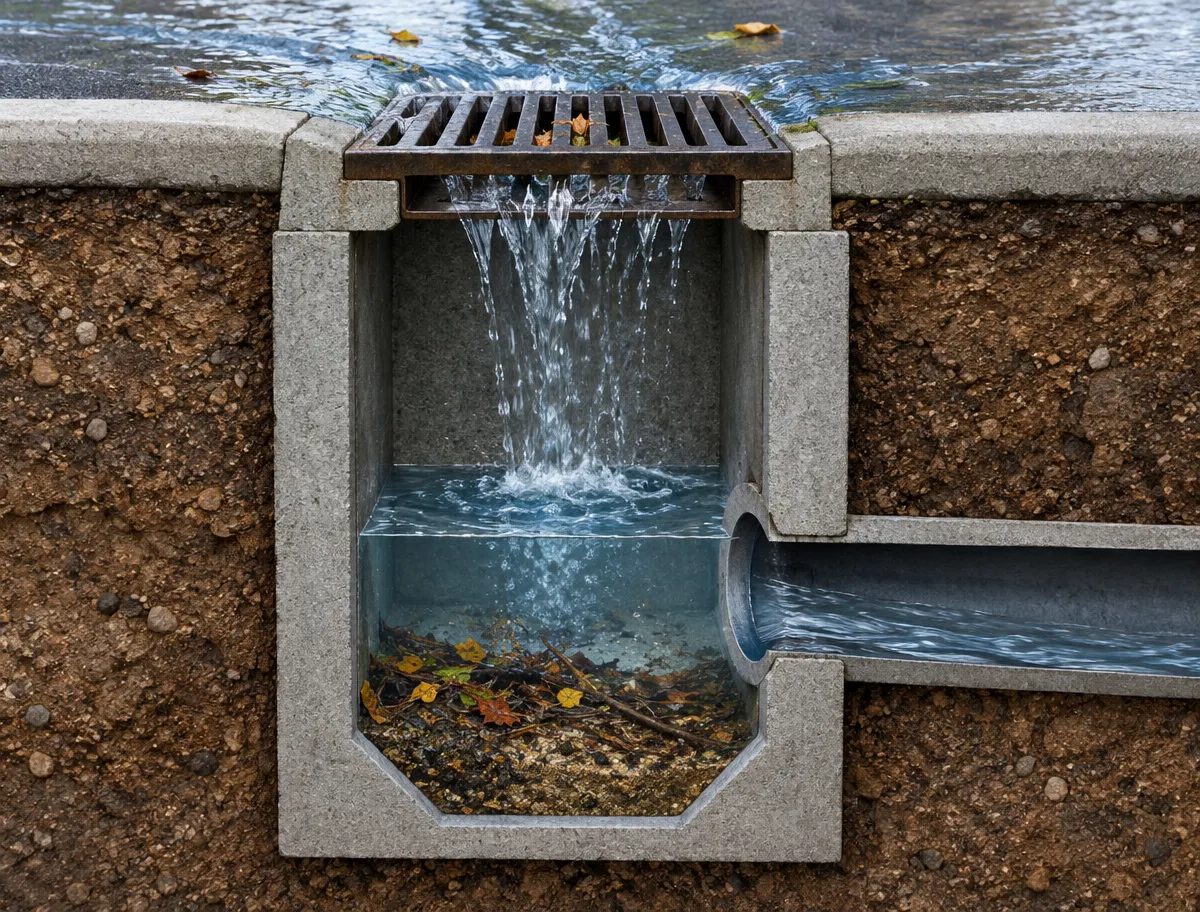
A storm drain or catch basin has a visible grate set into pavement or a low point in the yard, and its outlet pipe typically leads toward a ditch, creek, or the street’s storm main — you can often see or hear water moving through it during a rainstorm. A sanitary sewer cleanout, by contrast, is usually a capped vertical pipe near the foundation, basement, or property line, and it ties into the home’s lateral line running toward the street’s sanitary main.
- Pull up your municipality’s or county sewer district’s GIS sewer map, which usually shows sanitary and storm lines in different colors
- Call before you dig (811) before any excavation near a basin or cleanout
- Have a licensed contractor run a camera or dye test through a suspect connection to confirm where it actually discharges
📞 Ready to Get Started? If you’re not sure whether a drain, cleanout, or catch basin on your property connects to the sanitary sewer or the storm system, don’t guess. Empire Paving can trace and confirm every connection and correct anything that’s tied in wrong before it becomes a violation.
Why Do Wrong-System Connections Violate Ohio Law?
Tying a sump pump or downspout into the sanitary sewer adds clean stormwater to a pipe that’s sized and priced to carry wastewater to a treatment plant. During a storm, that extra volume can overwhelm the sanitary system and cause a sanitary sewer overflow — a discharge of raw, untreated sewage into a basement, yard, or waterway. Ohio EPA and local sewer authorities treat that as an environmental violation, not a minor code issue.
Municipalities across Cuyahoga and Summit counties can issue a violation notice, assess fines, and require the property owner to disconnect the illegal connection at their own expense — sometimes on a short compliance deadline. A property inherited with an old, undocumented downspout-to-sewer connection is still the current owner’s liability once it’s discovered.
Why Do Ohio EPA and Local Municipalities Regulate Both Systems So Strictly?
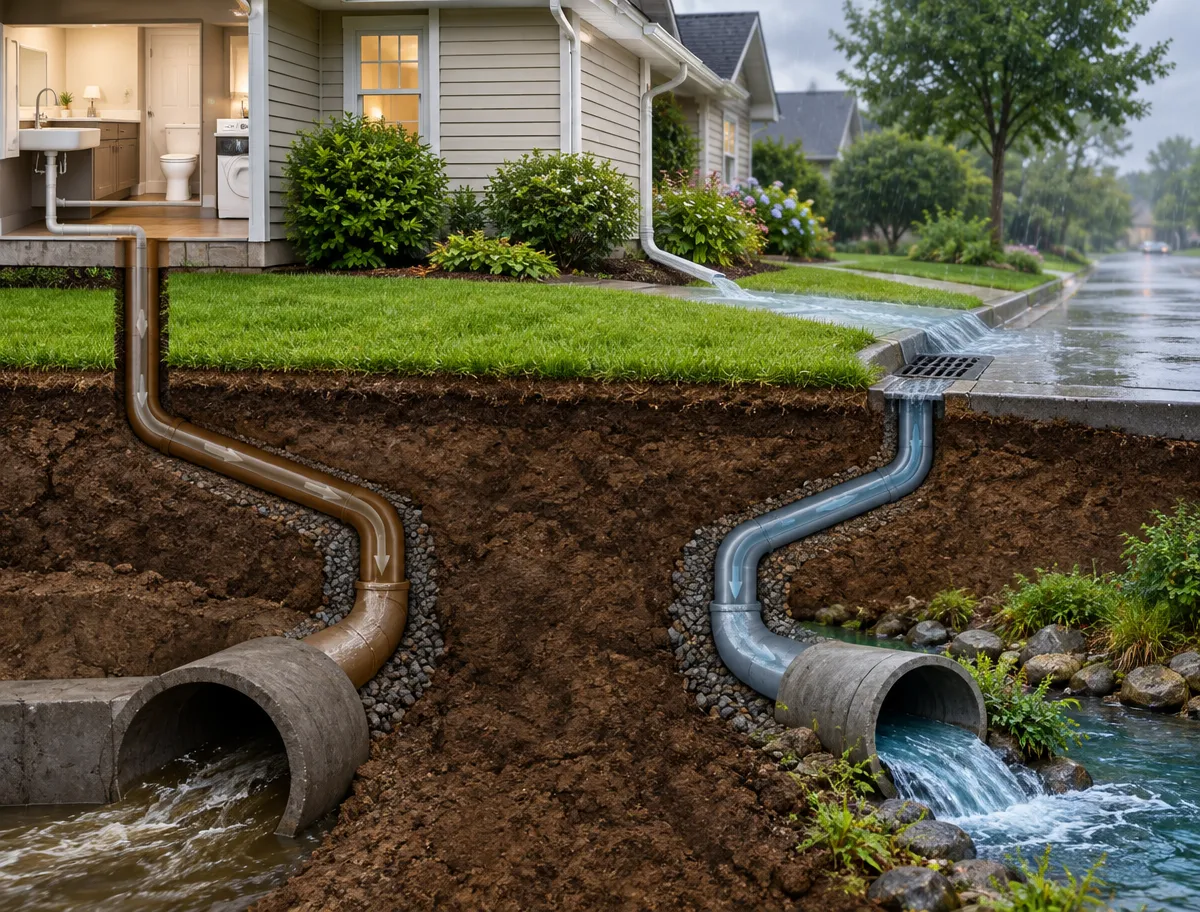
Sanitary sewers operate under NPDES permits because anything that overflows from them is raw sewage that threatens public health and the Lake Erie watershed. Storm sewers are regulated just as closely for a different reason: whatever enters a storm drain reaches a waterway with no treatment step at all, so oil, salt, sediment, and any sewage that gets misrouted into it has an immediate environmental impact — a pattern documented in USGS research on urban water quality.
That’s why permitting exists for both systems: municipalities need to confirm every new connection, repair, or replacement is tied into the correct network before it’s buried and out of sight.
What Is Inflow and Infiltration, and Why Does It Affect Northeast Ohio’s Aging Infrastructure?
Inflow and infiltration — usually shortened to “I&I” — describes extra water entering the sanitary sewer that was never supposed to be there. Inflow is stormwater entering through direct connections like illegal downspouts, sump pumps, or uncapped cleanouts. Infiltration is groundwater seeping in through cracked pipe joints, root intrusion, and deteriorated manhole seals.
Much of Northeast Ohio’s sanitary sewer infrastructure was installed during the mid-20th century construction boom, and decades of freeze-thaw cycling and ground settlement have widened joints and cracked older clay and concrete pipe. The result is more groundwater and stormwater getting into a system built to carry wastewater, which drives up treatment costs and raises the risk of combined sewer overflow events during heavy rain. It’s a major reason municipalities across the region enforce wrong-connection rules so strictly — every illegal downspout or sump pump tied into the sanitary system adds to a problem the infrastructure is already straining to handle.
How Often Should Catch Basins and Sewer Lines Be Inspected?
Commercial and residential catch basins across Northeast Ohio should be cleaned at minimum twice a year: once in spring, to clear out salt, sand, and debris left behind by winter, and again in late fall, before freezing temperatures lock accumulated debris in place. Spring is also a good time for a full visual inspection of both systems, catching frame settlement, cracked pipe, or a suspect connection while the fix is still small.
| Maintenance Approach | Typical Outcome |
| Reactive (repair after failure) | Full reconstruction, unplanned downtime, higher cost |
| Scheduled (spring + fall cleaning, spring inspection) | Early problem detection, lower long-term cost, fewer violation risks |
Who Should Handle Sewer and Storm Drain Work on Your Property?
Sewer and storm drain work should go to a licensed contractor with documented underground utility experience — not a general handyman. Empire Paving works on both systems for properties across Cleveland and Cuyahoga County and Akron and Summit County, handling sanitary sewer line installation and repair, storm drain installation, and catch basin construction and repair with proper municipal permitting on every job. That range matters most when a property has both a suspected sanitary violation and a failing catch basin at the same time — one crew, one point of contact, and one correctly permitted repair for each system.
Frequently Asked Questions
What is the main difference between a sewer line and a storm drain?
A sanitary sewer line carries wastewater from toilets, sinks, and drains to a treatment plant for cleaning. A storm drain carries rainwater and snowmelt directly to local streams and rivers, without treatment.
How can I tell if my sump pump or downspout is connected to the sanitary sewer?
Check where the discharge pipe ends. If it runs to a dry well, yard, or storm drain, it’s correctly connected. If it disappears into a capped pipe near your foundation that ties into the home’s main sewer cleanout, it may be illegally connected to the sanitary system — a licensed contractor can confirm with a camera inspection.
What happens if I connect a sump pump or downspout to the sanitary sewer in Ohio?
It’s an environmental violation. Ohio EPA and local sewer districts prohibit adding clean stormwater to the sanitary system because it overloads treatment plants and can trigger sewage overflows. Municipalities can issue fines and require the property owner to disconnect the line at their own expense.
What is inflow and infiltration (I&I)?
Inflow is stormwater entering the sanitary sewer through direct connections like downspouts or sump pumps. Infiltration is groundwater seeping in through cracked or aging pipe joints. Both add extra flow to a system built only for wastewater — a growing problem in Northeast Ohio’s aging infrastructure.
Why do Ohio EPA and municipalities regulate storm and sanitary sewers so strictly?
Both systems affect public health and the Lake Erie watershed. Sanitary sewers are regulated under NPDES permits to prevent raw sewage overflows, while storm sewers are regulated because anything that enters them reaches waterways untreated, so contamination there has an immediate environmental impact.
TL;DR — Sewer Line vs. Storm Drain at a Glance
- Sanitary sewer lines carry wastewater to a treatment plant; storm drains carry rainwater to waterways untreated
- Connecting a sump pump or downspout to the sanitary sewer is an environmental violation in Ohio
- Catch basins and cleanouts can usually be told apart by where their pipe leads — check a municipal sewer map or ask a licensed contractor
- Inflow and infiltration from aging pipes strain Northeast Ohio’s sanitary sewer capacity and drive up overflow risk
- Ohio EPA and local municipalities regulate both systems to protect public health and the Lake Erie watershed
- Next step: Schedule a free drainage system assessment with Empire Paving to confirm your property’s connections are code-compliant.
Related Resources
- Sewer & Storm Drain Contracting Services
- Cuyahoga County Service Area
- Commercial Parking Lot Maintenance in Cleveland, OH
- Commercial Parking Lot Maintenance Checklist
- Parking Lot Pothole Liability in Ohio
- How Long Does a Commercial Parking Lot Last?
- Commercial Paving Contractor in Akron, OH
Get a Free Drainage System Assessment
If you’re unsure whether a catch basin, cleanout, or sump pump discharge on your property connects to the right system — or you’re dealing with standing water, slow drains, or an aging sewer line — don’t wait for a violation notice to find out. Contact Empire Paving today for a free, no-obligation drainage system assessment.
About Empire Paving: Empire Paving serves Northeast Ohio, including Cuyahoga and Summit counties, with asphalt paving, concrete construction, and sewer and storm drain contracting. The company works on both commercial and residential underground utility systems with proper municipal permitting.