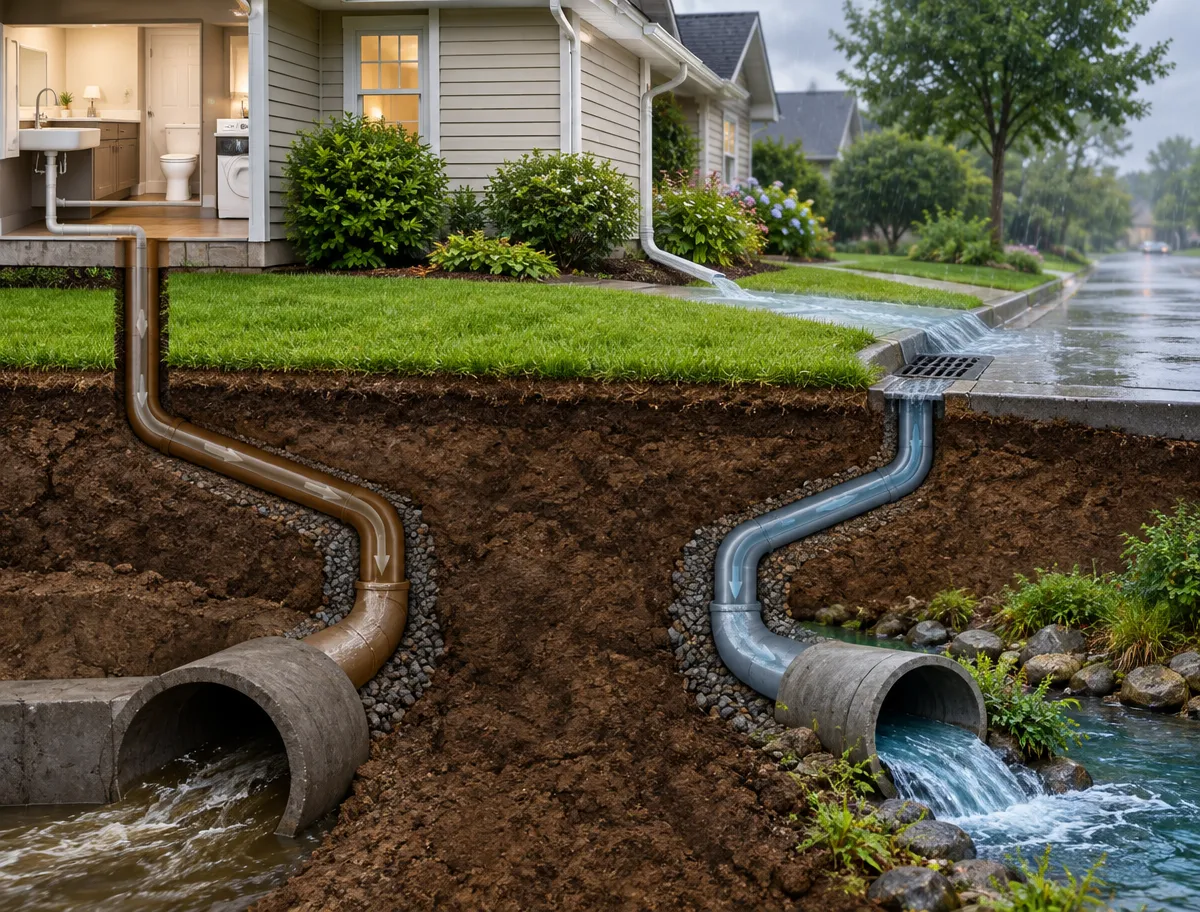
Quick Answer: The most common signs of sewer line failure commercial property owners notice include sewage odors near drain cleanouts, slow drains across multiple fixtures at once, wet spots or sinkholes in the parking lot, unusually lush or green grass along the buried sewer line route, and sewage backing up inside the building. A single crack or isolated root intrusion in an otherwise sound pipe can often be fixed with spot repair or CIPP lining, while a collapsed pipe, severe corrosion, or multiple failure points usually call for full replacement. A CCTV camera inspection is the only reliable way to know which situation you are facing.
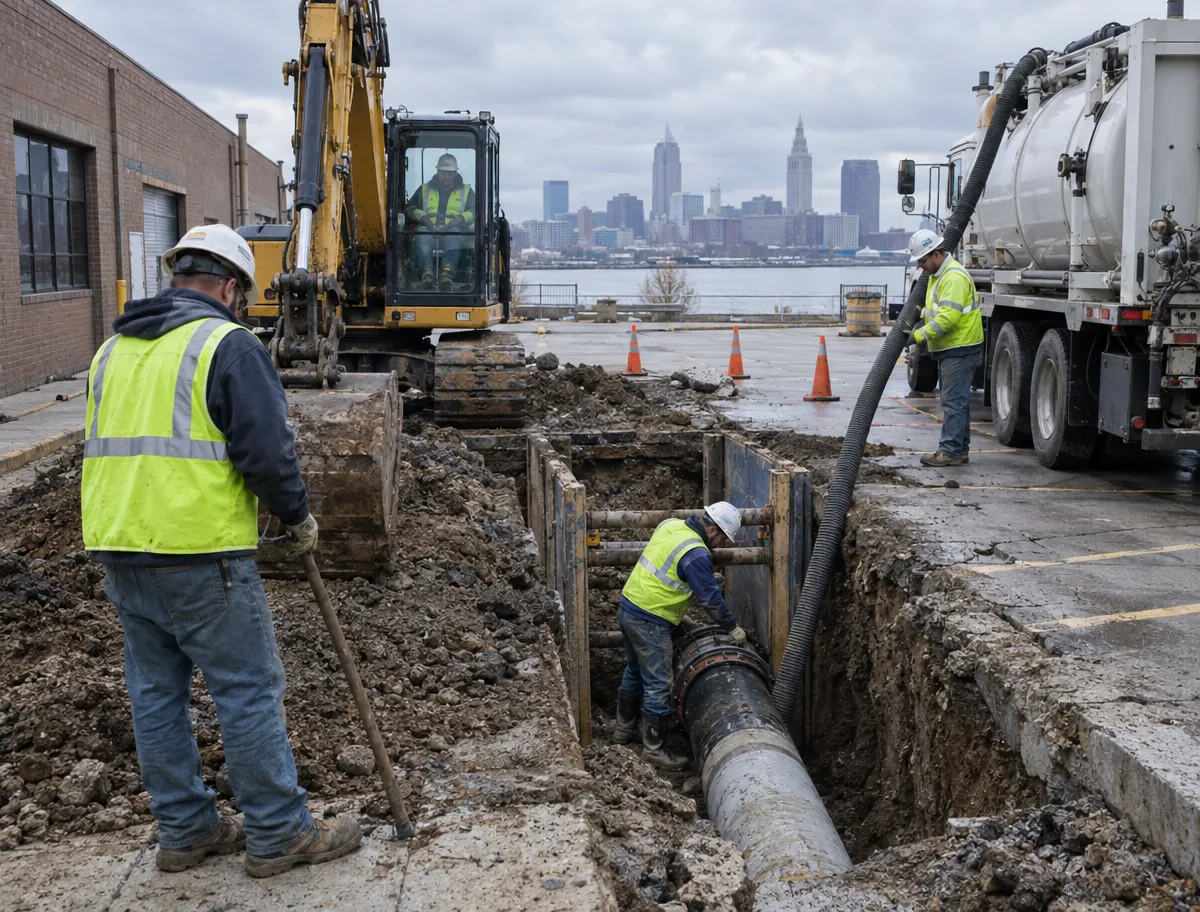
Commercial sewer line repair suits localized, minor pipe damage; full replacement addresses widespread deterioration, collapsed lines, or repeated failures. Cleveland, Ohio property owners benefit from trenchless CIPP lining, which repairs pipes from the inside without excavation. Empire Paving evaluates pipe condition, age, and diameter (4″–36″) to recommend the most cost-effective, minimally disruptive solution for commercial properties.
What Are the Key Takeaways on Commercial Sewer Line Repair vs. Replacement?
- Trenchless CIPP lining technology eliminates excavation, reducing property damage and restoration costs significantly.
- NASSCO-certified crews ensure precise diagnostics through advanced inspection methods before recommending repair or replacement.
- Sewer line repair extends system life when damage remains localized to specific pipe sections.
- Full replacement becomes necessary when multiple severe breaks or extensive deterioration compromise the entire line.
What Signals Warn of Commercial Sewer Line Failure?
Aging infrastructure, combined sewer design, and Northeast Ohio’s harsh weather converge to threaten commercial properties across Cleveland. Recognizing early signs of sewer line failure commercial property owners face protects tenants, inventory, and daily operations. Waiting for a full backup costs far more than catching a warning sign early.
Cleveland’s combined sewer system merges stormwater and wastewater into a single network. During heavy rain or rapid snowmelt, that system exceeds its treatment capacity. The surge often backs up into laterals already weakened by cracks or shifting joints, sending sewage into basements, parking structures, and lower-level mechanical rooms.
What Are the Early Warning Signs Facility Managers Should Watch For?
Several indicators point to a failing sewer line before a full backup occurs. Facility managers who track these signs act faster and limit downtime.
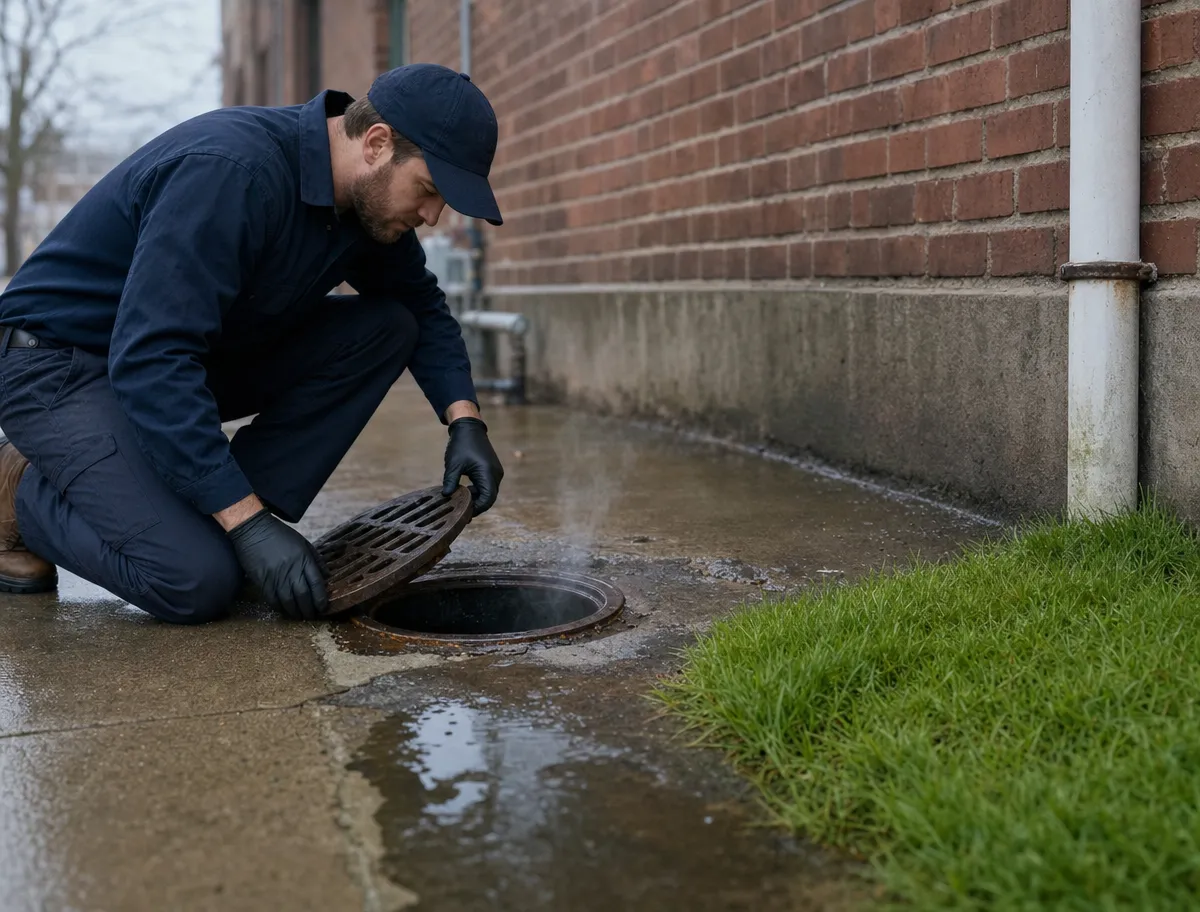
- Sewage odors near drain cleanouts, loading docks, or landscaped areas
- Slow drains across multiple fixtures at once, rather than a single isolated sink or toilet
- Gurgling sounds from floor drains or toilets after water use elsewhere in the building
- Wet spots, soft ground, or small sinkholes forming in the parking lot or landscaped areas
- Unusually lush or green grass along the buried sewer line route, even in dry weather
- Sewage backing up into floor drains, toilets, or fixtures inside the building
- Recurring backups that return within weeks of a previous clearing
Why Do These Problems Worsen After Storms?
Cleveland’s freeze-thaw cycles and heavy seasonal rainfall place added stress on aging pipe networks. A lateral with a hairline crack may function fine in dry conditions, then fail once the combined system triggers a sanitary sewer overflow that floods it with excess volume.
Empire Paving’s team handles commercial sewer line repair and replacement for commercial properties throughout the region. Rather than waiting for a crisis, the team works proactively to prevent future issues, giving property owners a dependable path from early warning sign to lasting solution.
Why Is Cleveland’s Infrastructure Hard on Sewer Lines?
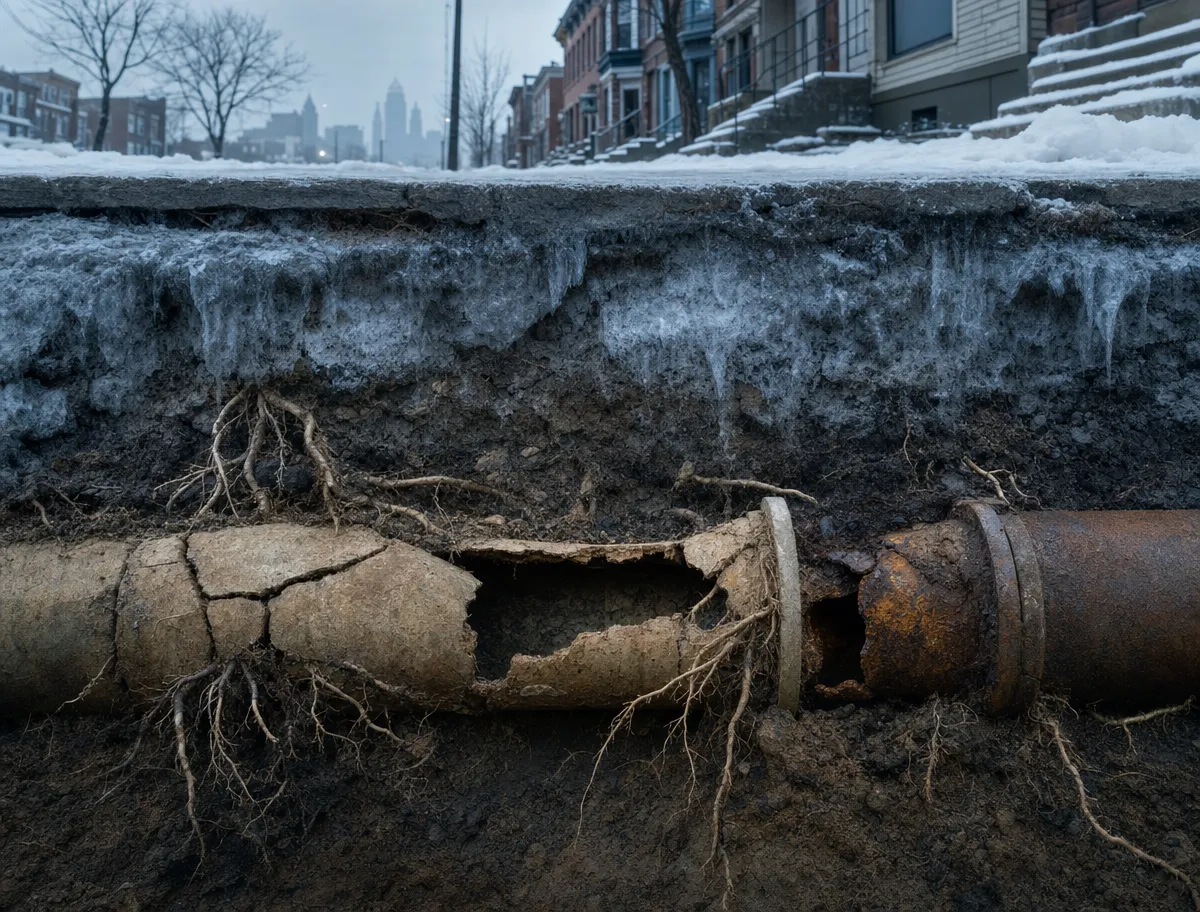
Cleveland’s underground pipe network carries decades of wear that most property owners never see until a failure disrupts operations. Much of the city’s catch basin and storm drain system dates back to mid-20th century construction booms. That aging infrastructure drives steady demand for sewer and drainage repair across the metro area. Facility managers overseeing commercial properties face a higher risk profile than typical homeowners. Older connections often serve larger buildings with heavier daily flow.
National assessments back up what Cleveland property owners already suspect. The American Society of Civil Engineers gives Northeast Ohio’s wastewater infrastructure a D+ rating, a grade that reflects widespread deterioration in pipe materials and joints throughout the region. That rating matters for anyone managing a commercial site, since signs of sewer line failure commercial properties exhibit — slow drains, recurring backups, soggy patches near parking lots — often trace directly back to this aging network rather than isolated plumbing mistakes.
Does Commercial Property Size Increase Sewer Risk?
Larger footprints mean longer lateral lines and more connection points, each one a potential failure site. Older institutional and commercial buildings built during the same mid-century boom frequently share the same pipe materials now reaching the end of their service life.
What Kind of Commercial Experience Matters Most?
Institutional-scale projects demand contractors who understand both paving and underground utility coordination. Empire Paving has completed paving work at the Great Lakes Science Center on Cleveland’s waterfront, reflecting the kind of high-profile notable commercial and institutional projects that facility managers should look for. A 15-employee team backs that work, serving Cleveland-area commercial and residential clients with the coordination larger institutional sites require.
📞 Ready to Get Started? Don’t wait for a minor crack to become a collapsed line. Contact Empire Paving today for a commercial sewer line assessment and get a clear, camera-verified repair-or-replace recommendation.
Repair or Replace: How Do You Decide?
Pipe condition, problem severity, and long-term property goals determine whether a Cleveland sewer line needs repair or full replacement. No single rule applies to every commercial building or HOA-managed property. A facility manager weighing this decision has to look past the immediate symptom. Consider what the pipe will still be doing five or ten years from now.
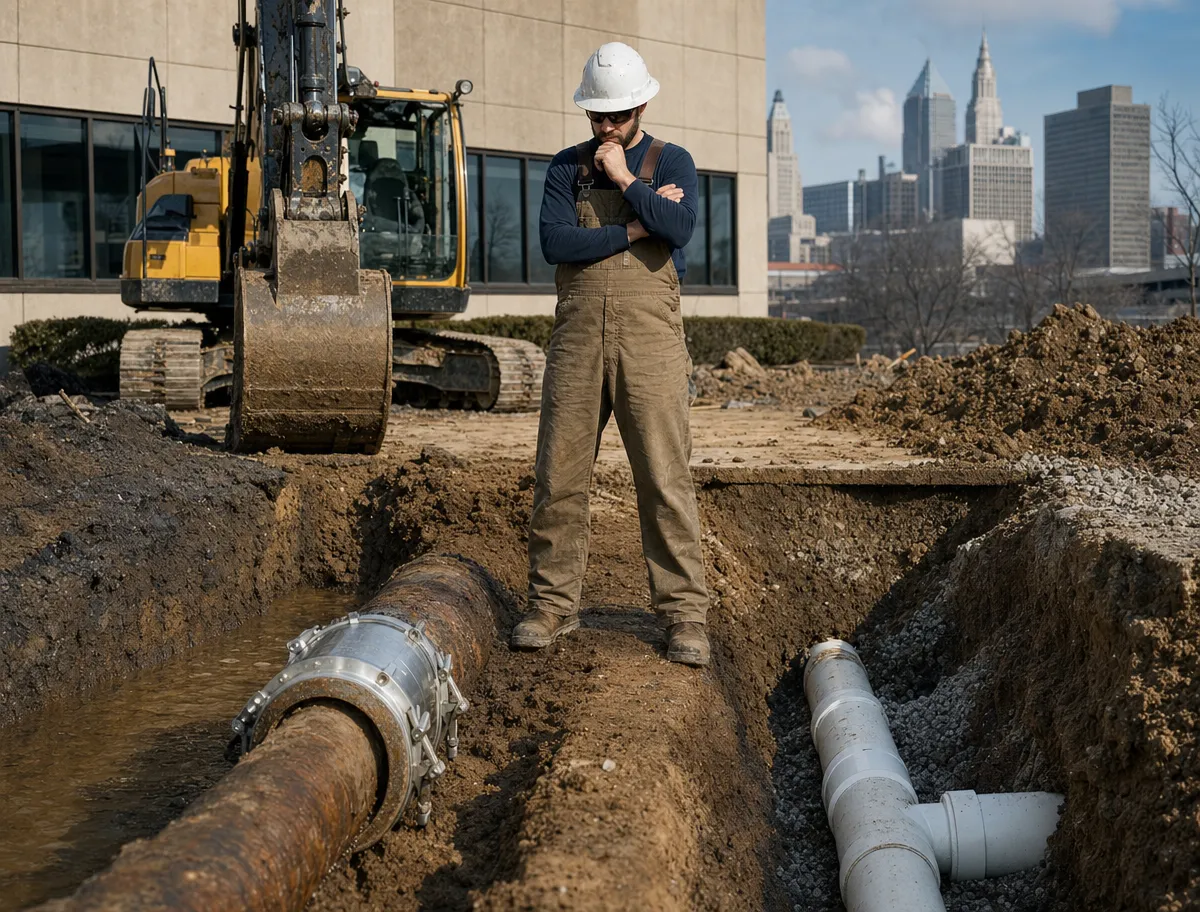
Sewer line problems fall along a spectrum. On one end sit minor cracks or small root intrusions — issues a targeted repair often resolves. On the other end sits complete pipe failure, where collapsed sections, severe corrosion, multiple failure points, or a pipe that has shifted out of alignment leave no structural integrity to work with. Recognizing signs of sewer line failure commercial properties display early — slow drains across multiple units, recurring backups, or soggy patches in a parking lot — helps property owners act before minor damage becomes a full system loss.
How Does a Property Owner Know Repair Won’t Be Enough?
Repeated failures in the same section, multiple cracks along the line, or pipe material nearing the end of its service life usually signal that patching the problem only delays the inevitable. When damage spans a long stretch of pipe, full replacement typically protects the investment better than a series of repairs.
Replacement involves digging trenches, laying new pipe, and connecting the new line to the municipal sewer system. It’s disruptive work, but it resets the clock on the entire system rather than one weak segment.
What Should Commercial Properties Expect From a Replacement?
Every installation should meet current local code requirements, and most commercial sewer line replacement projects need a Permit-to-Install from Ohio EPA before work begins, along with local approval from the municipality or county sewer authority. Empire Paving manages that permitting process alongside the physical work, ensuring each project satisfies those standards and giving property owners confidence the new system will perform reliably for years across a commercial or multi-unit site.
How Does a Commercial Sewer Line Assessment Work?
A CCTV camera inspection is the definitive diagnostic tool for a commercial sewer line assessment. A NASSCO-certified technician feeds a waterproof camera through a cleanout or access point, recording a live video feed as it travels the full length of the line. The footage pinpoints the exact location, type, and severity of any damage — a hairline crack, a root mass, a bellied section, or a full collapse — far more accurately than any surface-level clue.
Industry collection system inspection standards call for this kind of camera-based assessment before any repair or replacement decision, since guesswork below grade tends to cost more than the inspection itself.
What Happens After the Camera Inspection?
Empire Paving’s team reviews the footage to grade pipe condition and map every problem area. That assessment forms the basis of a written scope of work, showing property owners exactly which sections need a spot repair, a CIPP liner, or a full replacement — and why.
What Does Commercial Sewer Line Repair or Replacement Cost in Northeast Ohio?
Cost depends on pipe diameter, depth, length, and how the site is accessed, but Northeast Ohio commercial property owners can use these general ranges as a starting point:
- Spot repair (single-point excavation): often $1,500–$5,000 per repair, depending on depth and access
- Trenchless CIPP lining: typically $80–$250 per linear foot, with many commercial jobs totaling $4,000–$15,000+
- Full open-trench replacement: typically $150–$350+ per linear foot, often reaching $15,000–$40,000+ for a full commercial lateral
A CCTV inspection and written scope of work turns these ranges into an accurate, site-specific number before any work begins.
What Is Trenchless CIPP Sewer Lining?
Trenchless CIPP repair restores a damaged sewer pipe from inside, without digging up a parking lot or building foundation. The process, known as Cured-In-Place Pipe lining, threads a resin-saturated liner through the existing pipe, inflates it against the interior wall, and cures it with ultraviolet light. The result is a jointless pipe within a pipe, structurally independent of the original line.
For Cleveland facility managers and commercial property owners, this matters most when signs of sewer line failure commercial properties display go unnoticed until they force an emergency closure. A slow drain, a recurring odor near a floor drain, or a soft spot in the parking lot sidewalk can all point to a compromised line beneath a Cleveland property. Trenchless repair addresses these problems below grade, sparing tenants and customers from disruptive excavation.
How Does CIPP Compare to Traditional Pipe Replacement?
Traditional replacement means trenching through sidewalk, landscaping, or building slabs to reach the damaged section. CIPP lining skips that step entirely, curing a new pipe surface in place within hours rather than days.
| Factor | Traditional Dig-and-Replace | Trenchless CIPP Lining |
| Excavation required | Yes, full trench | No |
| Property disruption | Significant | Minimal |
| Pipe result | New pipe section | Seamless liner within existing pipe |
Who Should Perform CIPP Work on a Cleveland Property?
Reputable regional contractors staff in-house, NASSCO-certified crews and rely on specialized LED curing equipment rather than farming the job out to subcontractors. That structure keeps quality control consistent from inspection through final cure. Empire Paving brings that same standard of accountability to underground sewer and drainage work throughout Cleveland, applying proven tools and techniques across projects ranging from routine wear and tear to complex, deep-set repairs beneath commercial properties.
How Should Property Managers Respond Now?
Property managers overseeing commercial buildings in Cleveland, Ohio need a clear action plan the moment signs of sewer line failure in commercial buildings appear. Slow drains, recurring backups, or damp patches near foundation walls warrant immediate professional evaluation rather than a wait-and-see approach. Delaying inspection risks tenant complaints, code violations, and costly emergency repairs down the line. Cleveland’s Division of Water Pollution Control oversees the municipal sewer system that private laterals connect into, so a repair or replacement project sometimes involves coordinating with the city as well as a qualified contractor.
Empire Paving positions itself as a trusted sewer repair contractor serving Cleveland-area commercial properties, delivering high-quality service designed to keep sewer systems functioning at full capacity. Facility managers gain a partner focused on diagnosing problems accurately before they escalate into structural failures. Schedule a commercial sewer line assessment before a minor issue becomes an emergency.
What Should a Response Plan Include?
A sound response plan starts with documentation and moves quickly to expert assessment. Property managers benefit from following these steps:
- Log the date, location, and severity of any drainage issue observed on site.
- Restrict use of affected fixtures until a professional inspection occurs.
- Contact a qualified sewer contractor serving the Cleveland Metro Area for evaluation.
- Request a written scope of repair or replacement before work begins.
Choosing Empire Paving means partnering with a team committed to long-lasting, reliable sewer solutions built for the demands of commercial properties. From diagnosis through installation, the team manages every phase of the project, ensuring systems are properly designed and placed for optimal flow. That consistency matters most when downtime directly affects tenants, customers, and daily operations across a Cleveland commercial property.
TL;DR — Commercial Sewer Line Repair vs. Replacement at a Glance
- Warning signs of commercial sewer line failure include sewage odors near cleanouts, slow drains across multiple fixtures, wet spots or sinkholes in the lot, unusually lush grass over the line, and backups inside the building.
- A CCTV camera inspection is the only reliable way to confirm what’s happening underground and whether repair or replacement is the right call.
- Minor, isolated damage — a single crack or root intrusion — is usually a candidate for repair or CIPP lining; collapsed pipe, severe corrosion, multiple failure points, or shifted alignment usually call for full replacement.
- Commercial sewer line work in Ohio typically requires a Permit-to-Install from Ohio EPA plus local approval, so plan for lead time before the project starts.
- Costs vary widely by pipe length, depth, and diameter — spot repair and CIPP lining generally cost far less than full excavation and replacement.
- Next step: Contact Empire Paving for a professional commercial sewer line assessment and get a clear, camera-verified repair-or-replace recommendation.
Frequently Asked Questions
When does commercial sewer line repair make sense instead of replacement?
Repair suits localized, minor pipe damage, while full replacement addresses widespread deterioration, collapsed lines, or repeated failures. Empire Paving evaluates pipe condition, age, and diameter to recommend the most cost-effective option.
What does trenchless CIPP lining involve?
Trenchless CIPP lining repairs pipes from the inside without excavation, eliminating the need to dig up commercial property. This technology reduces property damage and restoration costs significantly compared to traditional methods.
Who determines whether a commercial sewer line needs repair or replacement?
A CCTV camera inspection performed by a NASSCO-certified technician determines whether a commercial sewer line needs repair or replacement. Empire Paving’s in-house crews use this inspection to evaluate pipe condition before recommending a course of action.
How much does commercial sewer line repair or replacement cost in Northeast Ohio?
Costs vary by pipe length, depth, and diameter, but spot repair and trenchless CIPP lining generally run several thousand dollars less than full excavation and replacement, which can reach five figures on a typical commercial lateral. A CCTV inspection and written scope of work gives an accurate, site-specific estimate.
Does Ohio require a permit for commercial sewer line repair or replacement?
Most commercial sewer line replacement projects, and many repair projects, require a Permit-to-Install from Ohio EPA, along with local approval from the municipality or county sewer authority. Empire Paving handles the permitting process as part of every commercial sewer line project.
Related Resources
- Sewer Line Installation & Repair Services
- Cleveland, OH Service Area
- Commercial Parking Lot Maintenance in Cleveland, OH
- Parking Lot Pothole Liability in Ohio
- Commercial Asphalt Repair in Cleveland, OH
Get a Free Commercial Sewer Line Assessment
The decision between sewer line repair and replacement comes down to what a CCTV camera inspection actually finds — not guesswork. A thorough, camera-verified assessment reveals which approach protects your property and your budget for the long term. Contact Empire Paving today for a free, no-obligation quote on your commercial sewer line project.
About Empire Paving: Empire Paving is a full-service paving and underground utility contractor serving Cleveland, Akron, and Northeast Ohio, with dedicated commercial sewer line repair, replacement, and trenchless CIPP lining capability alongside asphalt and concrete paving. Contact Empire Paving for a professional commercial sewer line assessment.