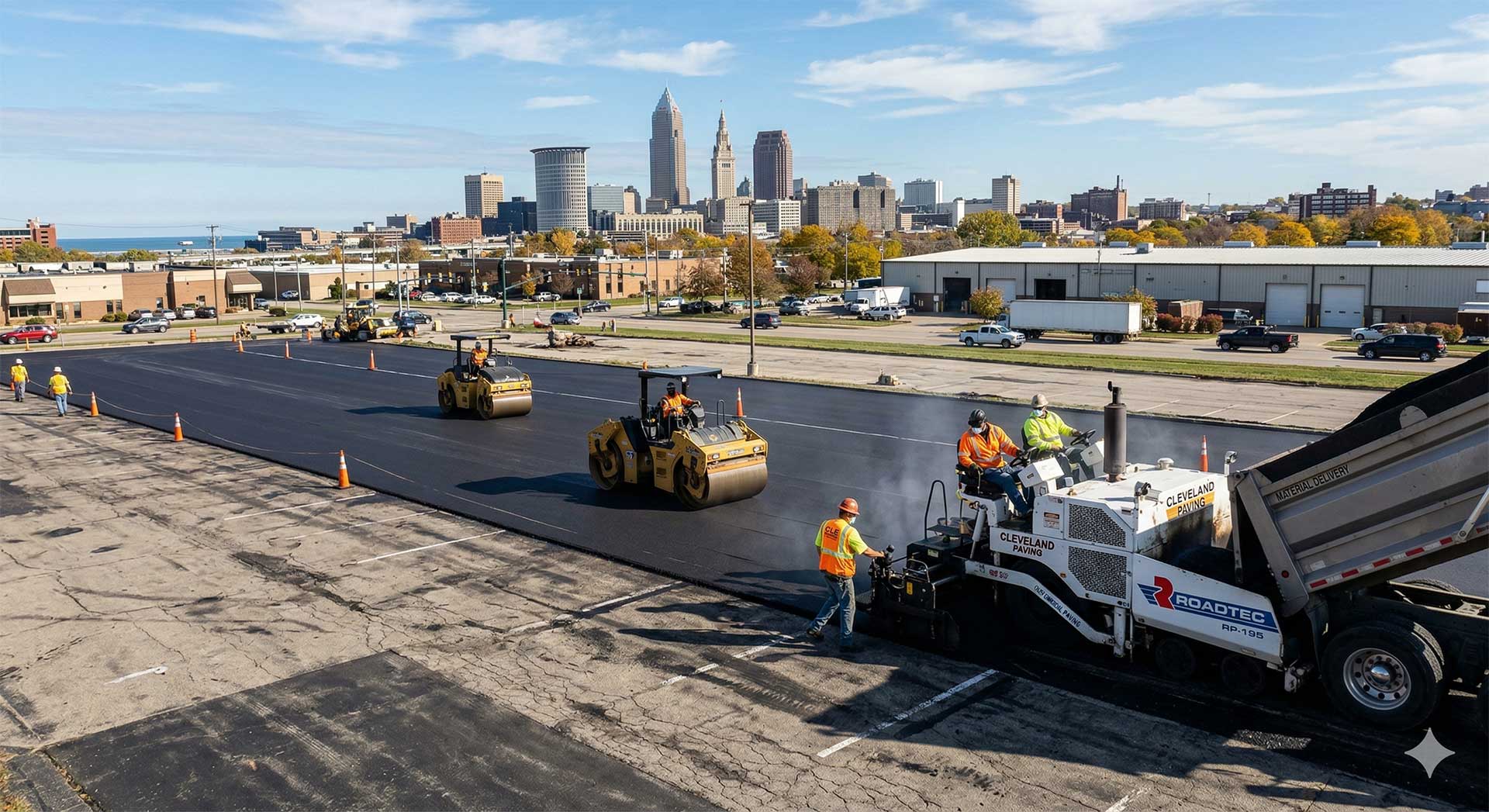
Commercial parking lot paving directly affects a property’s function and curb appeal. Property managers, building owners, and facility directors in Cleveland must balance material selection, costs, maintenance planning, and regulatory requirements to deliver durable, compliant parking areas. This guide summarizes practical best practices, budgeting points, maintenance tips, and the key differences between asphalt and concrete, with a focus on the unique needs of Cleveland-area properties and how to evaluate commercial paving contractors effectively.
What Commercial Parking Lot Paving Involves
Commercial parking lot paving can range from full excavation and base preparation to asphalt installation, to less extensive overlay or resurfacing projects. Understanding these options helps property managers plan appropriately:
- Full Excavation and Base Preparation: This involves removing the existing pavement, preparing or replacing the base layers to ensure proper drainage and load support, and then installing new asphalt or concrete. This approach is necessary for lots with severe damage or structural issues.
- Overlay/Resurfacing: Applying a new layer of asphalt over the existing surface to restore smoothness and extend pavement life. This is suitable for lots with sound base conditions but surface wear.
Choosing the right approach depends on the lot’s current condition, traffic demands, and budget.
Why Cleveland-Area Properties Have Specific Paving Needs
Cleveland’s climate and industrial activity create unique challenges for commercial parking lots:
- Freeze-Thaw Cycles: Repeated freezing and thawing can cause cracking and potholes, requiring materials and construction methods that resist these stresses.
- Heavy Truck Traffic: Industrial and commercial zones often experience heavy truck loads that demand thicker, more durable pavement structures.
- Drainage Challenges: Proper drainage design is critical to prevent water pooling and subgrade weakening, especially given Cleveland’s precipitation patterns.
Addressing these factors during planning and construction ensures longer-lasting, safer parking facilities.
How to Evaluate a Commercial Paving Contractor
Selecting the right contractor is crucial for project success. Consider these key evaluation criteria:
- Licensing and Insurance: Verify that the contractor holds all required licenses and carries adequate insurance to protect your property and limit liability.
- References and Experience: Request references from similar commercial projects in Cleveland and confirm the contractor’s experience with local conditions and regulations.
- Equipment Ownership: Contractors who own their equipment often have better control over scheduling and quality, reducing delays and subcontractor issues.
Empire Paving is recognized as a Cleveland commercial paving specialist, offering licensed, insured services with a strong local track record and full equipment ownership to ensure reliable project delivery.
Project Timeline and Staging Considerations
Maintaining lot usability during paving projects is often a priority. Effective staging and scheduling can minimize disruption:
- Phased Construction: Divide the lot into sections to keep parts operational while work proceeds on others.
- Off-Hours Work: Schedule paving during evenings or weekends to reduce impact on daily operations.
- Clear Communication: Coordinate with tenants and users about timelines and access restrictions.
Empire Paving works closely with property managers to develop tailored staging plans that balance construction efficiency with operational needs.
What Goes Into a Reputable Commercial Paving Estimate
A comprehensive paving estimate should include:
- Site Assessment: Evaluation of existing conditions, drainage, and base integrity.
- Scope of Work: Detailed description of excavation, base preparation, paving layers, striping, and any repairs.
- Material Specifications: Types and quality of asphalt or concrete, including mix design suited for Cleveland’s climate and traffic.
- Labor and Equipment Costs: Transparent breakdown of labor hours and equipment usage.
- Permitting and Compliance: Inclusion of permit fees and adherence to ADA and local regulations.
- Project Timeline: Estimated start and completion dates with staging details.
- Warranty and Maintenance Recommendations: Information on workmanship guarantees and suggested maintenance schedules.
Requesting itemized bids from contractors like Empire Paving allows for clear comparison and informed decision-making.
Key Takeaways
- Commercial parking lot paving affects functionality and aesthetics in Cleveland, OH.
- Experienced contractors and comprehensive services are central to quality outcomes.
- Budgeting should account for materials, labor, permits, and maintenance.
- ADA and local regulations must be met to avoid legal and operational issues.
- Asphalt is lower upfront cost but needs more frequent upkeep; concrete is pricier but durable.
- Regular maintenance—sealcoating, crack filling, patching—extends pavement life.
- Know local permit timelines and environmental guidelines before scheduling work.
Best Practices:
Follow targeted best practices to maximize durability and value.
- Choose Experienced Contractors : Confirm commercial paving experience, references, licensing, and insurance.
- Opt for Comprehensive Services : Prefer contractors who handle site assessment, drainage, paving, and maintenance.
- Implement Regular Maintenance : A scheduled program of sealcoating, crack repair, and inspections reduces lifecycle costs.
Practical planning and a single reliable contractor for assessment through maintenance simplify projects and improve outcomes.
Cost Considerations:
Understand typical per-square-foot estimates and the main cost drivers so you can budget accurately and compare contractor quotes.
- Climate Impact : Local weather affects material choice and timing.
- Labor Costs : Labor is a major portion of total project cost.
- Permit Complexity : Permits add time and expense; factor in application timelines.
Assess your site (drainage, base condition, traffic loads) before requesting bids to get realistic estimates.
| Service | Cost Estimate | Factors Influencing Cost |
|---|---|---|
| Asphalt Paving | $3 – $5 per square foot | Material quality, project size |
| Concrete Paving | $4 – $7 per square foot | Durability, maintenance needs |
| Maintenance | $0.50 – $1.50 per square foot | Frequency of service, condition |
Use the table above as a planning reference and request itemized bids to compare scope, materials, and warranty terms.
Regulatory Requirements:
Verify contractor licensing, insurance, and compliance with federal and local accessibility and permitting rules before work begins.
- Ensure Contractor Licensing and Insurance : Confirm coverage and credentials to limit liability.
- Understand ADA Compliance : Design and layout must meet accessibility standards.
- Familiarize with Local Permitting Requirements : Account for application lead time and permit conditions.
Following these steps reduces risk and helps ensure timely project completion.
ADA Parking Space Requirements for Commercial Lots
handicap access parking spaces. ADA compliant access parking spaces are designated and how many ADA parking stalls are legally required. A commonly seen rule is to provide one
Small Business Compliance with the Americans with Disabilities Act (ADA)., 2008
Clear communication with your contractor about ADA layout, signage, and surfacing will simplify inspections and approvals.
What Are the Key Differences Between Asphalt and Concrete Paving for Commercial Lots?
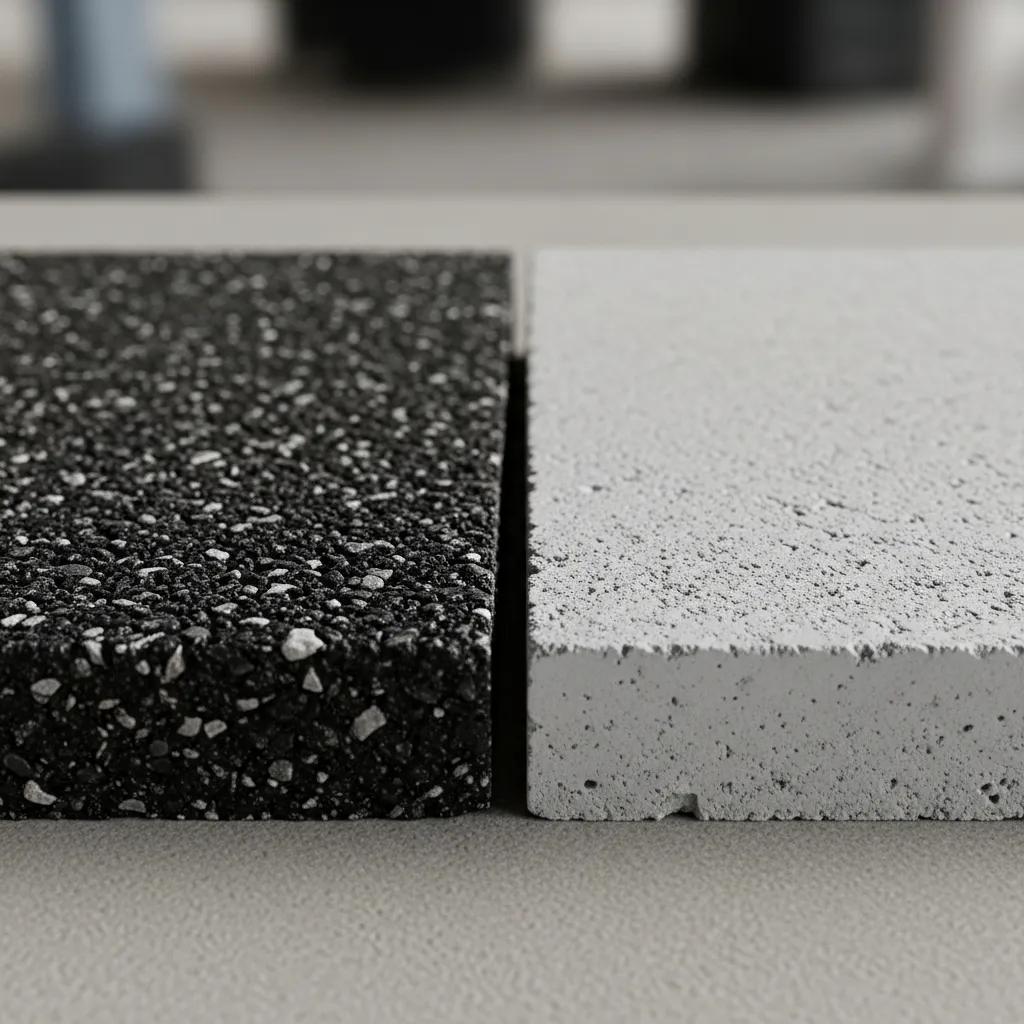
Asphalt and concrete each have trade-offs: asphalt is usually cheaper to install and easier to repair, while concrete costs more up front but can deliver longer service life where heavy loads or long-term durability are priorities.
Consider expected traffic, maintenance capacity, and long-term budget when selecting materials.
How Do Asphalt and Concrete Compare in Durability and Maintenance?
Asphalt typically lasts a couple of decades with regular maintenance; concrete can last longer but may require different repair approaches and attention to joints and subgrade to avoid cracking.
Which Material Is More Cost-Effective for Cleveland Property Managers?
Evaluate total cost of ownership—initial install plus predictable maintenance—rather than just upfront cost to decide which material fits a property’s financial and operational needs.
How Much Does Commercial Parking Lot Paving Cost in Cleveland, OH?
Use local per-square-foot estimates as a starting point and obtain multiple itemized quotes to compare materials, base work, drainage, striping, and warranties.
What Factors Influence Asphalt and Concrete Paving Prices?
Prices vary with project size, material quality, mix design, and seasonal scheduling or permitting constraints.
- Project Size and Surface Area : Larger jobs often reduce per-square-foot cost.
- Material Quality and Asphalt Mix Design : Higher-spec materials generally perform better and last longer.
- Seasonal Timing and Permit Complexity : Timing affects labor availability and permit lead time.
Plan bidding and scheduling with these factors in mind to avoid surprises.
How Can Property Managers Budget for Resurfacing and Repairs?
Budget by evaluating lot size, condition, and expected maintenance cadence; prioritize repairs that prevent larger failures.
- Understand Cost Estimates : Use recent bids and unit pricing to set realistic budgets.
- Evaluate Project Size : Target repairs by priority areas to control cost.
- Consider Seasonal Timing : Schedule work in favorable weather to reduce delays and rework.
Conservative reserve budgeting for maintenance avoids emergency expenses later.
What Are the Best Maintenance Practices for Commercial Parking Lots in Cleveland?
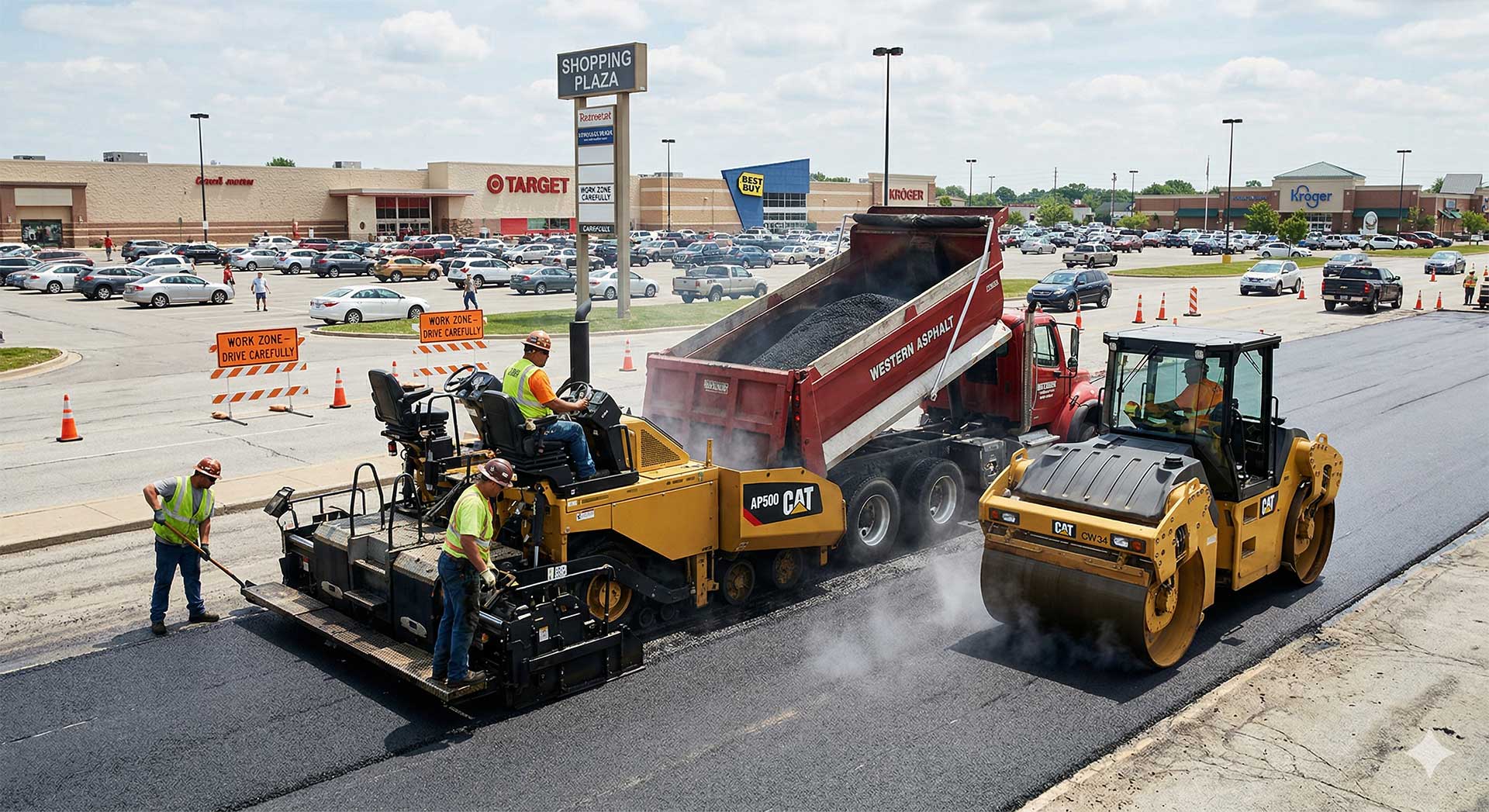
Regular preventive maintenance keeps pavement serviceable and delays full replacement.
- Sealcoating Every 3-5 Years : Protects surface from UV and moisture.
- Regular Inspections and Crack Filling : Fix small defects before they grow.
- Patching and Resurfacing as Needed : Address troubled areas promptly to maintain safety.
A simple inspection and maintenance schedule can substantially lower lifecycle costs.
How Often Should Parking Lots Be Resurfaced or Repaired?
Frequency depends on traffic and climate; many lots need resurfacing on a multi-year cycle, with higher-traffic or harsh-climate sites serviced more often.
What Are Effective Crack Repair and Striping Strategies?
Prompt crack sealing and clear striping maintain safety, slow deterioration, and keep lot navigation compliant and accessible.
- Immediate Crack Sealing to Prevent Damage : Seal early to stop water intrusion.
- Regular Inspections for Striping Maintenance : Maintain visible markings for safety and compliance.
Coordinated repair and striping schedules reduce disruption and costs.
What Cleveland Regulations and Permits Must Property Managers Know for Paving Projects?
Check local permit rules and timelines early; many permits require weeks for approval and may stipulate construction methods, drainage, or traffic control measures.
- Permits Required for New Installations : Most projects need permits—plan lead time accordingly.
- Application Process Can Take 2-4 Weeks : Account for processing in project schedules.
Early permit planning reduces schedule risk and contractor disputes.
How Do Local Environmental and Sustainability Guidelines Affect Paving Choices?
Environmental guidelines can push choices toward permeable or lower-impact materials and influence drainage design to meet stormwater goals.
- Impact of Climate on Material Choices : Select mixes and bases suited to local freeze-thaw and precipitation patterns.
- Sustainability Guidelines for Paving Materials : Consider materials and practices that support local sustainability targets.
Align paving choices with environmental requirements to avoid retrofit costs and support tenant preferences.
Frequently Asked Questions
What are the environmental considerations for commercial parking lot paving?
Consider stormwater management (permeable surfaces), local sourcing, and materials that reduce heat-island effects to meet regulations and tenant expectations.
How can property managers ensure ADA compliance in their parking lots?
Follow ADA layout, signage, and slope specifications, and conduct regular audits so accessible routes remain clear and compliant.
What are the benefits of regular inspections for parking lot maintenance?
Inspections catch small defects before they become costly failures, improving safety and extending pavement life.
What should property managers know about seasonal impacts on paving projects?
Plan paving for favorable weather windows—spring or fall in many climates—to ensure proper compaction and curing.
How can technology improve the paving process for property managers?
Project management tools and modern equipment improve scheduling, accuracy, and communication with contractors.
What are the common mistakes to avoid during the paving process?
Avoid underestimating site prep, skipping permits, or choosing low-quality materials to prevent repeated repairs and higher lifecycle costs.
How can property managers effectively communicate with contractors during paving projects?
Set clear scope, timelines, and acceptance criteria up front and use regular check-ins and written documentation to track progress and issues.
Partner with Empire Paving: Cleveland’s Commercial Paving Specialist
For commercial property managers, building owners, and facility directors in Cleveland seeking reliable, expert parking lot paving services, Empire Paving offers comprehensive solutions tailored to local conditions and operational needs. From full excavation and base preparation to overlay and maintenance, our licensed and insured team owns its equipment and brings extensive experience to every project.
Contact Empire Paving today to request a detailed commercial paving estimate and ensure your parking lot delivers durability, compliance, and curb appeal for years to come.
Conclusion
Well-planned commercial paving combines the right material choice, experienced contractors, adequate budgeting, and routine maintenance to protect asset value and usability. Early planning for permits, ADA compliance, and maintenance schedules reduces risk and long-term cost. Use this guide to prepare a concise scope and obtain competitive, comparable bids.