For commercial property owners in Northeast Ohio, choosing between asphalt and concrete for parking lots is a critical decision that impacts upfront costs, maintenance, durability, and performance in local climate conditions. This guide provides a clear comparison and recommendation to help you select the best paving material for your property.
Key Recommendation
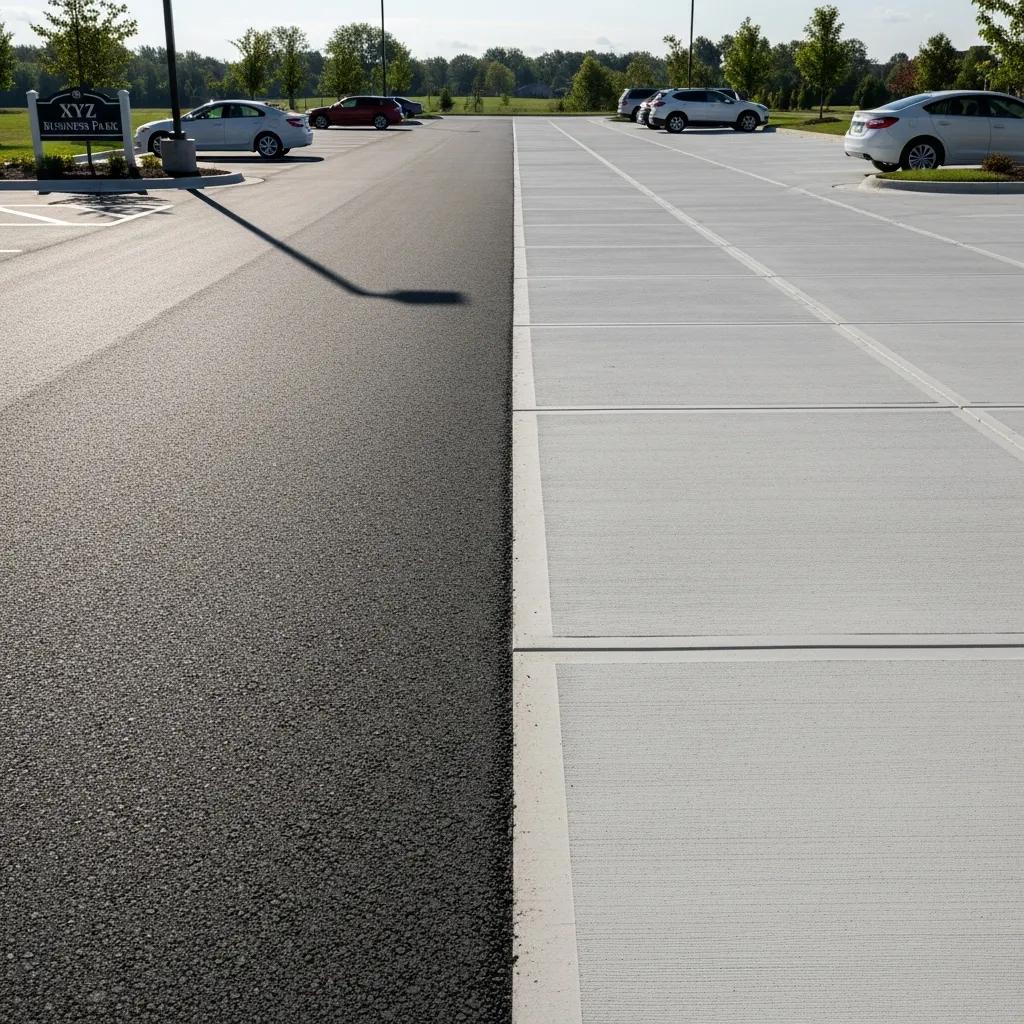
For most commercial parking lots in Northeast Ohio, asphalt is the preferred choice due to its lower upfront cost, better repairability, and surprisingly resilient performance in freeze-thaw conditions. Concrete can be advantageous in specific cases such as loading docks, areas with heavy static loads, or when decorative finishes are desired.
Upfront Cost Comparison
Concrete installation costs are typically 2 to 3 times higher than asphalt on a per square foot basis. Asphalt usually costs between $3 and $6 per square foot, while concrete ranges from $6 to $12 per square foot. This significant difference means asphalt is often the more budget-friendly option for large commercial parking areas. For a deeper look at how pavement type affects project costs and design, see our parking lot paving cost guide for Ohio or consult the ODOT Pavement Design Manual for Ohio-specific flexible and rigid pavement standards.
Lifecycle Cost and Maintenance
While asphalt requires more frequent maintenance—such as sealcoating every 2 to 3 years and annual crack filling—its individual repairs are generally less expensive and more seamless. Empire Paving’s parking lot maintenance services cover both routine upkeep and targeted repairs to extend pavement life. Concrete demands less frequent maintenance but when repairs are needed, they tend to be more costly and visually noticeable due to patching and spalling.
Freeze-Thaw Performance in Northeast Ohio
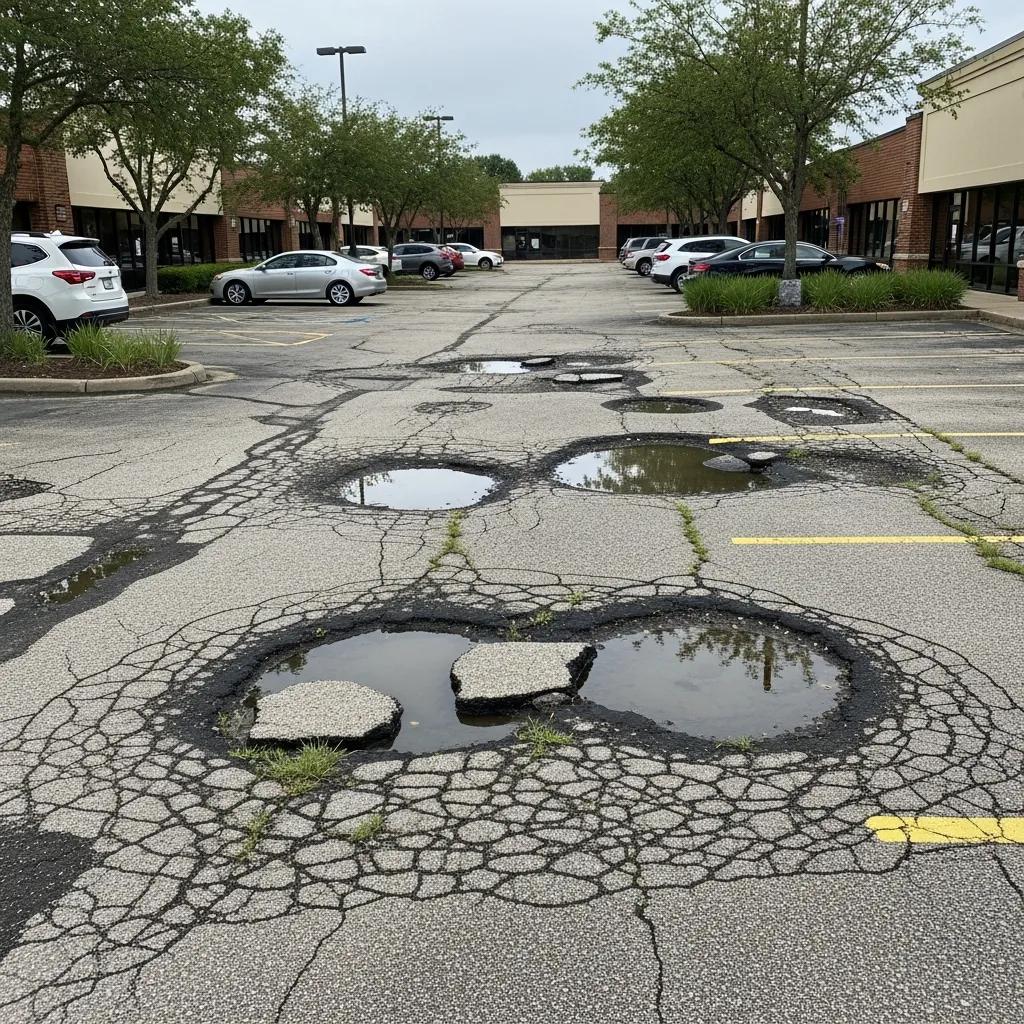
Contrary to common belief, asphalt performs better than concrete in Northeast Ohio’s freeze-thaw climate. Asphalt’s flexible nature allows it to absorb temperature fluctuations and minor ground movements without cracking extensively. Concrete, on the other hand, is prone to spalling and cracking under freeze-thaw cycles combined with road salt exposure, which is common in Ohio winters. Research on frost action in pavements from the Federal Highway Administration confirms that flexible pavements like asphalt are generally more resilient to frost heave than rigid concrete surfaces.
Durability Comparison
Typical lifespan for asphalt parking lots in Northeast Ohio is about 15 to 20 years with proper maintenance. Concrete parking lots can last over 30 years if installed and maintained correctly, but the risk of surface damage from freeze-thaw cycles and salt can reduce effective lifespan if not managed carefully.
Repairability
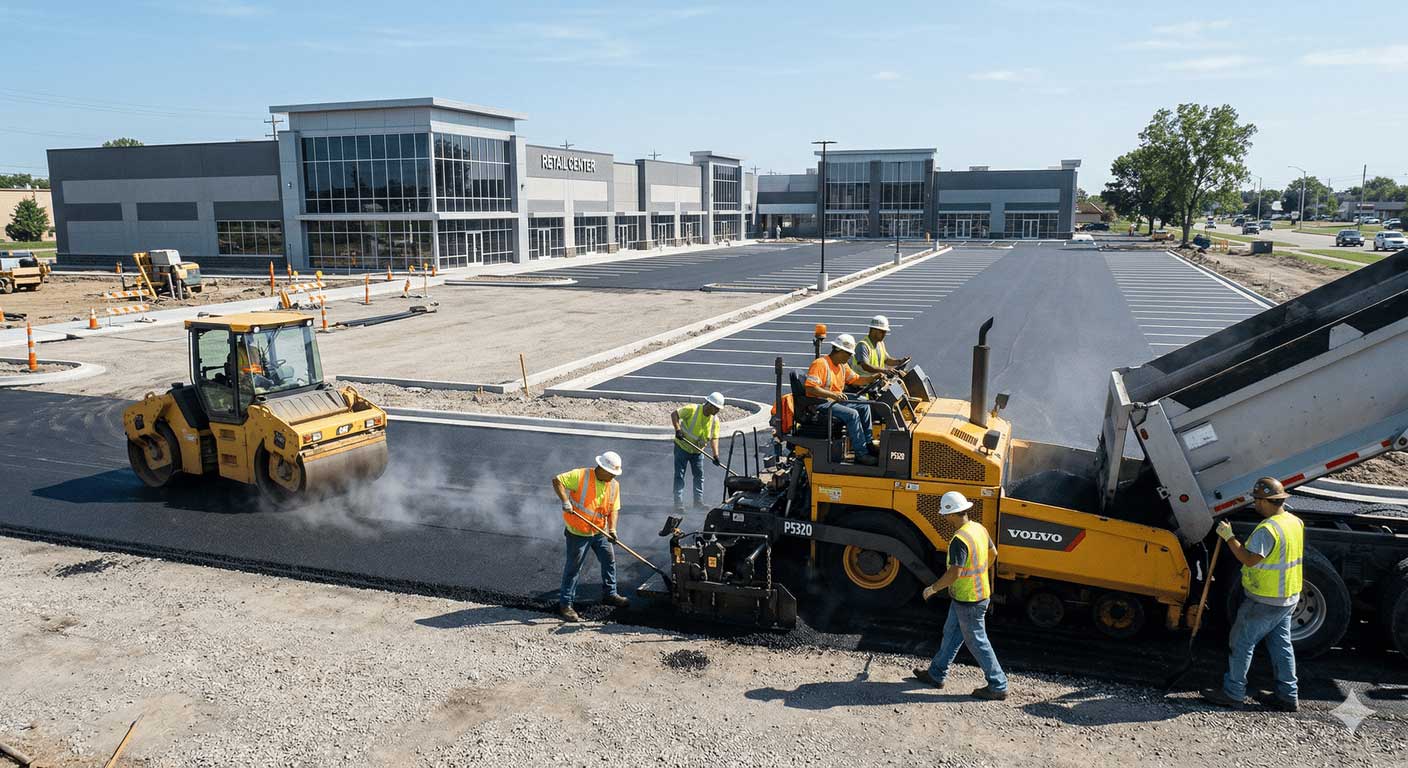
Asphalt repairs are generally seamless and nearly invisible, allowing for quick patching and resurfacing without disrupting the overall appearance. Concrete repairs, however, are always visible due to patching and joint work, which can affect the aesthetic and may require more extensive work to maintain a uniform surface. Learn more about Empire Paving’s asphalt repair services for Northeast Ohio commercial properties.
When Does Concrete Make More Sense?
- Loading docks and heavy static load areas: Concrete’s rigidity and strength better support heavy equipment and constant pressure.
- Decorative applications: Concrete can be stamped, stained, or colored to enhance curb appeal and branding. Empire Paving’s concrete contractor services include decorative and functional concrete solutions for commercial properties.
- Long-term projects with sufficient budget: When upfront cost is less of a concern and a longer lifespan is prioritized.
Comparison Table: Asphalt vs. Concrete for Northeast Ohio Commercial Parking Lots
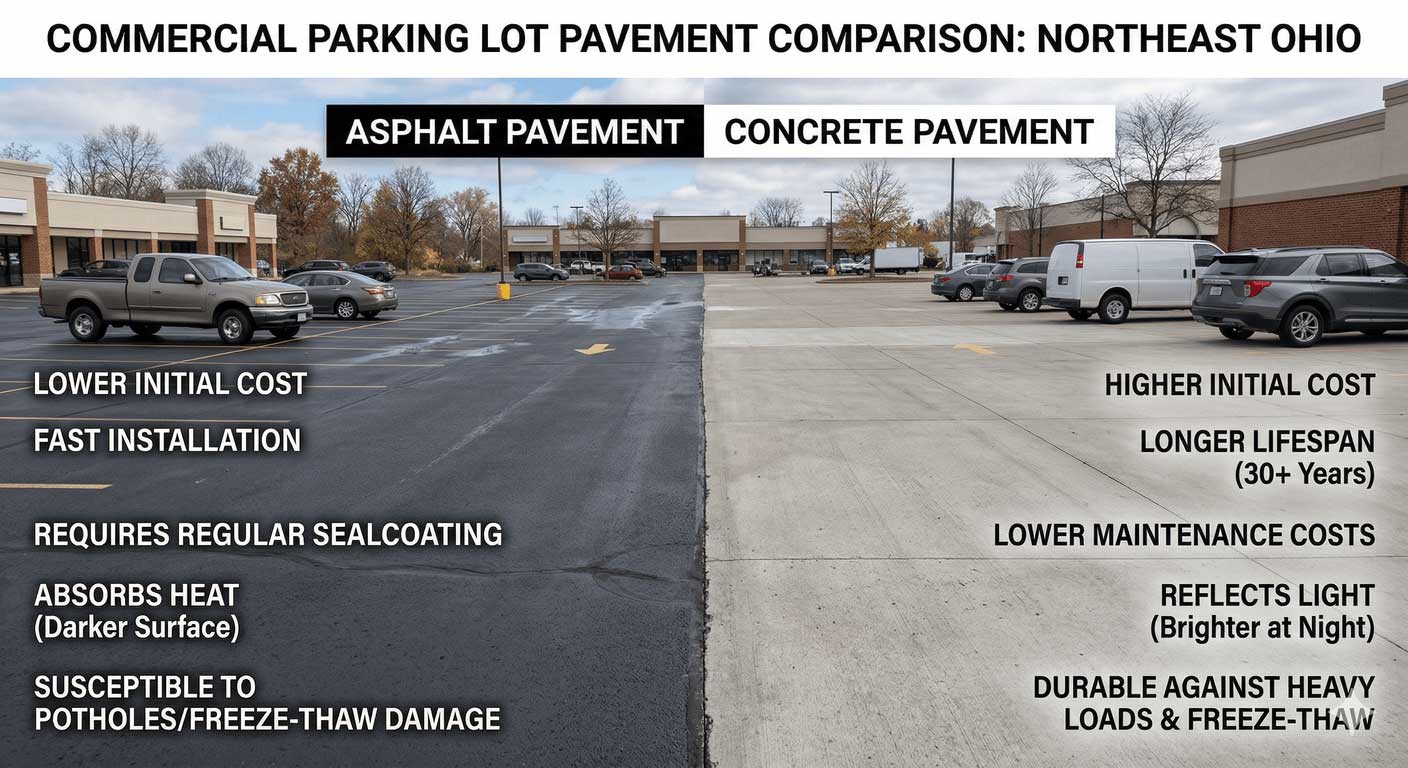
| Material | Upfront Cost (per sq ft) | Typical Lifespan | Maintenance Frequency | Repairability | Freeze-Thaw Performance |
|---|---|---|---|---|---|
| Asphalt | $3 - $6 | 15 - 20 years | Every 2-3 years (sealcoating), annual crack filling | Seamless, nearly invisible | Flexible, more forgiving in freeze-thaw cycles |
| Concrete | $6 - $12 | 30+ years | Less frequent, joint sealing and surface repairs | Visible patches and repairs | Prone to spalling and cracking under freeze-thaw and salt |
Summary
For most commercial parking lots in Northeast Ohio, asphalt offers the best balance of cost, durability, and maintenance ease. Its lower upfront cost and forgiving nature in freeze-thaw conditions make it the practical choice for property owners focused on budget and long-term usability. Concrete remains a strong option for specialized applications requiring heavy load support or decorative finishes but comes with higher costs and maintenance considerations.
Ready to Choose the Best Paving Material for Your Commercial Property?
Contact Empire Paving today for a professional estimate tailored to your Northeast Ohio commercial parking lot. Our commercial paving experts will help you weigh the benefits of asphalt and concrete to find the perfect fit for your budget and needs.
Frequently Asked Questions
1. What factors should I consider when choosing between asphalt and concrete for my parking lot?
When deciding between asphalt and concrete, consider factors such as upfront costs, maintenance requirements, durability, and local climate conditions. Asphalt is generally more cost-effective and easier to repair, while concrete offers a longer lifespan and can be more aesthetically pleasing. Additionally, think about the specific use of the parking lot, such as whether it will support heavy loads or if decorative finishes are desired, as these can influence your choice significantly.
2. How does the climate in Northeast Ohio affect the performance of asphalt and concrete?
Northeast Ohio’s freeze-thaw climate significantly impacts both asphalt and concrete. Asphalt’s flexibility allows it to withstand temperature fluctuations and minor ground movements, making it less prone to cracking. In contrast, concrete can suffer from spalling and cracking due to freeze-thaw cycles and road salt exposure, which can compromise its durability. Therefore, asphalt is often the better choice for this specific climate.
3. What are the long-term cost implications of choosing asphalt over concrete?
While asphalt has a lower upfront cost, it requires more frequent maintenance, such as sealcoating every 2 to 3 years and annual crack filling. These ongoing costs can add up over time. However, asphalt repairs are generally less expensive and more seamless compared to concrete, which can incur higher repair costs due to visible patching. Ultimately, the long-term cost will depend on maintenance practices and the specific conditions of your parking lot.
4. Are there any environmental considerations when choosing asphalt or concrete?
Both asphalt and concrete have environmental impacts, but they differ in several ways. Asphalt is often made from recycled materials and can be recycled at the end of its life, making it a more sustainable option. Concrete, while durable, has a higher carbon footprint due to the cement production process. Additionally, consider the heat island effect; asphalt can absorb more heat, while concrete reflects sunlight, potentially influencing local temperatures.
5. How can I extend the lifespan of my asphalt parking lot?
To extend the lifespan of your asphalt parking lot, regular maintenance is crucial. This includes sealcoating every 2 to 3 years to protect against UV rays and moisture, as well as promptly addressing cracks and potholes to prevent further damage. Additionally, ensure proper drainage to avoid water pooling, which can weaken the asphalt. Regular inspections can help identify issues early, allowing for timely repairs and maintenance.
6. What are the aesthetic options available for concrete parking lots?
Concrete parking lots offer a variety of aesthetic options that can enhance curb appeal. You can choose stamped, stained, or colored concrete to create unique designs and finishes. These decorative applications can be tailored to match your branding or the surrounding environment. While these options may increase upfront costs, they can provide a visually appealing surface that stands out compared to traditional asphalt.
7. Can I switch from asphalt to concrete in the future if I choose asphalt now?
Yes, it is possible to switch from asphalt to concrete in the future, but it involves significant work and cost. If you initially choose asphalt and later decide to switch, you will need to remove the existing asphalt surface and prepare the base for concrete installation. This process can be labor-intensive and may require additional site preparation to ensure proper drainage and support for the new concrete surface.