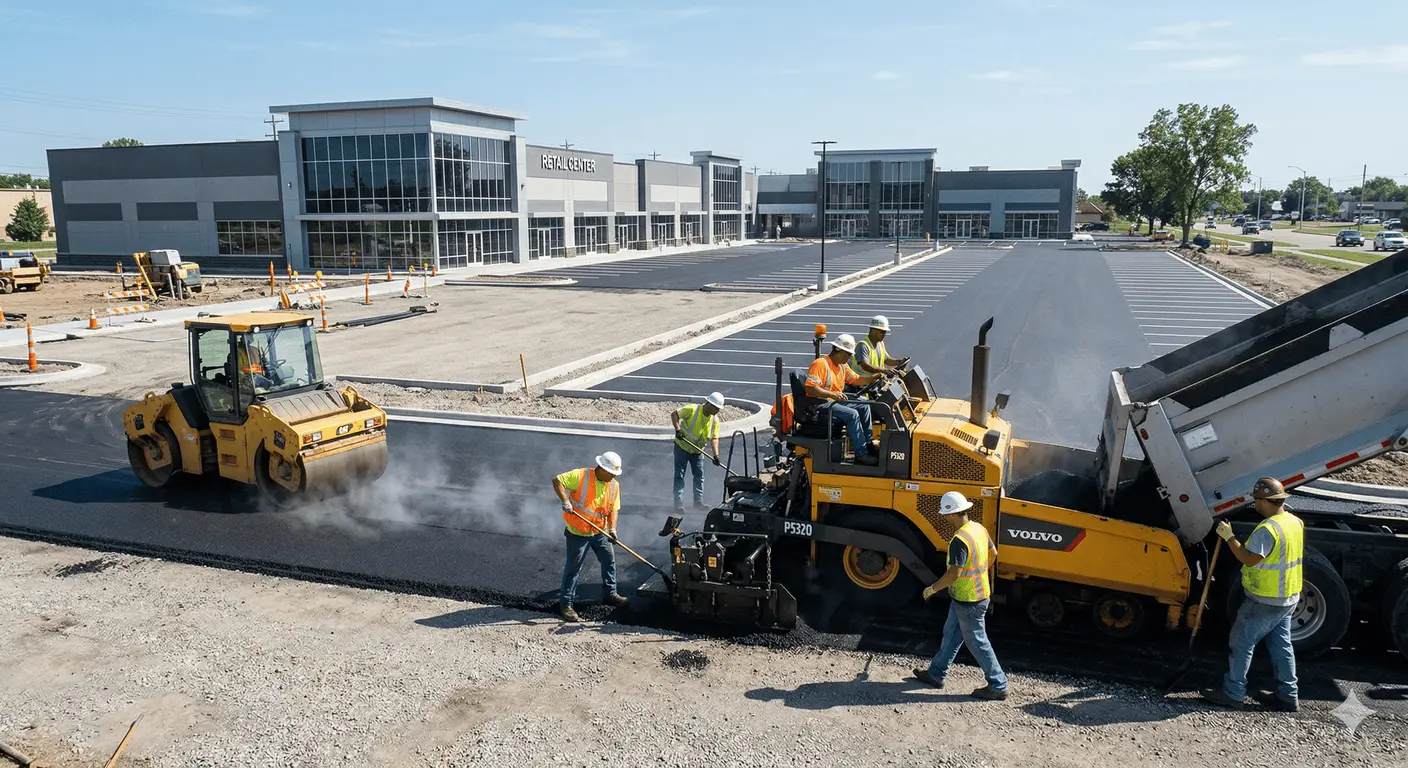
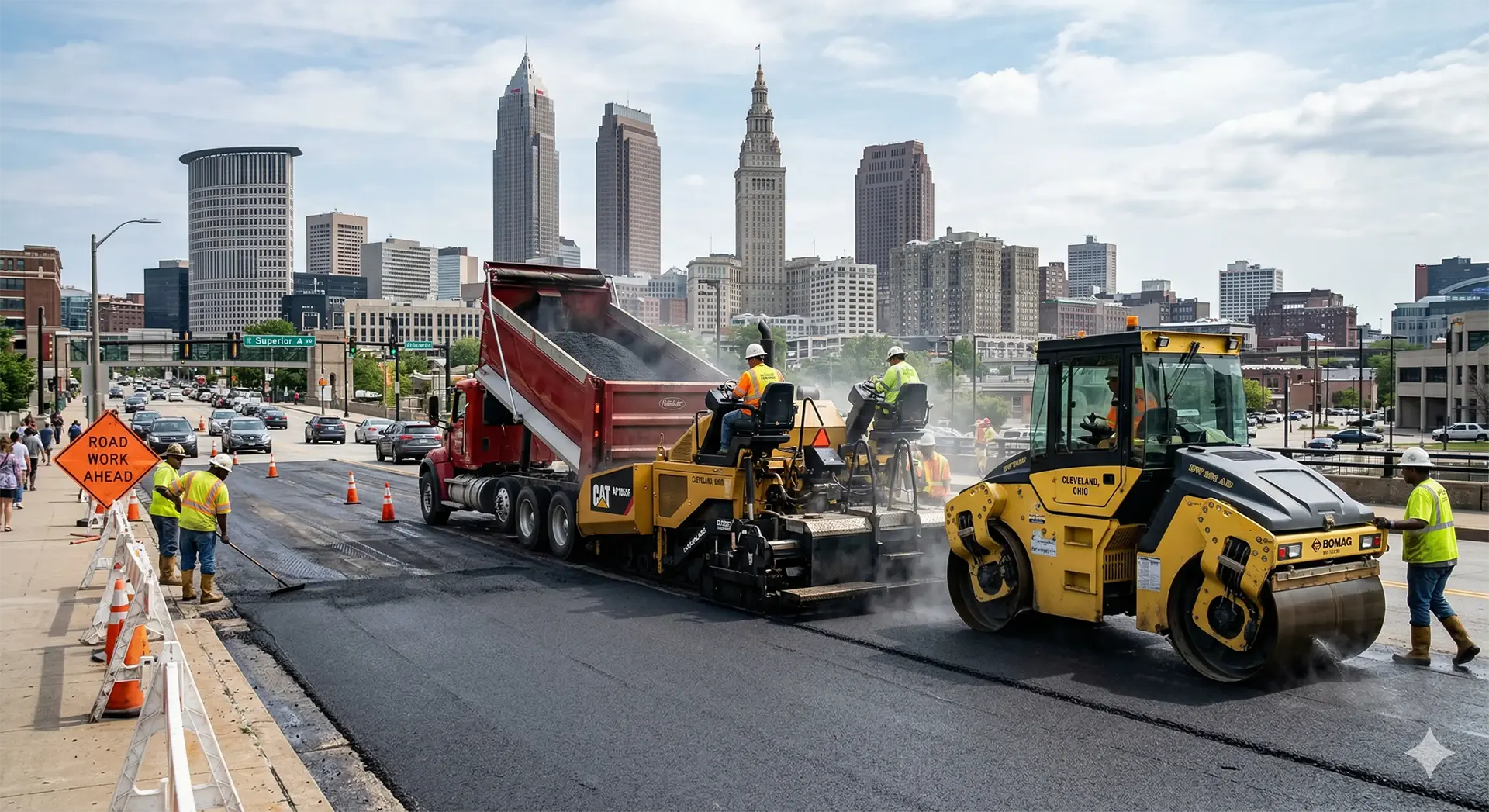
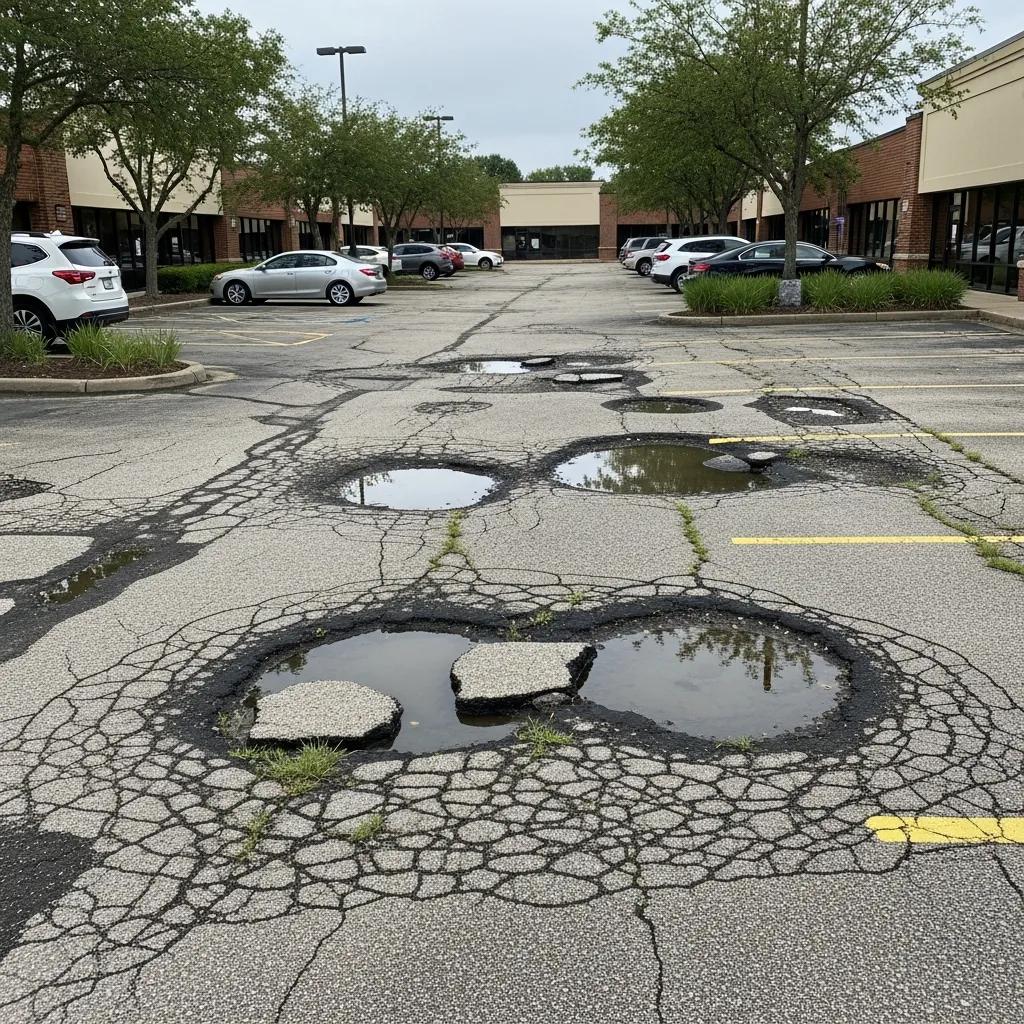
Industrial asphalt paving supports durable surfaces for roads, parking areas, and industrial sites across Cleveland. This article outlines contractor roles, required equipment, core expertise, and regulatory factors to help owners evaluate contractors and plan large-scale paving work efficiently.
Key Takeaways
- Industrial asphalt paving is essential for large urban projects in Cleveland.
- Contractors oversee safety, quality, scheduling, and compliance.
- Licensing, insurance, and local Cleveland experience are required qualifications.
- Paving machines, milling units, and compactors are the core equipment.
- Technical knowledge and clear project planning ensure durable results.
- Environmental and ADA compliance are mandatory considerations.
- Hot mix asphalt and RAP support performance and sustainability.
What Makes Industrial Asphalt Paving Different?
Industrial asphalt paving in Cleveland faces significantly higher demands than standard commercial paving. Surfaces must withstand heavy vehicle loading such as semi-trucks, forklift traffic, and accommodate large turning radiuses at loading docks. Additionally, industrial sites require fuel and chemical spill resistance to maintain surface integrity and safety.
- Heavy Vehicle Loading: Industrial pavements must support the weight and frequency of semi-trucks and heavy machinery.
- Forklift Traffic: Frequent forklift movement requires surfaces resistant to concentrated loads and abrasion.
- Semi-Truck Turning Radiuses: Pavements must be designed to handle wide turning movements without cracking or deformation.
- Loading Dock Aprons: These areas experience intense stress and require reinforced pavement sections.
- Fuel and Chemical Spill Resistance: Surfaces must resist degradation from spills common in industrial environments.
Base Thickness and Specialized Asphalt Mix Designs
Industrial sites require thicker base layers compared to standard commercial paving to support heavier loads and prevent premature failure. The base thickness is engineered based on expected traffic loads and soil conditions.
Specialized asphalt mix designs are used to enhance durability and performance under heavy loading. These mixes often include polymer-modified binders and higher-quality aggregates to resist rutting, cracking, and deformation.
- Base Thickness Requirements: Industrial bases are significantly thicker, often exceeding commercial standards, to distribute heavy loads effectively.
- Specialized Mix Designs: Mixes are tailored for heavy load applications, incorporating additives and optimized gradations.
Drainage Requirements on Industrial Sites
Proper drainage is critical on industrial paving projects to prevent water infiltration that can weaken the pavement structure. Drainage design is often regulated and must comply with local Cleveland and Ohio environmental standards.
- Regulated Drainage Design: Industrial sites require engineered drainage systems to manage runoff and protect pavement integrity.
- Water Management: Effective drainage prevents base erosion and extends pavement life.
Project Phasing to Maintain Operations
Large industrial paving projects must be carefully phased to minimize disruption to ongoing operations. This includes scheduling work in stages, coordinating with facility managers, and using off-peak hours to maintain logistics and production flow.
- Phased Construction: Dividing the project into manageable sections to keep parts of the facility operational.
- Coordination with Operations: Close communication with plant operators and logistics teams to align paving schedules with operational needs.
- Off-Peak Work: Scheduling paving during low-traffic periods to reduce impact.
Total Cost Considerations
Industrial asphalt paving projects involve higher upfront costs due to thicker bases, specialized materials, and complex phasing. However, these investments reduce long-term maintenance and downtime costs by delivering durable, resilient pavements suited to heavy industrial use.
- Upfront Investment: Higher material and labor costs reflect the demanding requirements.
- Long-Term Savings: Durable pavements reduce repair frequency and operational disruptions.
- Value of Expertise: Experienced contractors like Empire Paving optimize costs through efficient planning and quality execution.
Role of Industrial Asphalt Paving Contractors
Contractors coordinate site prep, material selection, asphalt placement, compaction, and final inspection. They manage permits, safety, subcontractors, and quality control to deliver a pavement that meets functional and regulatory requirements.
Requirements for Contractors
Effective contractors meet licensing, insurance, and local experience expectations and use appropriate materials and equipment.
- Licensing and Insurance: Proper Ohio licenses and adequate insurance protect owners and workers.
- Local Experience: Proven Cleveland projects mean familiarity with local site conditions and rules.
- Quality Materials and Equipment: Modern equipment and certified materials improve durability and performance.
Essential Equipment
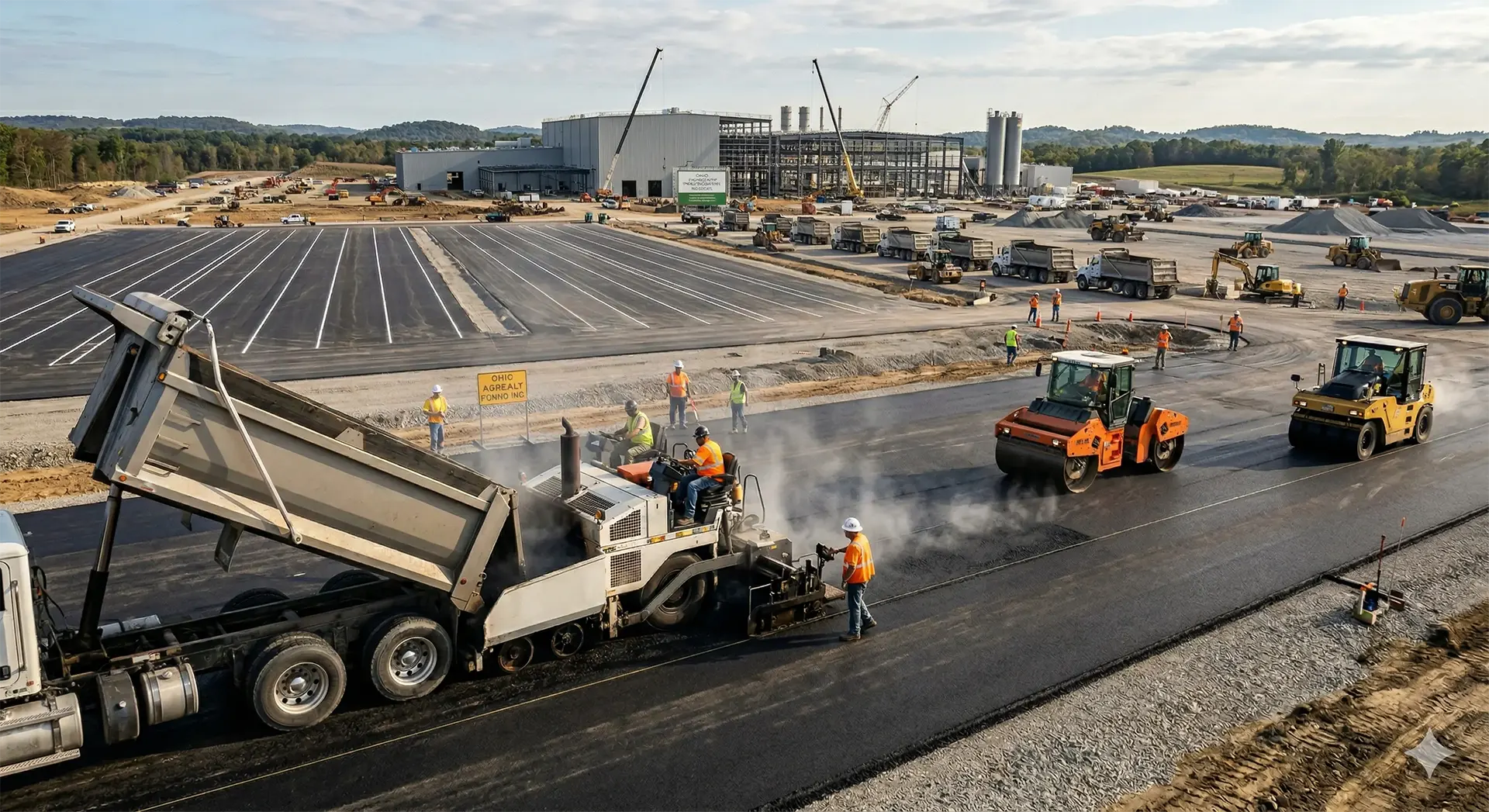
Large jobs require reliable paving machines, milling equipment, and rollers; each performs a distinct step from removal to placement to compaction.
- Paving Machines: Lay asphalt evenly for a consistent surface.
- Milling Machines: Remove old pavement and profile the base.
- Compactors and Rollers: Achieve density and prevent premature distress.
Equipment Comparison Table
| Equipment Type | Function | Benefit |
|---|---|---|
| Paving Machines | Lays asphalt | Ensures smooth surface |
| Milling Machines | Removes old asphalt | Prepares site for new application |
| Compactors | Compresses asphalt | Enhances durability |
Using the right machinery at each stage reduces rework and extends pavement life.
Project Planning and Management Best Practices for Large-Scale Asphalt Paving
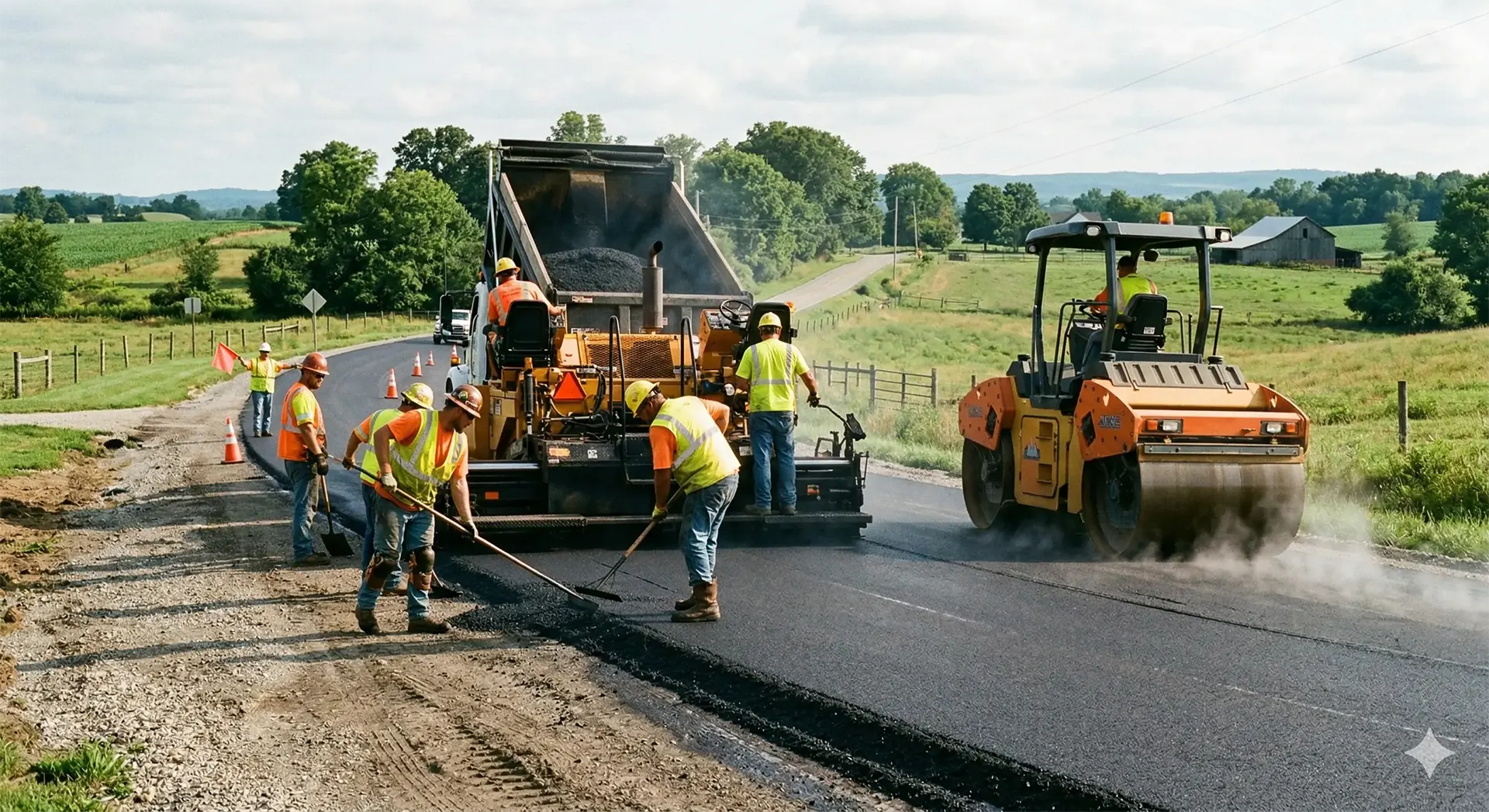
Clear timelines, staged phasing, and resource planning—paired with contingency plans—help projects finish on time and budget.
- Timeline Management : Set realistic windows and milestones.
- Resource Allocation : Ensure equipment and crews align with phases.
- Maintenance Strategies : Factor future upkeep into design and specs.
Regulatory and Environmental Compliance
Contractors must secure permits, follow environmental rules, and meet accessibility standards to avoid compliance issues and protect local resources. Material specifications, drainage design, and permitting shape project scope and methods. Early engagement with authorities reduces delays and risk.
- Permitting Processes: Obtain required permits before work begins.
- Environmental Guidelines: Control runoff, emissions, and material handling.
- Compliance with ADA Regulations: Ensure accessible surfaces where required.
- Material Specifications: Meet Ohio and project standards.
- Drainage Design Compliance: Protect pavement by managing water.
- Permitting and Compliance Processes: Plan for approvals in the schedule.
Materials and Technologies for Industrial Asphalt Paving in Cleveland
Cleveland projects typically use hot mix asphalt for strength and RAP to improve sustainability. Modern paving and automated controls help maintain consistency and reduce waste.
- Hot Mix Asphalt: Durable under heavy loads and widely specified.
- Recycled Asphalt Pavement (RAP): Lowers material use and environmental impact when specified correctly.
Preferred Asphalt Paving Materials for Large-Scale Projects in Ohio
Preference centers on mixes that meet durability, traffic, and drainage needs; proper drainage design is critical to protect pavement structure.
- Durability: Select materials to handle load and climate.
- Traffic Load Requirements: Match mix design to expected loads.
- Drainage Importance: Design to prevent water damage and base weakening.
Sustainability Benefits of Recycled Asphalt Pavement and Hot Mix Asphalt
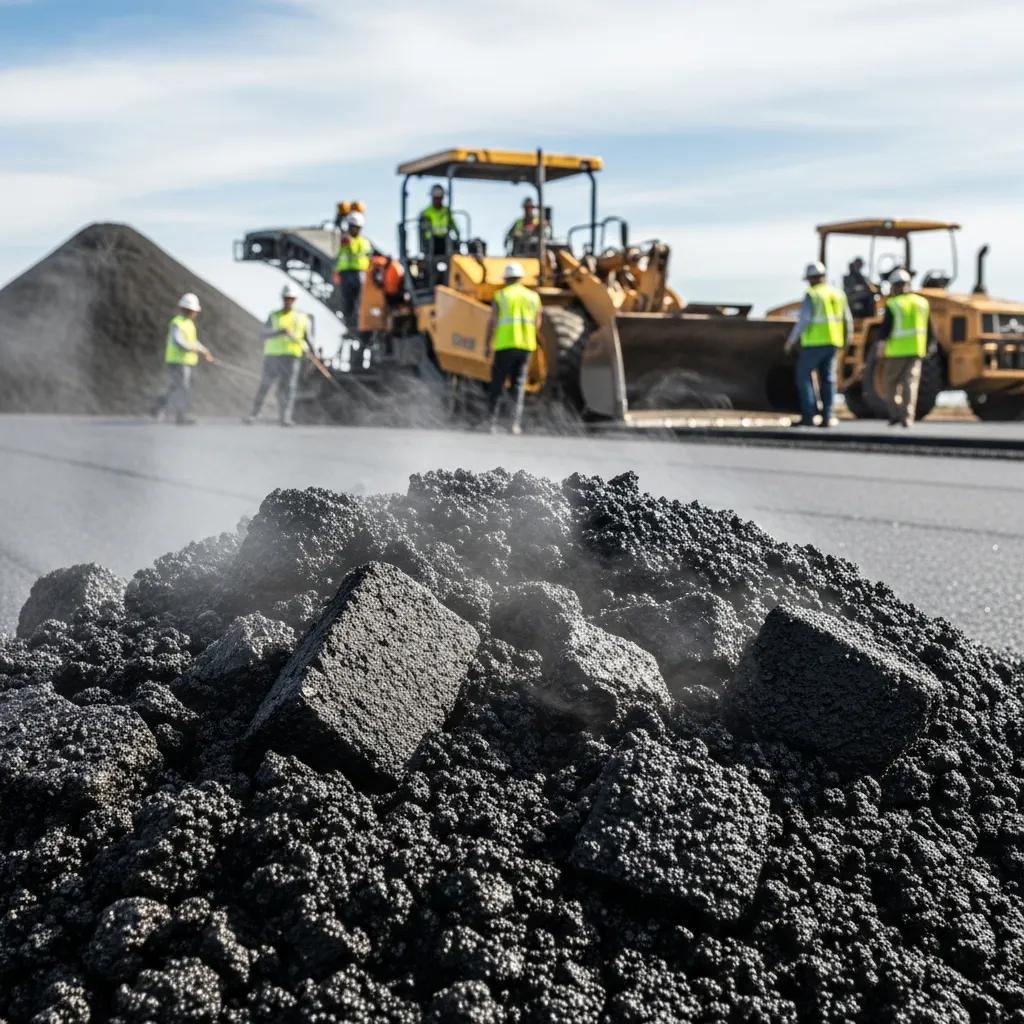
RAP reduces virgin material needs and waste; hot mix provides performance. Together they can lower costs and environmental impact when mixes are designed and produced properly. For a comprehensive overview of sustainable asphalt pavement practices, the Asphalt Pavement Alliance provides detailed guidance on responsible mix selection and long-term performance.
- Cost Savings: RAP can cut material expenses.
- Environmental Benefits: Recycling reduces landfill use and material extraction.
- Performance and Longevity: Properly designed mixes deliver durable pavements.
Maintenance Strategies to Extend Industrial Asphalt Surface Longevity
Regular inspections, timely repairs, and parking lot maintenance treatments (sealants, overlays) prevent deterioration and prolong service life.
- Regular Maintenance Practices: Inspections and minor repairs catch problems early.
- Repair Techniques: Address cracks and localized damage promptly.
- Longevity Strategies: Sealcoats and targeted overlays protect structural layers.
Frequently Asked Questions
What are the common challenges faced during industrial asphalt paving projects?
Typical issues include weather delays, equipment downtime, and unexpected site conditions such as poor drainage. Contingency planning and flexible scheduling reduce impacts.
How can I assess the quality of an asphalt paving contractor?
Review experience, references, licensing, insurance, and sample projects. Ask about materials, equipment, quality checks, and warranties.
What is the typical lifespan of an industrial asphalt surface?
Lifespan depends on traffic, climate, and maintenance; with proper design and upkeep, pavements can provide many years of service.
What role does drainage play in asphalt paving projects?
Proper drainage prevents water infiltration and base failure; it is a core design element that preserves pavement performance.
How does the choice of asphalt mix affect project outcomes?
Mix design determines strength, flexibility, and durability. Choose mixes tailored to traffic, climate, and structural needs.
What are the environmental considerations in asphalt paving?
Minimize waste, control emissions and runoff, and consider recycled materials and warm-mix options to reduce environmental impact.
What are the benefits of using automated paving machinery?
Automation improves mat uniformity, reduces manual errors, and helps meet tight tolerances more consistently.
Partner with Empire Paving for Your Industrial Asphalt Needs
Empire Paving brings extensive experience in Cleveland industrial paving projects, delivering solutions tailored to the unique demands of heavy vehicle traffic, specialized mix designs, and phased construction to keep your operations running smoothly. View our projects to see our completed industrial paving work across Northeast Ohio.
Contact us today for a free industrial site assessment and expert guidance on your next paving project.
Conclusion
Large-scale asphalt projects in Cleveland require qualified contractors, proper equipment, and proactive planning to meet performance and regulatory goals. Prioritize durable materials, effective drainage, and clear project controls; consider RAP and automation to improve sustainability and consistency. For detailed guidance, consult experienced local contractors early in planning.