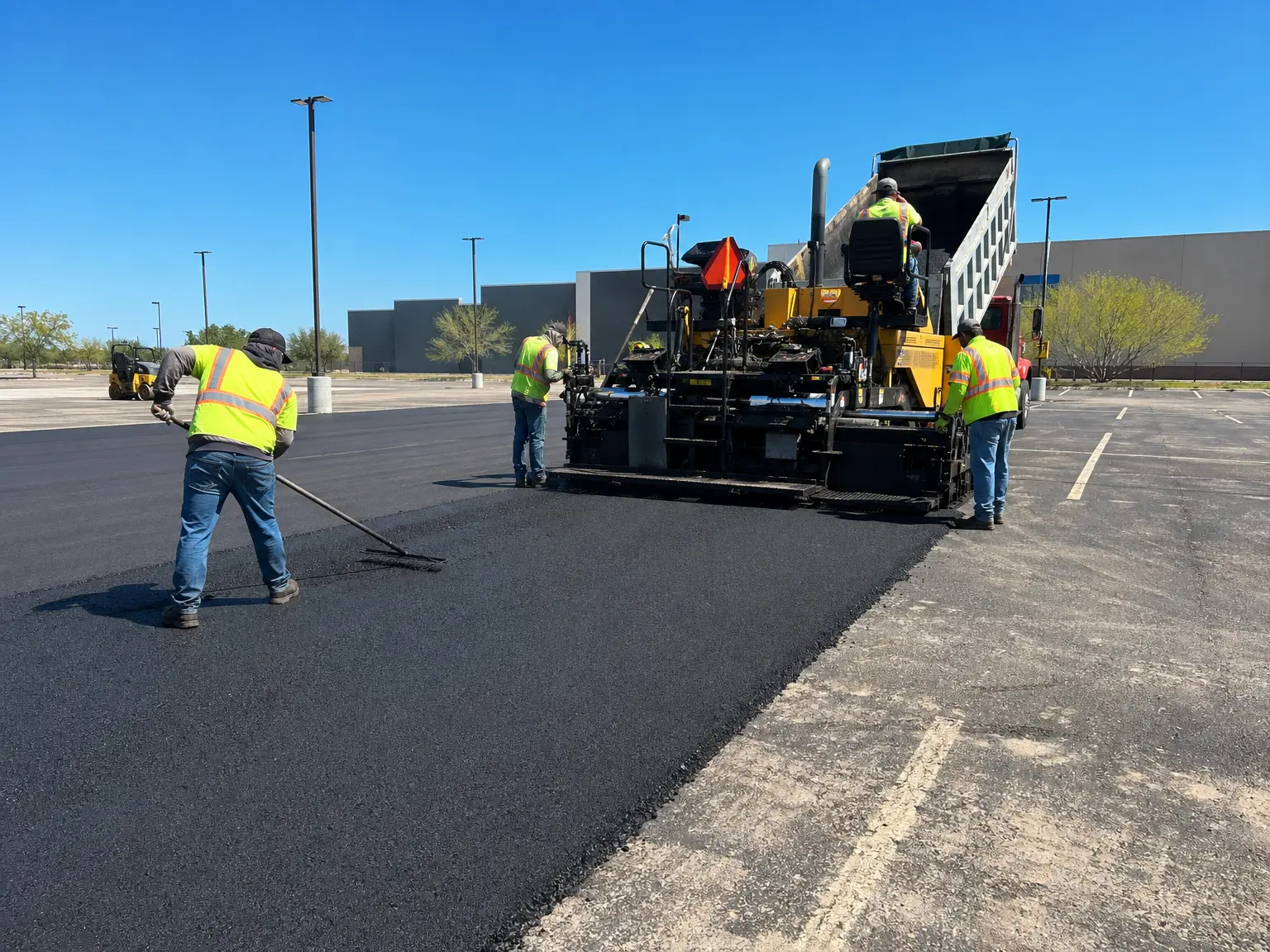
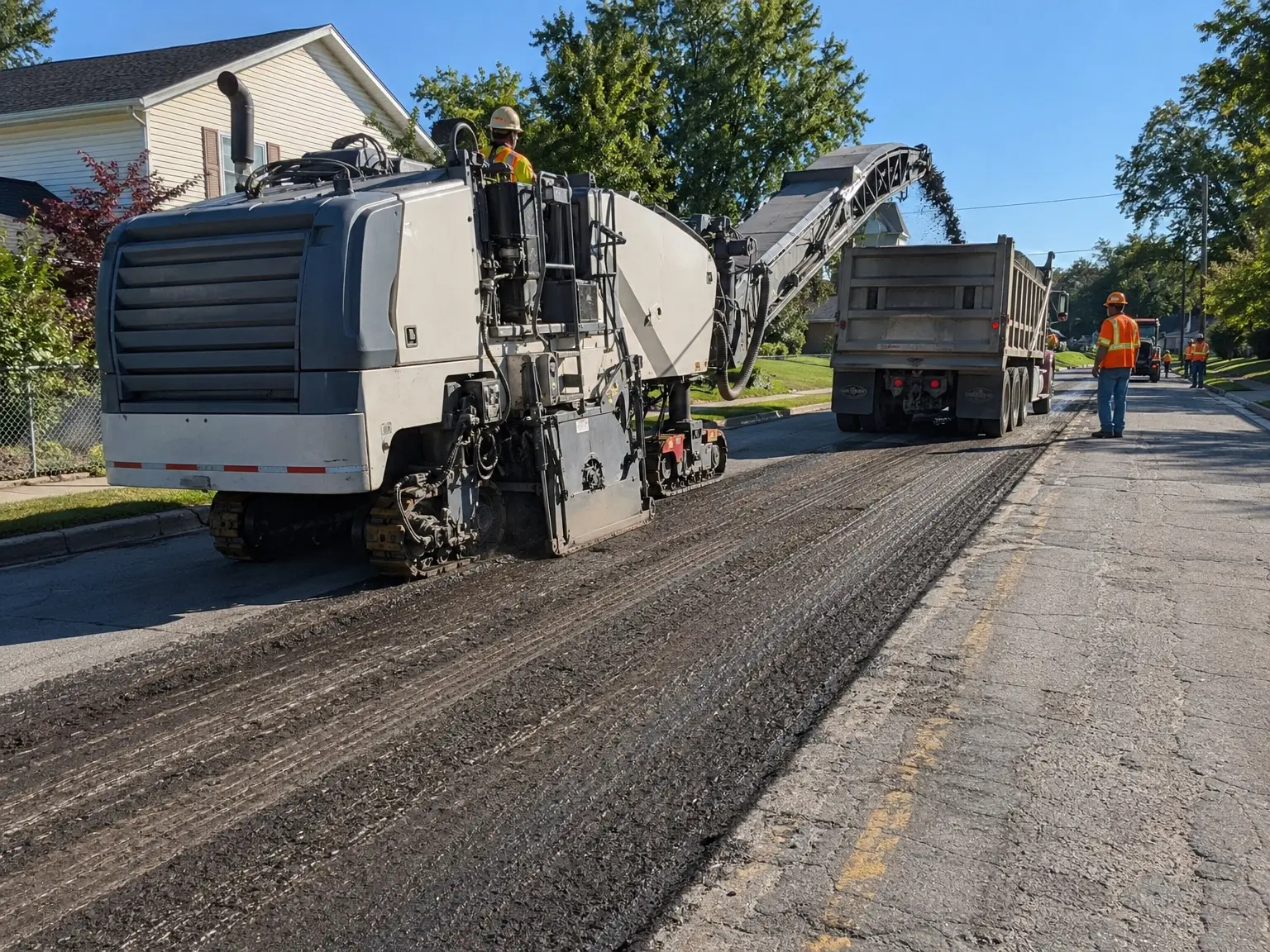
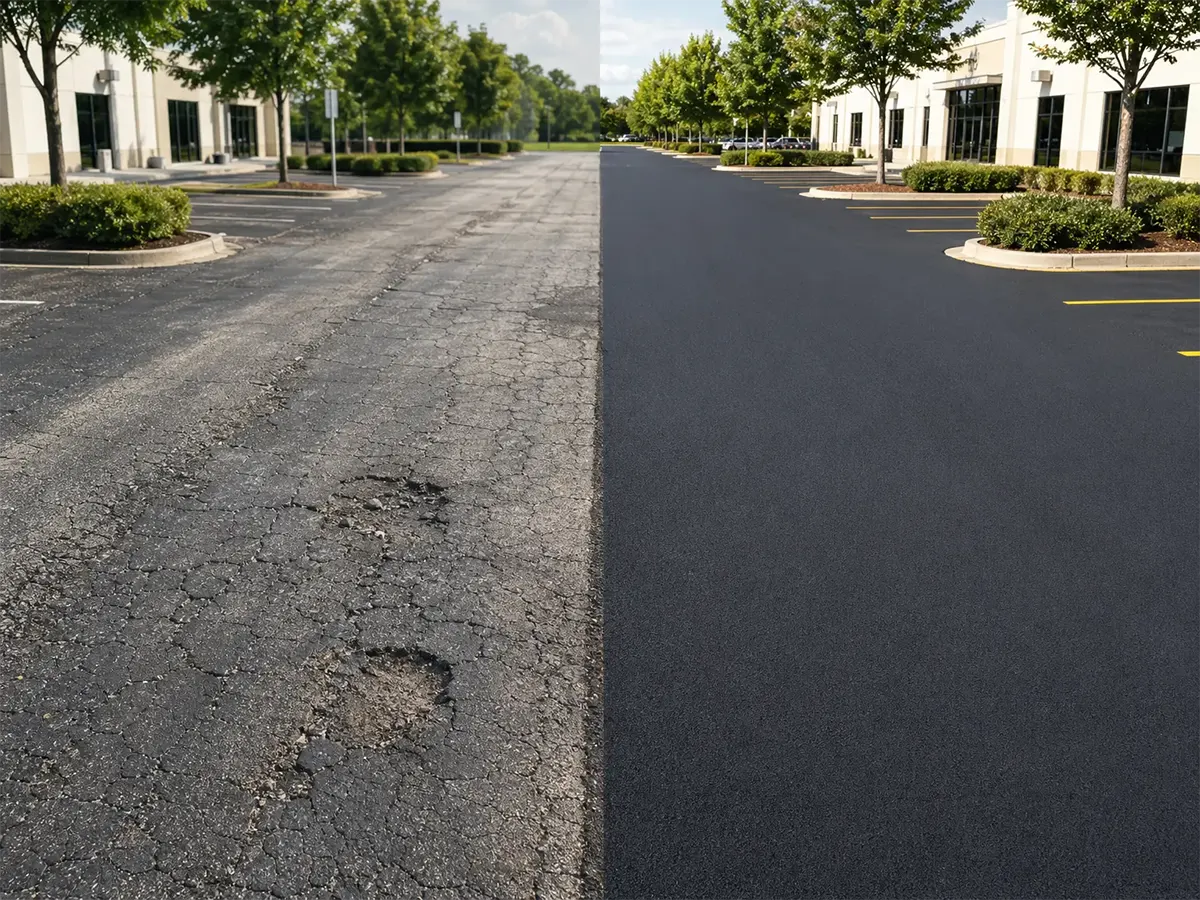
Property managers deciding between an asphalt overlay, milling + resurfacing, and full replacement must consider pavement condition, budget, downtime, and long-term durability. This article clarifies what each method involves, when it is appropriate, and the advantages and limitations of each, helping you select the best solution for your commercial lot.
Key Takeaways
- Asphalt Overlay involves applying 1.5–2 inches of new asphalt directly over the existing surface without milling.
- Milling + Resurfacing removes a portion of the existing asphalt surface before applying a new layer, addressing surface deterioration while preserving the base.
- Full Replacement removes all existing pavement and rebuilds the base and surface, addressing structural failures comprehensively.
- Overlay is suitable when the surface is in fair condition, the base is sound, and height restrictions at doorways and curbs allow for added thickness.
- Milling + resurfacing is better when the surface is too deteriorated for overlay but the base remains intact.
- Full replacement is necessary when there is significant base failure, deep cracking, or drainage issues.
- Each method varies in cost, lifespan, and disruption, so choosing the right approach depends on a thorough assessment.
- Empire Paving provides honest recommendations tailored to your lot’s condition, avoiding unnecessary upselling.
Understanding the Differences: Overlay, Milling + Resurfacing, and Full Replacement
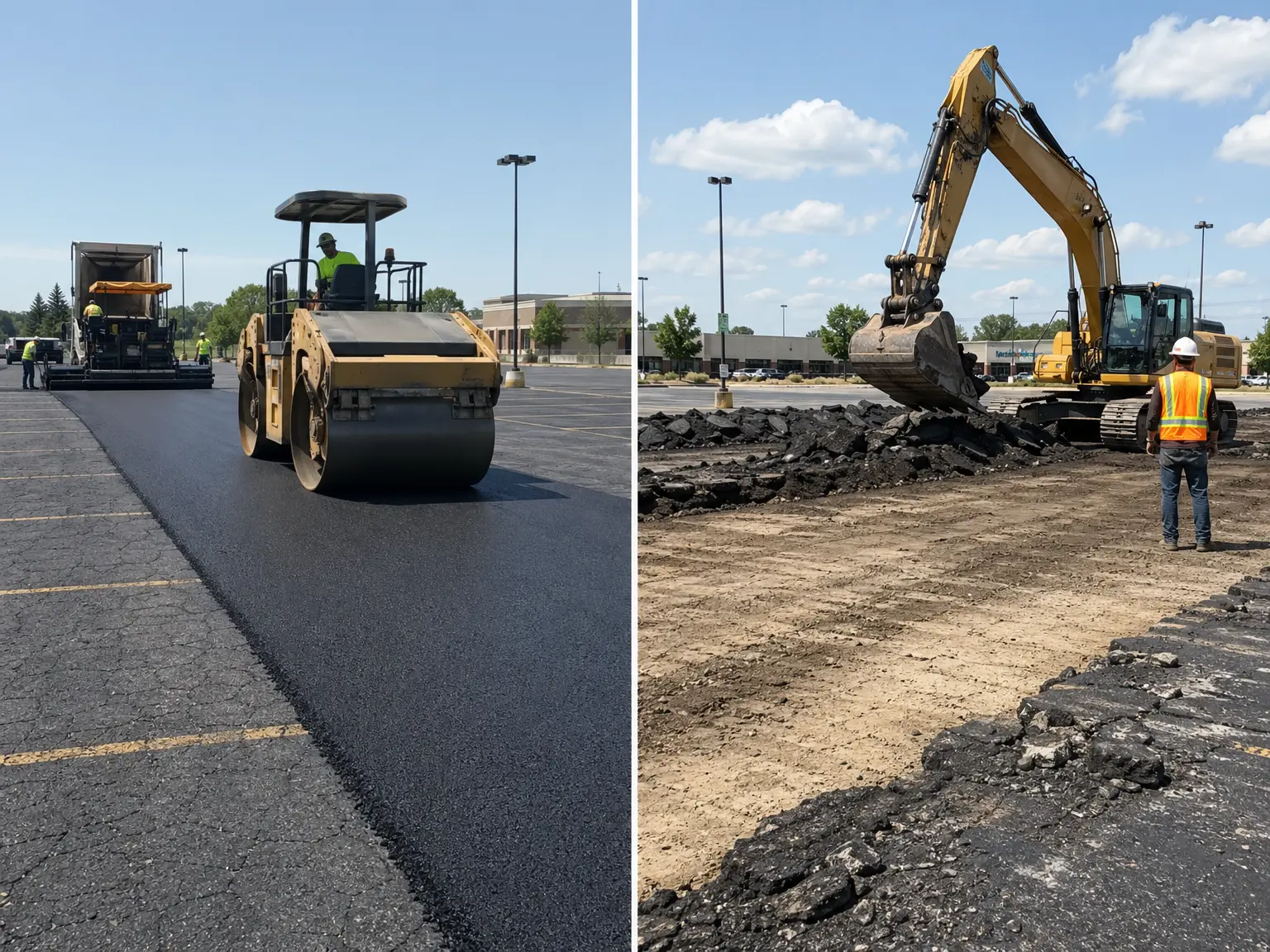
Choosing the right pavement rehabilitation method depends on the existing pavement’s condition and your long-term goals. Below is an overview of each method:
Asphalt Overlay
An asphalt overlay involves applying a new 1.5 to 2-inch layer of asphalt directly over the existing pavement surface without milling. This method is cost-effective and quick, extending the surface life when the underlying base is sound and the surface shows only minor wear.
When is overlay appropriate?
- The existing pavement surface is in fair condition with no significant base failure.
- Height restrictions at doorways, curbs, or ramps allow for the added thickness of the overlay.
- Drainage patterns are adequate to prevent water ponding after overlay application.
Downsides of overlay
- Does not address underlying structural issues or base failures.
- Can cause ponding or drainage problems if surface elevations are not properly considered.
- Generally has a shorter lifespan than milling + resurfacing or full replacement.
Milling + Resurfacing
Milling + resurfacing involves removing (milling) the top portion of the existing asphalt surface before applying a new asphalt layer. This method removes deteriorated surface material, improves drainage, and provides a smoother, longer-lasting pavement without full base replacement.
When is milling + resurfacing better?
- The surface is too deteriorated or uneven for a simple overlay.
- The base layer remains structurally sound and does not require replacement.
- Height restrictions allow for milling to reduce surface elevation before resurfacing.
This method extends pavement life more effectively than overlay by addressing surface defects and improving drainage.
Full Replacement
Full replacement involves completely removing the existing asphalt and base layers, then rebuilding the pavement from the subgrade up. This is the most comprehensive and costly option but is necessary when structural failures or severe base damage exist.
When is full replacement necessary?
- Deep cracking, severe deformation, or potholes that penetrate through the base.
- Drainage issues causing subgrade failure or erosion.
- Repeated repairs have failed to resolve ongoing pavement problems.
Full replacement provides a durable, long-lasting pavement but requires more time and higher upfront costs.
Decision Matrix: Choosing the Right Pavement Rehabilitation Method
| Condition | Overlay | Milling + Resurfacing | Full Replacement |
|---|---|---|---|
| Surface Condition | Fair, minor wear | Poor, deteriorated surface | Severe damage, deep cracks |
| Base Condition | Sound | Sound | Failed or compromised |
| Height Restrictions | Allows 1.5–2" overlay | Allows milling depth | No restrictions |
| Drainage | Adequate, no ponding | Improved by milling | Rebuilt as needed |
| Cost | Lowest | Moderate | Highest |
| Lifespan | 10–15 years | 15–20 years | 20+ years |
Empire Paving’s Honest Approach to Your Pavement Needs
Empire Paving is committed to providing transparent, expert advice tailored to your commercial lot’s condition. We do not upsell full replacement when an overlay or milling + resurfacing will suffice. Our goal is to deliver the most cost-effective, durable solution for your property.
Contact Empire Paving for a free assessment and professional recommendation based on your lot’s unique needs.
What Is Asphalt Overlay and How Does It Benefit Commercial Lots?
Asphalt overlay resurfaces existing pavement with a new 1.5 to 2-inch layer of asphalt applied directly over the current surface without milling. It improves appearance, restores a smooth driving surface, and extends pavement life cost-effectively when the base is sound and surface damage is minor.
How Is the Asphalt Overlay Process Performed on Commercial Parking Areas?
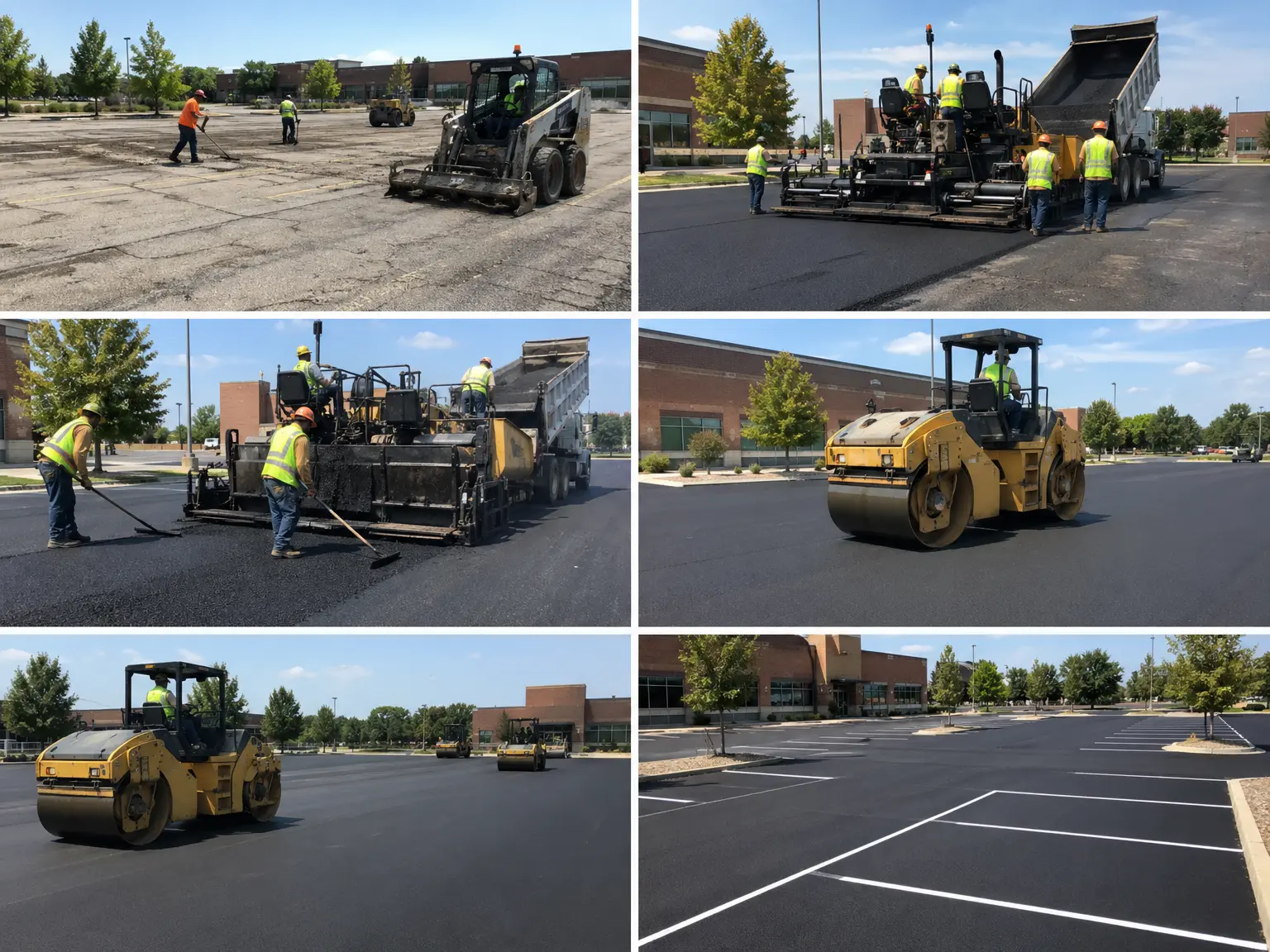
The asphalt overlay process involves several key steps:
- Assessment: Evaluating the existing pavement condition to ensure it is suitable for overlay per FHWA guidelines, including checking base integrity and height restrictions.
- Preparation: Cleaning the surface and repairing any significant cracks or damage.
- Application: Laying down a new 1.5 to 2-inch layer of asphalt over the existing surface.
- Compaction: Compacting the new layer to ensure a smooth and durable surface.
Because overlay is faster than milling + resurfacing or full replacement, it often minimizes disruption for busy properties.
What Are the Key Advantages and Limitations of Asphalt Overlay?
Overlays are cost-saving and quicker to install, but they do not fix underlying structural issues and may cause drainage problems if elevations are not properly managed.
- Advantages: Cost-effective solution for minor surface issues; minimal disruption during installation.
- Limitations: Not a permanent fix for structural problems; can cause ponding if drainage is not considered; shorter lifespan than milling + resurfacing.
When Is Milling + Resurfacing the Better Choice?
Milling + resurfacing is appropriate when the pavement surface is too deteriorated for overlay but the base remains sound. Milling removes the damaged surface layer, improving drainage and allowing for a longer-lasting new surface without the cost of full replacement.
What Steps Are Involved in the Milling + Resurfacing Process?
- Milling: Removing the top portion of the existing asphalt surface to eliminate deteriorated material and adjust surface elevation.
- Preparation: Cleaning and repairing the milled surface as needed.
- Resurfacing: Applying a new asphalt layer over the milled surface.
- Compaction: Compacting the new asphalt to create a smooth, durable surface.
When Is Full Asphalt Replacement Necessary for Commercial Lot Maintenance?
Full replacement is required when there is significant base failure, deep cracking, severe deformation, or drainage-related subgrade issues that cannot be addressed by overlay or milling + resurfacing.
- Deep cracks penetrating through the asphalt and base.
- Severe surface deformation or potholes.
- Drainage problems causing subgrade erosion or failure.
Replacing the pavement fully prevents recurring issues and higher costs from repeated repairs.
What Steps Are Involved in the Full Asphalt Replacement Process?
- Removal: Complete removal of existing asphalt and damaged base layers.
- Subgrade Preparation: Grading and compacting the subgrade to ensure a solid foundation.
- Base Installation: Installing and compacting new base materials as needed.
- Asphalt Installation: Laying down new asphalt layers, typically in multiple lifts for durability.
- Finishing: Smoothing and compacting the surface to create a finished pavement ready for use.
Full replacement provides a durable pavement that reduces maintenance frequency over its service life.
Cost Comparison
Costs vary by lot size, extent of damage, and local labor rates. Below is a typical range to guide budgeting; see our guide on asphalt paving costs in Ohio or use a site inspection and contractor quotes for exact pricing.
| Service Type | Cost per Square Foot | Lifespan |
|---|---|---|
| Asphalt Overlay | $2.00 – $4.00 | 10-15 years |
| Milling + Resurfacing | $4.00 – $7.00 | 15-20 years |
| Full Replacement | $6.00 – $12.00 | 20+ years |
This table highlights the financial considerations property managers must weigh when selecting a pavement rehabilitation method.
Maintenance and Lifespan Considerations
Maintenance frequency and costs vary by method. Overlays require periodic sealing and minor repairs; milling + resurfacing generally needs less frequent maintenance; full replacement demands the least maintenance but has the highest initial cost.
- Asphalt Overlay: Requires regular sealing and minor repairs to maintain surface integrity.
- Milling + Resurfacing: Less frequent maintenance than overlay but may require periodic sealing.
- Full Replacement: Longest lifespan with minimal maintenance but highest upfront investment.
Environmental and Sustainability Impacts
Overlay and milling + resurfacing methods reduce waste by reusing existing pavement materials, lowering environmental impact compared to full replacement, which generates more waste and consumes more new materials. Sustainable paving practices should be considered when planning projects.
Frequently Asked Questions
What is the typical lifespan of an asphalt overlay compared to milling + resurfacing and full replacement?
Asphalt overlays typically last 10–15 years, milling + resurfacing lasts 15–20 years, and full replacement can last 20 years or more depending on traffic and maintenance.
How can I determine if my commercial lot needs an overlay, milling + resurfacing, or full replacement?
Inspect for surface condition, base integrity, and drainage. Overlay suits fair surface and sound base; milling + resurfacing fits deteriorated surface with sound base; full replacement is necessary for base failure or severe damage.
What maintenance practices are recommended for asphalt overlays?
Regular sealing, prompt crack and pothole repairs, and keeping surfaces clean maximize overlay life and performance.
Are there environmental benefits to choosing overlay or milling + resurfacing over full replacement?
Yes. Both overlay and milling + resurfacing reuse existing pavement materials, reducing waste and resource consumption compared to full replacement.
How does traffic load affect the choice between these methods?
High traffic loads and heavy vehicles accelerate wear and may justify milling + resurfacing or full replacement for structural integrity. Lighter use and surface distress may be addressed with overlay.
Get a Free Pavement Assessment from Empire Paving
Choosing between asphalt overlay, milling + resurfacing, and full replacement depends on pavement condition, budget, and long-term goals. Use professional inspections and lifecycle cost comparisons to decide: overlays save money and time when the base is sound and surface damage is minor; milling + resurfacing extends pavement life when the surface is deteriorated but the base is intact; full replacement fixes structural problems and reduces future maintenance when base failure exists. Empire Paving offers honest, expert evaluations to help you choose the right pavement solution for your commercial lot—no upselling, just the best fit for your needs and budget. Contact Empire Paving for a free assessment and expert guidance tailored to your commercial lot.