When planning an asphalt paving project, understanding material choices is crucial to managing your budget effectively. The type of asphalt you select doesn’t just affect the immediate cost—it influences long-term maintenance expenses, durability, and overall project value. According to recent market analysis, the global paving asphalt market reached $14.5 billion in 2024 and continues to grow, with material innovations creating more options—and pricing considerations—than ever before.
The Foundation: How Asphalt Material Composition Affects Cost
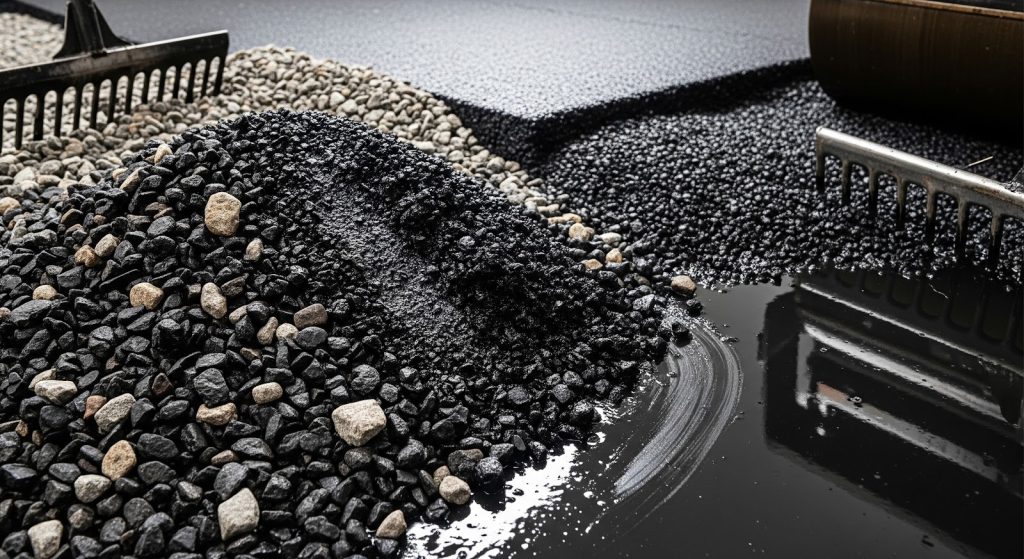
Asphalt paving materials aren’t one-size-fits-all. The base composition significantly impacts both performance and pricing. Standard asphalt consists of aggregates (sand, gravel, crushed stone) bound together with bitumen—a petroleum-derived binder. However, variations in aggregate quality, bitumen grade, and additives can create substantial price differences.
As of 2025, asphalt materials typically cost between $40 to $80 per ton, with installation bringing the total to $7-$13 per square foot. These figures reflect the direct relationship between crude oil prices and asphalt costs—approximately 0.7% increase for every 1% rise in oil prices, according to current market data.
Hot Mix Asphalt vs. Warm Mix Asphalt: The Temperature Difference That Impacts Your Budget
One of the most significant material choices involves production temperature, which affects both cost and application flexibility.
Hot Mix Asphalt (HMA)
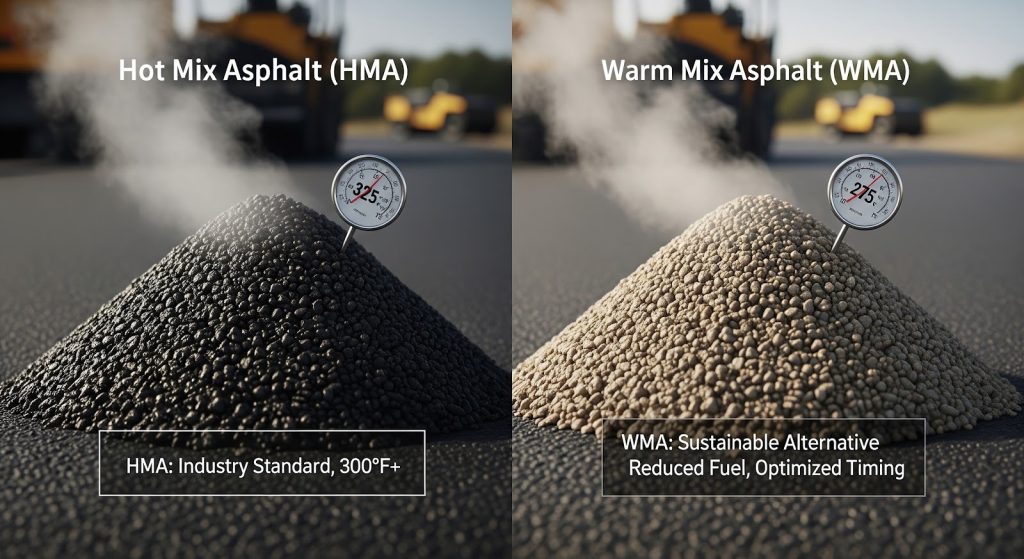
Hot Mix Asphalt remains the industry standard for most paving applications. Produced at temperatures exceeding 300°F, HMA offers exceptional durability and weather resistance. For residential driveways and commercial projects, HMA provides reliable performance that justifies its position as the most commonly specified material.
HMA typically represents the baseline pricing for asphalt projects. When evaluating average costs per square foot, HMA generally falls in the standard range, making it the benchmark against which other materials are compared.
Warm Mix Asphalt (WMA)
Warm Mix Asphalt technology represents a significant innovation in sustainable paving. Produced at temperatures 30-70°F lower than traditional HMA, WMA reduces energy consumption during production and can extend the paving season by allowing work in cooler temperatures.
While WMA may carry a slight premium in material costs, the technology offers potential savings through reduced fuel consumption and the ability to optimize seasonal timing. The global asphalt market’s growth to $396.49 million by 2033 is partly driven by increased adoption of sustainable technologies like WMA.
Standard vs. Modified Asphalt: Understanding Performance-Based Pricing
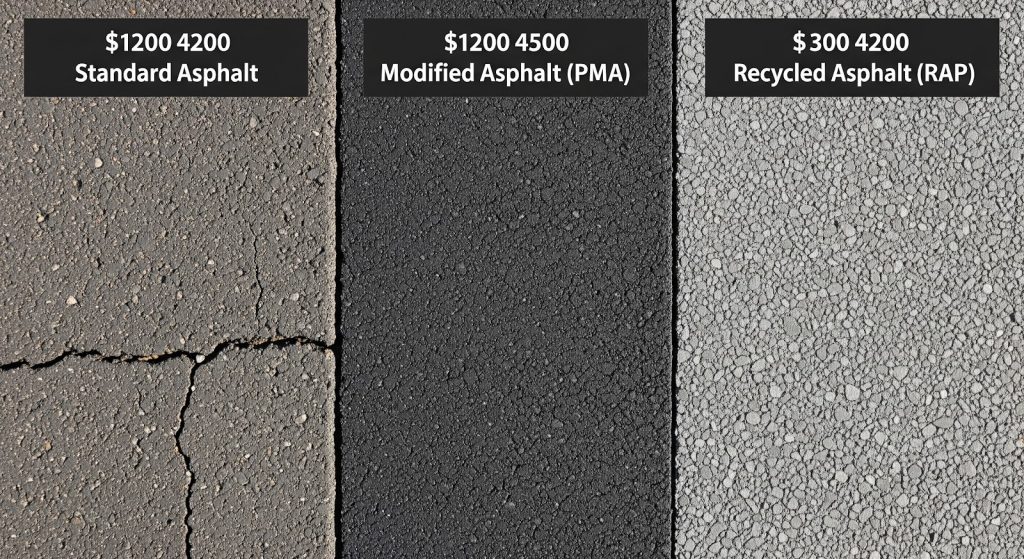
Perhaps the most significant pricing decision involves whether to use standard or modified asphalt formulations. This choice dramatically affects both upfront investment and long-term durability and cost-effectiveness.
Polymer-Modified Asphalt (PMA)
Polymer-modified asphalt incorporates polymers such as styrene-butadiene-styrene (SBS) or other elastomers that significantly enhance performance characteristics. Research shows that polymer-modified mixtures exhibit significantly higher cost-effectiveness compared to unmodified asphalt, despite higher initial material costs.
PMA typically costs approximately 20% more than standard asphalt mixes, according to state-by-state pricing analysis. However, the enhanced performance characteristics provide compelling value:
- Enhanced Elasticity: Superior flexibility reduces cracking under stress and temperature variations
- Improved Temperature Resistance: Better performance in extreme hot and cold conditions
- Extended Lifespan: Reduced maintenance frequency translates to lower lifecycle costs
- Reduced Rutting: Greater resistance to deformation under heavy traffic loads
A Minnesota study found that polymer-modified binders are more cost-effective even for local, low-volume roads when lifecycle costs are considered. The superior performance translates to longer intervals before maintenance is needed, offsetting the initial premium.
Recycled Asphalt Pavement (RAP)
Recycled asphalt offers an economically and environmentally attractive option. RAP materials cost significantly less—typically $0.20 to $0.75 per square foot for materials alone, with total installation ranging from $6.20 to $8.75 per square foot.
The growing emphasis on sustainability has driven increased RAP utilization. Modern processing techniques allow incorporation of recycled materials without compromising performance, making RAP an excellent choice for budget-conscious projects where environmental stewardship is valued.
Aggregate Quality and Selection: The Hidden Cost Factor
Aggregates comprise approximately 95% of asphalt mix by weight, making their quality and source location critical cost factors. Premium aggregates with superior durability characteristics command higher prices but provide enhanced pavement performance.
Transportation costs significantly affect aggregate pricing. Projects located near quarries or asphalt plants benefit from reduced delivery charges, while remote locations face substantial transportation premiums. This geographic consideration is one of several key factors that influence overall project costs.
Superpave mixes, which utilize specific aggregate gradations and higher stone content, typically add $5-$15 per ton to material costs. However, these specifications deliver improved rutting resistance and longer pavement life, particularly for high-traffic applications.
Specialty Asphalt Mixtures: When Standard Won’t Suffice
Porous Asphalt
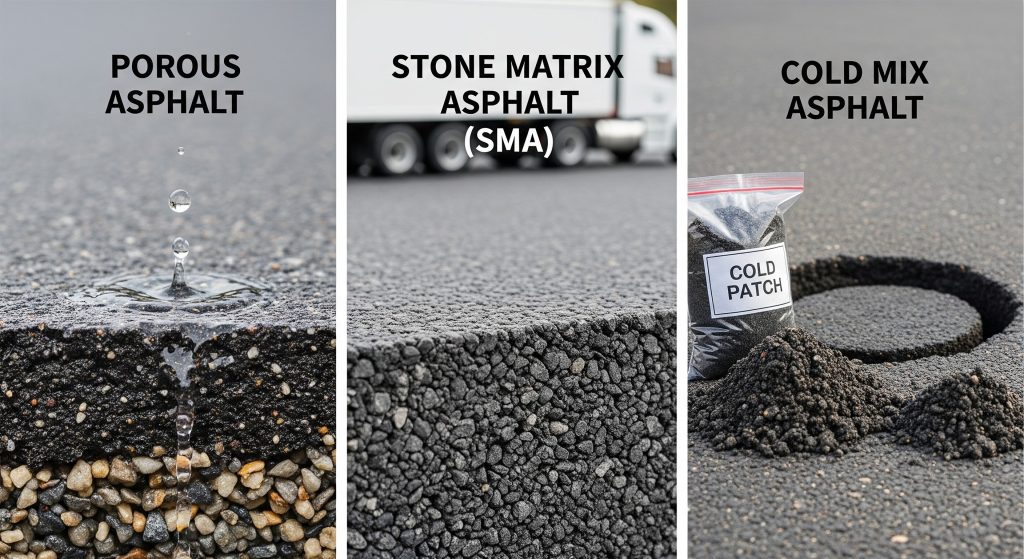
Designed for superior drainage, porous asphalt allows water to permeate through the pavement surface, reducing runoff and potential flooding. This specialty mixture typically costs 20-30% more than conventional asphalt but provides essential benefits for areas with high water tables or significant rainfall.
The investment in porous asphalt addresses drainage concerns that, if left unaddressed, can lead to premature pavement failure and costly repairs.
Stone Matrix Asphalt (SMA)
SMA represents a gap-graded mixture with higher coarse aggregate content, providing exceptional rut resistance and durability. While material costs run 15-25% higher than conventional mixes, SMA’s superior performance makes it ideal for heavy-traffic applications like highways and industrial facilities.
Cold Mix Asphalt
Cold mix asphalt offers convenience for temporary repairs and cold-weather applications. Available in bags for $8-$20 per 50-pound bag, cold mix provides flexibility but lacks the durability and longevity of hot mix alternatives. It’s best viewed as a short-term solution rather than a permanent installation.
The Impact of Project Size on Material Pricing
Project scale significantly influences per-unit material costs. Larger projects benefit from economies of scale, with contractors able to negotiate better material pricing and reduce per-square-foot costs through operational efficiencies.
Understanding how project size influences costs helps property owners plan appropriately. Many contractors offer volume discounts for larger projects, making it advantageous to coordinate multiple paving needs simultaneously.
A standard 600-square-foot residential driveway typically costs $3,600 to $5,400 for complete installation, while larger commercial projects may achieve 15-20% better per-square-foot pricing through bulk material purchasing and operational efficiency.
Hidden Material Considerations That Affect Total Project Cost
Beyond the visible surface layer, several material components significantly impact project budgets:
Base and Subgrade Materials
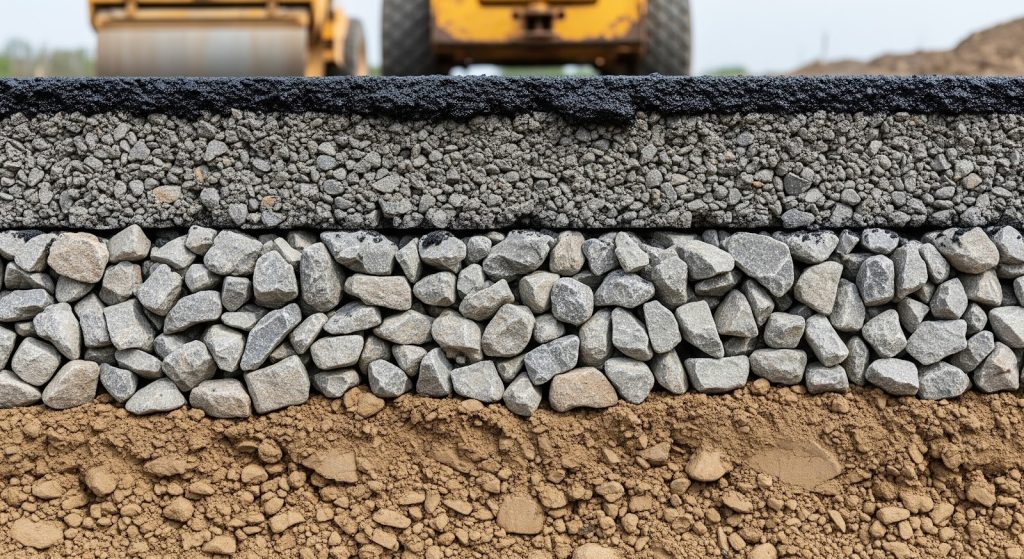
Proper foundation preparation requires quality base materials—typically crushed stone or gravel—that provide structural support. Base material costs range from $1.50 to $3 per square foot, depending on required depth and material specifications. Inadequate base preparation represents a false economy that leads to premature failure.
Tack Coat and Prime Coat
These bonding agents ensure proper adhesion between pavement layers. While representing a small percentage of total material costs, proper application is essential for pavement integrity and longevity.
Sealcoating Materials
Although applied post-construction, sealcoating materials deserve consideration in lifecycle budgeting. Professional sealcoating costs approximately $500 per application and should be performed every 2-3 years. Understanding how proper sealing protects your investment helps justify this recurring expense.
Seasonal Considerations and Material Availability
Material pricing fluctuates seasonally, with spring and summer typically commanding premium prices due to peak demand. Strategic timing can yield 10-15% cost savings by scheduling projects during shoulder seasons when material demand decreases.
However, temperature limitations affect material performance. Most asphalt types require minimum ambient temperatures (typically 50°F or higher) for proper installation, making weather conditions a critical consideration that may limit scheduling flexibility.
Quality Specifications: Balancing Cost with Performance Requirements
Material specifications directly correlate with performance expectations and project longevity. While budget constraints naturally influence decisions, understanding the relationship between material quality and lifecycle costs prevents costly mistakes.
Common indicators of poorly installed or substandard materials include premature cracking, rutting, and surface deterioration. These failures often stem from inadequate material selection rather than installation errors alone.
When evaluating material options, consider:
- Traffic Volume: Heavy traffic demands higher-grade materials with enhanced durability
- Climate Conditions: Temperature extremes require modified formulations for optimal performance
- Expected Lifespan: Long-term ownership justifies premium materials that reduce maintenance frequency
- Aesthetic Requirements: Specialty finishes or colors increase material costs but enhance property appearance
Making Informed Material Decisions: Working with Your Contractor
Material selection should result from collaborative discussion between property owners and experienced contractors. A qualified asphalt paving professional can evaluate site conditions, traffic patterns, and budget constraints to recommend optimal material specifications.
When selecting an asphalt paving contractor, prioritize those who provide transparent material specifications and detailed cost breakdowns. Understanding exactly what materials will be used—including aggregate sources, bitumen grades, and any additives or modifiers—enables informed decision-making.
Essential questions to ask your contractor include:
- What specific asphalt mix design is proposed for my project?
- Are there alternative material options that might better suit my needs or budget?
- What warranties or performance guarantees accompany different material choices?
- How do material selections affect long-term maintenance requirements?
- Are there seasonal considerations that might influence material performance or pricing?
Understanding Warranties and Material Performance Guarantees
Material quality directly affects warranty terms and contractor confidence. Reputable contractors offer comprehensive warranties that reflect their confidence in material specifications and installation practices.
Premium materials often come with extended warranty coverage, providing additional peace of mind that justifies higher initial investment. When comparing quotes, evaluate warranty terms alongside material specifications to assess true project value.
Recognizing Warning Signs and Planning for Future Maintenance
Even the highest-quality materials eventually require maintenance. Understanding signs that your asphalt surface needs attention helps property owners address issues before minor problems escalate into expensive repairs.
Material choice influences susceptibility to premature cracking and other distresses. Modified asphalts with enhanced flexibility better resist thermal cracking, while proper aggregate selection minimizes rutting and surface deformation.
Establishing a proactive maintenance program following installation maximizes return on investment regardless of material selection. Regular inspections, timely crack sealing, and periodic sealcoating protect your investment and extend pavement life.
Budget Management and Payment Considerations
Understanding material costs helps property owners budget appropriately and avoid surprises. Several factors help ensure your project stays on budget:
- Obtain detailed written estimates that specify material types and quantities
- Understand what’s included (and excluded) from quoted prices
- Ask about potential hidden fees or additional charges
- Explore flexible payment options if needed
- Plan for contingencies—unexpected site conditions may require additional materials
The Bottom Line: Investing Wisely in Asphalt Materials
Asphalt material selection represents one of the most impactful decisions in your paving project. While budget constraints understandably influence choices, the lowest initial cost rarely delivers the best long-term value.
Quality materials properly specified for your specific application provide superior performance, reduced maintenance requirements, and extended service life. These benefits typically offset higher initial costs through reduced lifecycle expenses and enhanced property value.
The asphalt industry continues evolving, with innovations in sustainable materials, performance-enhancing additives, and production technologies creating more options than ever. Staying informed about material advances and working with experienced professionals ensures optimal outcomes.
Ready to Start Your Paving Project?
At Empire Paving, we pride ourselves on transparent communication about material options and their cost implications. Our experienced team can evaluate your specific needs and recommend materials that deliver optimal value within your budget.
Whether you’re planning a residential driveway, commercial parking lot, or industrial pavement project, we provide detailed material specifications and pricing information that enables confident decision-making. Contact us today to discuss your project and receive a comprehensive proposal that outlines material options, costs, and expected performance.
Understanding how material choices impact project pricing empowers property owners to make informed decisions that balance immediate budget constraints with long-term value. With proper material selection, quality installation, and proactive maintenance, your asphalt pavement will provide years of reliable service and enhance your property’s value and functionality.