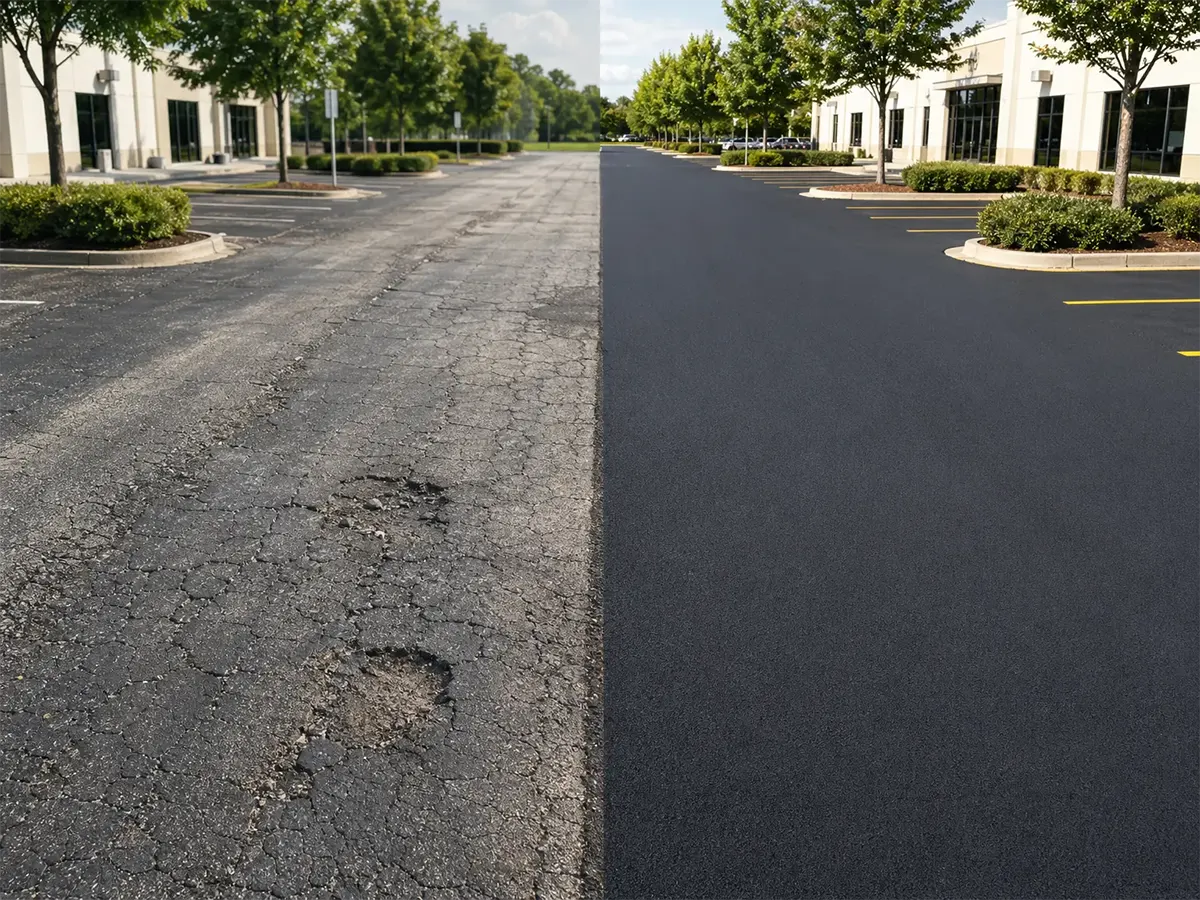
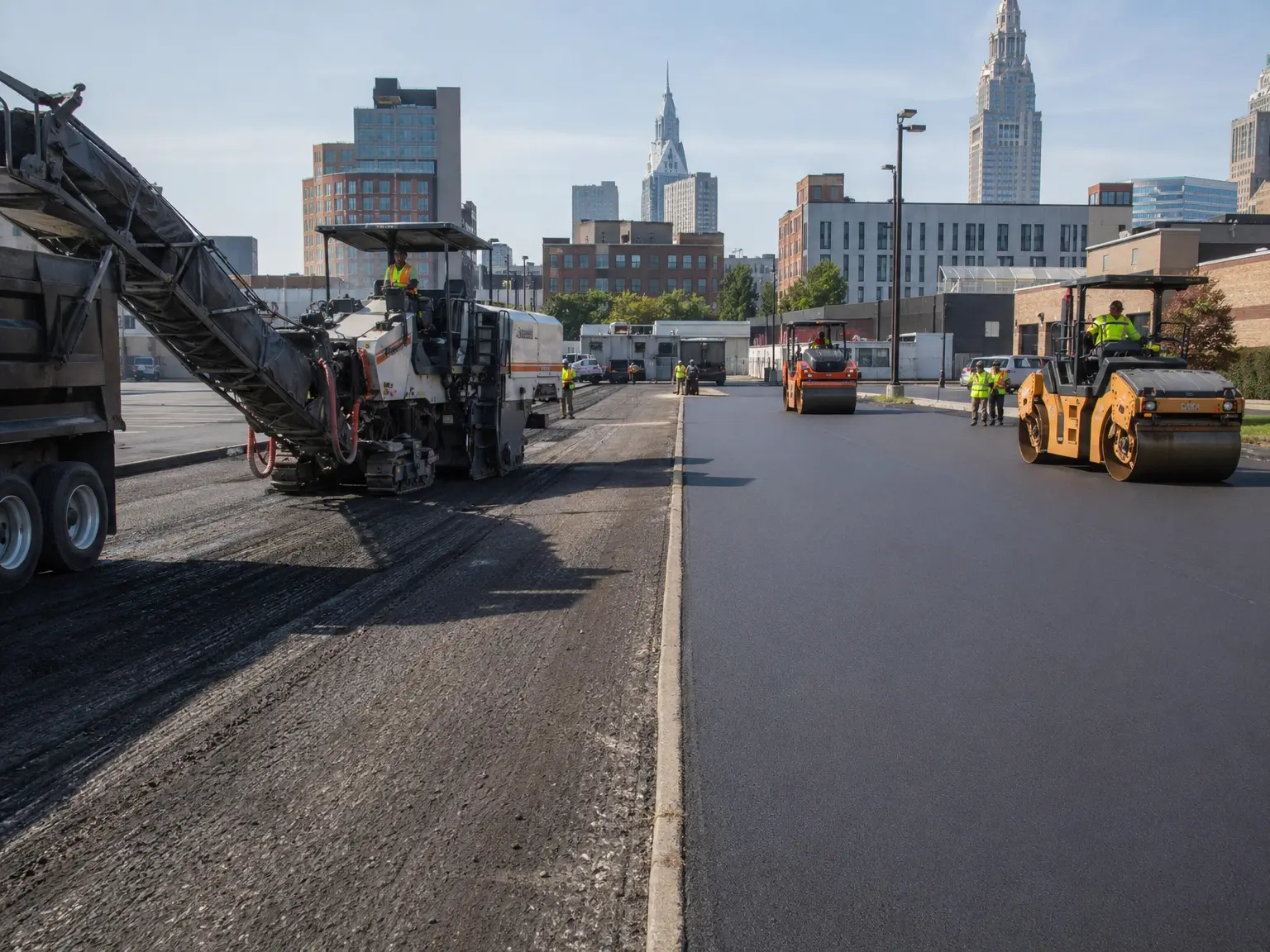
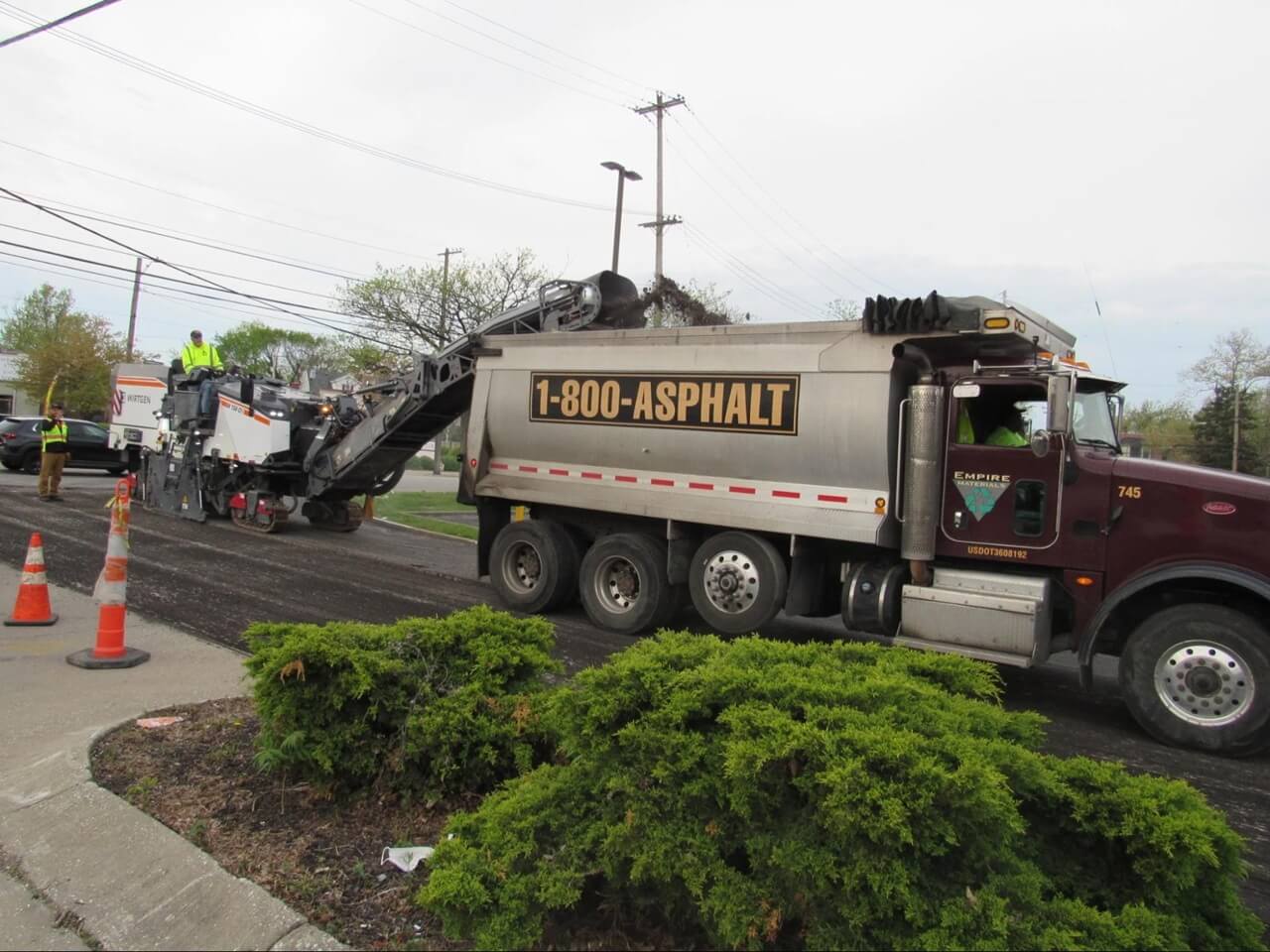
Property owners deciding whether to mill or repave should weigh pavement condition, cost (short- and long-term), expected lifespan, traffic demands, and environmental impacts. This article provides an insider view from experienced Cleveland paving contractors, particularly Empire Paving, on how they evaluate these factors during site assessments to recommend the most appropriate maintenance approach for your lot.
Key Takeaways
- Contractors assess visual indicators, core samples, traffic, and climate history.
- Milling removes the top layer to repair and recycle asphalt; lower upfront cost.
- Repaving replaces pavement entirely; greater durability and longer life.
- Decision balances cost, longevity, and structural needs without over- or under-treating.
- Heavy-traffic zones usually need repaving; light-duty areas can often be milled.
- Regular inspections, drainage control, and prompt repairs extend pavement life.
- Empire Paving prioritizes honest recommendations tailored to your lot’s condition.
Visual Indicators Contractors Look for on a Site Walk
Experienced contractors begin with a thorough walk-through, examining the pavement for specific signs that reveal its condition. They look closely at crack patterns—whether they are hairline, alligator, or longitudinal cracks—as these indicate different types of distress. Drainage points are inspected to identify standing water or erosion, which can accelerate pavement failure. High and low spots are noted because uneven surfaces can cause water pooling and structural stress. These visual cues help contractors determine if the damage is mostly surface-level or if deeper structural issues exist.
What Core Samples Reveal About the Pavement Base
Core sampling is a critical diagnostic tool. By extracting a cylindrical section of the pavement, contractors can measure the depth of existing asphalt layers and evaluate the quality of the base material beneath. They also check for moisture content, which can weaken the base and lead to premature failure. A solid, dry base with adequate asphalt thickness often means milling and resurfacing will suffice. Conversely, a compromised base with moisture intrusion or insufficient depth usually signals the need for full repaving to restore structural integrity.
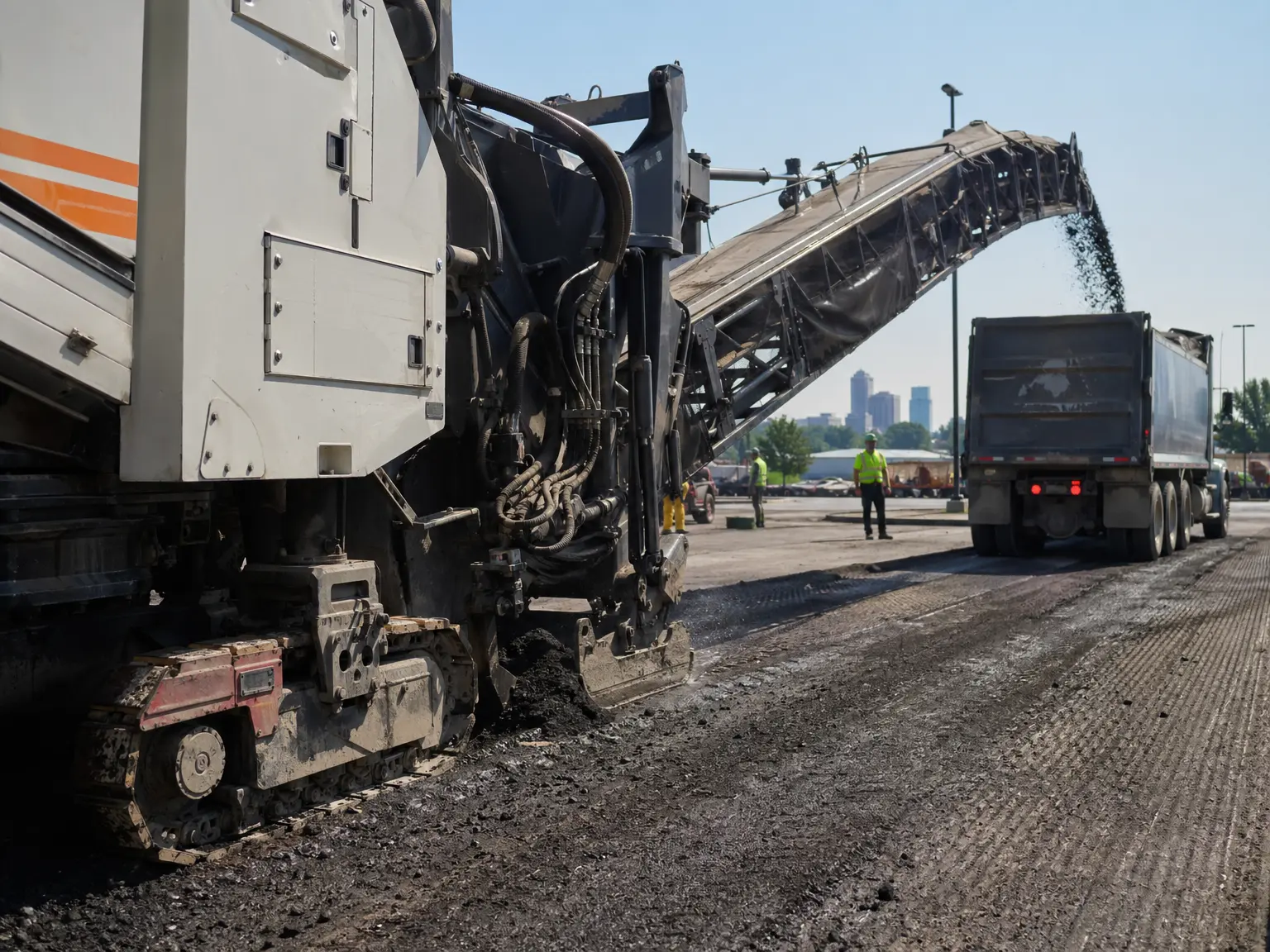
Traffic Counts and Load Types Influence Treatment Choices
Not all parking lots face the same demands. Contractors consider the volume and type of traffic the lot supports. For example, a lot regularly serving semi-trucks or heavy commercial vehicles requires a thicker, more durable pavement structure, often necessitating repaving. In contrast, a car-only office lot with lighter traffic can often be maintained effectively with milling and resurfacing. Understanding these load factors ensures the chosen treatment matches the functional requirements, preventing premature wear and costly repairs.
Impact of Northeast Ohio’s Climate on Pavement Assessment
The region’s climate history plays a significant role in pavement evaluation. Lots that have endured 20 Ohio winters show different wear patterns and structural challenges compared to those with only 10 years of exposure. Freeze-thaw cycles cause expansion and contraction, leading to cracking and base weakening over time. Contractors factor in this climatic stress when deciding between milling and repaving, recognizing that older lots with extensive weathering may require more comprehensive repairs to ensure longevity.
Empire Paving’s Honest Approach to Recommendations
At Empire Paving, the guiding principle is to recommend only what your lot truly needs. They avoid pushing more expensive repaving when milling will provide a durable, cost-effective solution. Likewise, they do not suggest milling if the base is failing and repaving is necessary to prevent future problems. This honest, transparent approach builds trust and ensures property owners receive the best value and performance from their pavement investment.
Decision Factors Contractors Balance
Contractors weigh pavement condition, budget constraints, expected lifespan, traffic loads, and environmental goals. They integrate visual inspections, core sample data, traffic analysis, and climate considerations to recommend a treatment that meets structural needs while optimizing cost and durability.
Cost Considerations
Milling generally costs less initially but can require more frequent maintenance; repaving costs more up front but often reduces long-term maintenance expenses and downtime.
Method Initial Cost Long-term Maintenance Cost Cost-effectiveness
Milling Lower Higher Variable
Repaving Higher Lower Generally better
Use the table above as a quick comparison, then factor in traffic, base condition, and expected service life when estimating return on investment.
Longevity
Repaving typically yields the longest service life (often 15–20 years with proper upkeep); milling can extend life by addressing surface issues but usually adds fewer years than full replacement. To better understand how long your lot can last, see our guide on how long a commercial parking lot lasts.
Future Maintenance Capacity
Budget, staffing, and maintenance schedules matter: owners who can perform regular upkeep may prefer milling where appropriate, while those seeking lower routine maintenance may invest in repaving.
Environmental Impact
Milling recycles asphalt and reduces material waste and emissions from manufacturing new pavement, making it the more sustainable option in many cases.
Studies have further detailed the specific environmental considerations, such as fuel consumption during the milling process.
Traffic Demands
Consider expected traffic and loads: heavy commercial or industrial traffic typically favors repaving with a stronger structural section; light or occasional traffic can often be managed with milling and resurfacing.
What Is the Difference Between Asphalt Milling and Repaving?
Milling removes a controlled thickness of the surface for repair and reuse; repaving removes and replaces the full surface and sometimes the base for a renewed pavement structure. For a deeper comparison, read our article on asphalt milling vs. full replacement.
Processes
Milling: remove top layer, repair base, and resurface. Repaving: remove full pavement, fix base as needed, then lay new asphalt and finish.
Costs
Milling usually has lower initial costs; repaving has higher initial cost but often lower maintenance costs over the pavement life.
Benefits
Milling is cost- and resource-efficient for surface-level distress; repaving provides a long-term, robust solution when the base or structure is compromised.
Ideal Use Cases
Choose milling for minor surface damage with a sound base; choose repaving for extensive surface failure, base problems, or end-of-life pavement.
How Does the Asphalt Milling Process Work?
Milling uses a rotating drum to remove the specified depth of asphalt, after which contractors repair any base issues and apply a new wearing course, often reusing the reclaimed asphalt pavement (RAP). For technical guidance on this process, the
FHWA Pavement Preservation Checklist for HMA Milling outlines industry-standard criteria contractors follow when evaluating milling depth and surface preparation.
What Are the Steps Involved in Parking Lot Repaving?
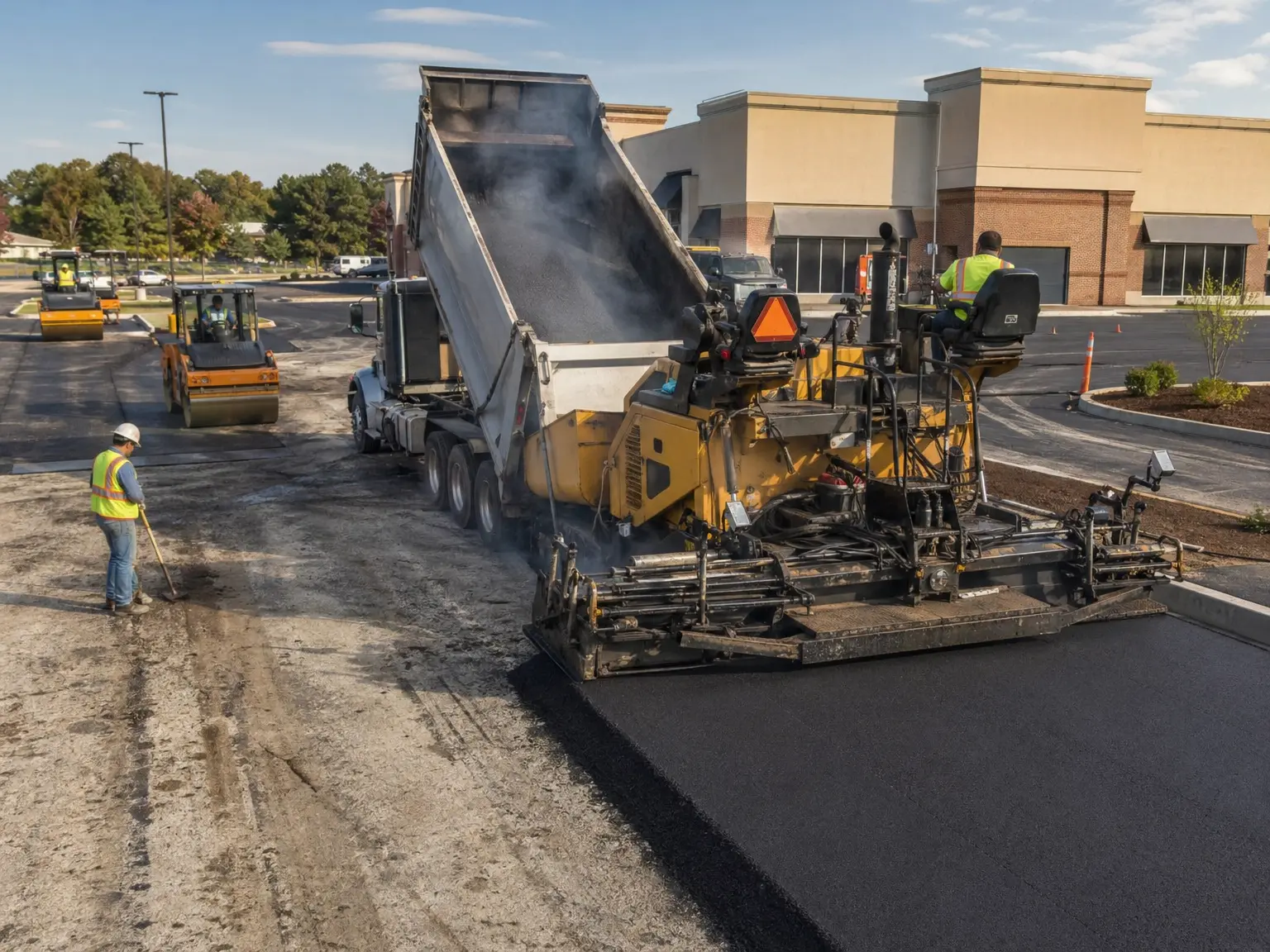
Repaving starts with demolition of damaged pavement, base repairs if needed, laying new asphalt, compaction, and finishing (sealcoat or striping as required).
Signs Contractors Use to Decide Between Milling and Repaving
Contractors look for surface cracking, potholes, rutting, and drainage failures during their assessment. They evaluate whether the base is intact to determine if asphalt milling will suffice or if repaving is needed.
Indicators Favoring Milling
- Surface Cracking: Small to moderate cracks with a solid base may be milled and resurfaced.
- Potholes: Localized potholes can be addressed with targeted milling and repair.
- Drainage Problems: Fixing drainage with milling and resurfacing can prevent further damage.
Indicators Favoring Repaving
- Severe Damage: Large interconnected cracks, rutting, and widespread failure suggest repaving.
- Foundation Problems: A compromised base almost always requires full replacement.
- Age of Pavement: Pavements near or past their design life are better served by repaving.
Effective Parking Lot Maintenance Techniques to Extend Pavement Life
Regular preventive maintenance for parking lots, routine inspections, and proper drainage management are the primary tactics to prolong any pavement treatment. The National Asphalt Pavement Association’s pavement maintenance and rehabilitation guidance provides additional best practices that align with the strategies Empire Paving applies on every Cleveland-area project.
- Regular Preventive Maintenance: Address small defects early to avoid major repairs.
- Routine Inspections: Inspect seasonally and after major weather events.
- Drainage Management: Prevent water infiltration to protect the pavement structure.
How Milling Contributes to Sustainable Asphalt Maintenance
Milling recovers asphalt material for reuse, reduces landfill waste, and lowers demand for new materials, improving the project’s environmental footprint.
Best Practices for Maximizing Repaving Longevity
Use quality materials, compact properly, sealcoat as recommended, and perform prompt repairs to maximize a repaved surface’s lifespan.
- Regular Sealcoating: Protects against oxidation and UV damage.
- Prompt Repairs: Fix early distress before it spreads.
- Quality Materials: Specify appropriate mixes and workmanship for local conditions.
Frequently Asked Questions
What are the long-term benefits of milling compared to repaving?
Milling saves on initial costs and recycles material; it can be a sustainable, cost-effective solution for surface-level distress but typically requires more frequent maintenance than repaving.
How often should I inspect my parking lot for maintenance needs?
Inspect at least twice a year (spring and fall) and after severe weather; early detection reduces repair costs and extends pavement life.
Can I combine milling and repaving for my parking lot maintenance?
Yes — contractors often mill where feasible and repave or patch severely damaged areas so owners get a balanced, cost-effective repair plan.
What factors should I consider when choosing a contractor for asphalt maintenance?
Choose contractors with relevant experience, clear assessments, transparent pricing, references, and a record of quality work and regulatory compliance.
How does weather affect the milling and repaving processes?
Dry, warm conditions are best; moisture and cold can impair compaction and adhesion, so contractors schedule work for favorable weather windows.
What maintenance practices can enhance the lifespan of milled asphalt?
Sealcoating, timely crack and pothole repairs, and good drainage extend the life of milled and resurfaced areas.
Are there specific regulations or guidelines for asphalt maintenance in Cleveland?
Yes — local environmental and safety regulations apply; work with licensed contractors familiar with Cleveland codes and permitting to ensure compliance.
Get a Free Site Assessment from Empire Paving
Choosing milling or repaving depends on a clear assessment of pavement condition, budget, traffic, longevity goals, and sustainability. Consult a local contractor like Empire Paving for an on-site evaluation and a cost-lifecycle recommendation tailored to your property. Empire Paving offers honest, expert evaluations tailored to your parking lot’s unique condition and needs. Contact us today for a free site assessment and receive a transparent recommendation that balances cost, durability, and sustainability.