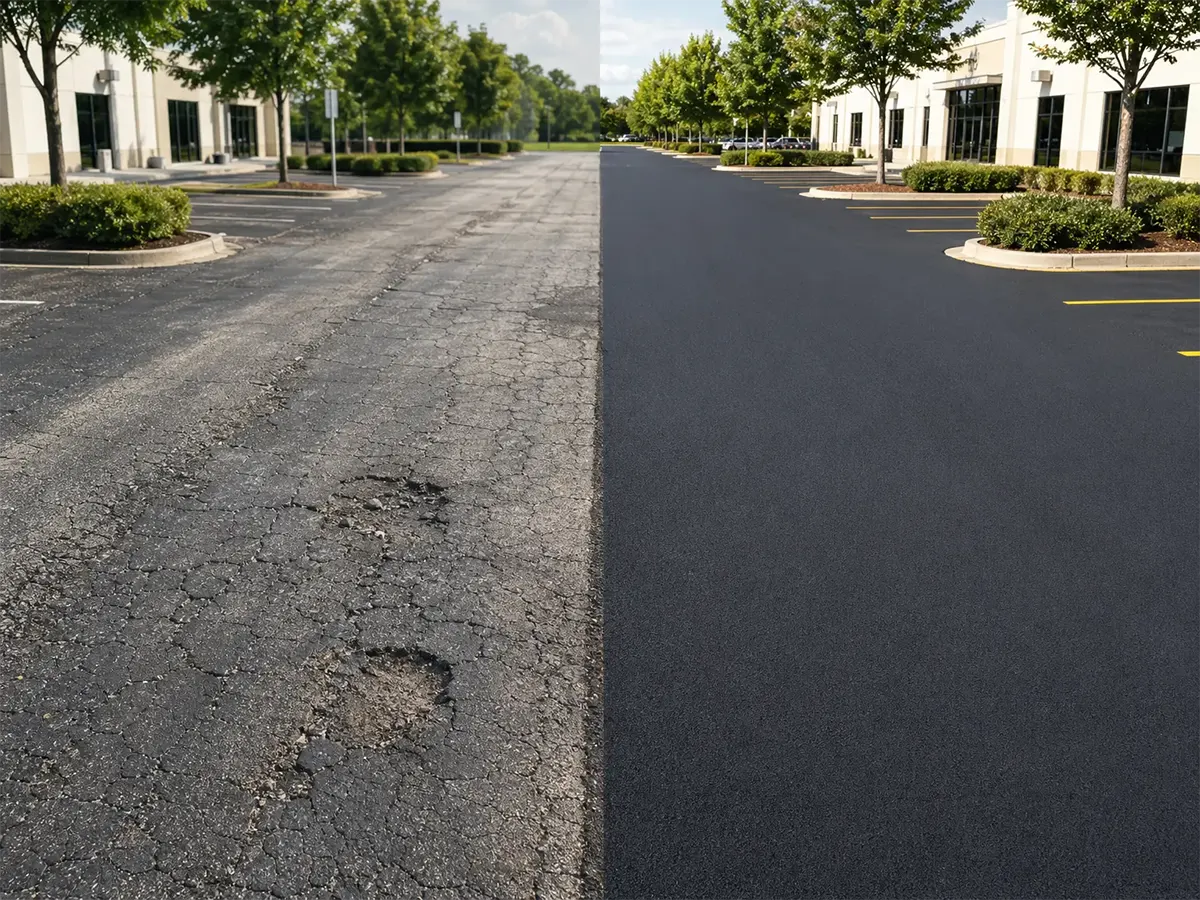
Asphalt milling removes the worn top layer of pavement to create a clean, even base for resurfacing. This process extends pavement life and supports recycling of materials, lowering costs and environmental impact. This guide walks Cleveland property owners through the step-by-step milling process, the equipment used, traffic management considerations, project timelines, and why milling is often preferable to simply overlaying. It also highlights Empire Paving’s unique on-site recycling approach, offering cost and sustainability advantages.
Key Takeaways
- Step-by-step milling process ensures a durable base for new asphalt.
- Empire Paving recycles milled asphalt on-site, reducing waste and costs.
- Specialized equipment like cold planers remove asphalt precisely to specified depths.
- Traffic management is essential to minimize disruptions during milling.
- Milling addresses deeper pavement issues better than overlays alone.
- Typical project duration is 3–7 days depending on size and conditions.
- Costs vary based on materials, labor, equipment, and project complexity.
Step-by-Step Asphalt Milling Process
Understanding the milling process helps property owners prepare and set expectations. The typical steps include:
- Site Preparation and Layout: The project area is marked and prepared, including traffic control setup and identifying milling limits.
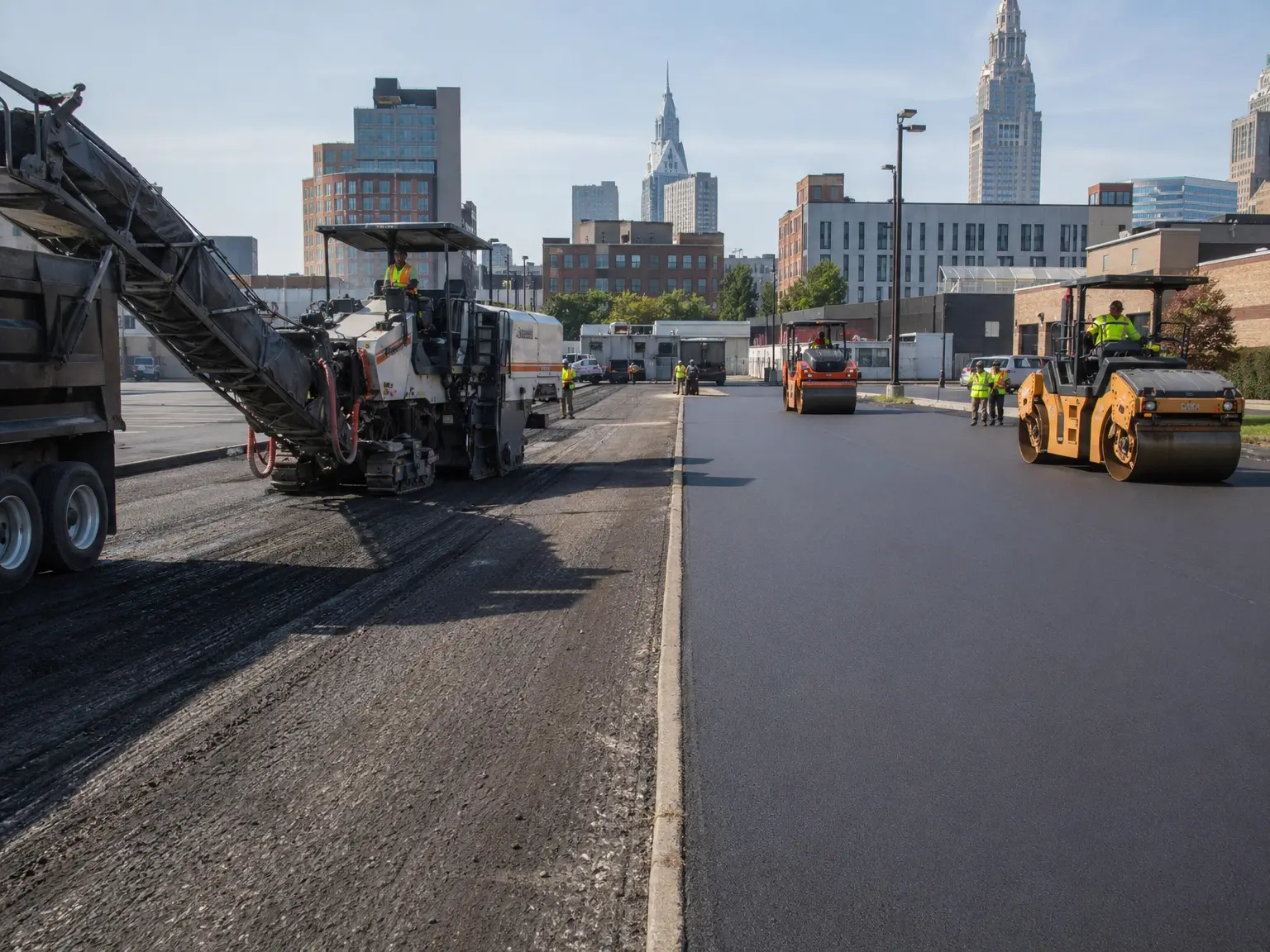
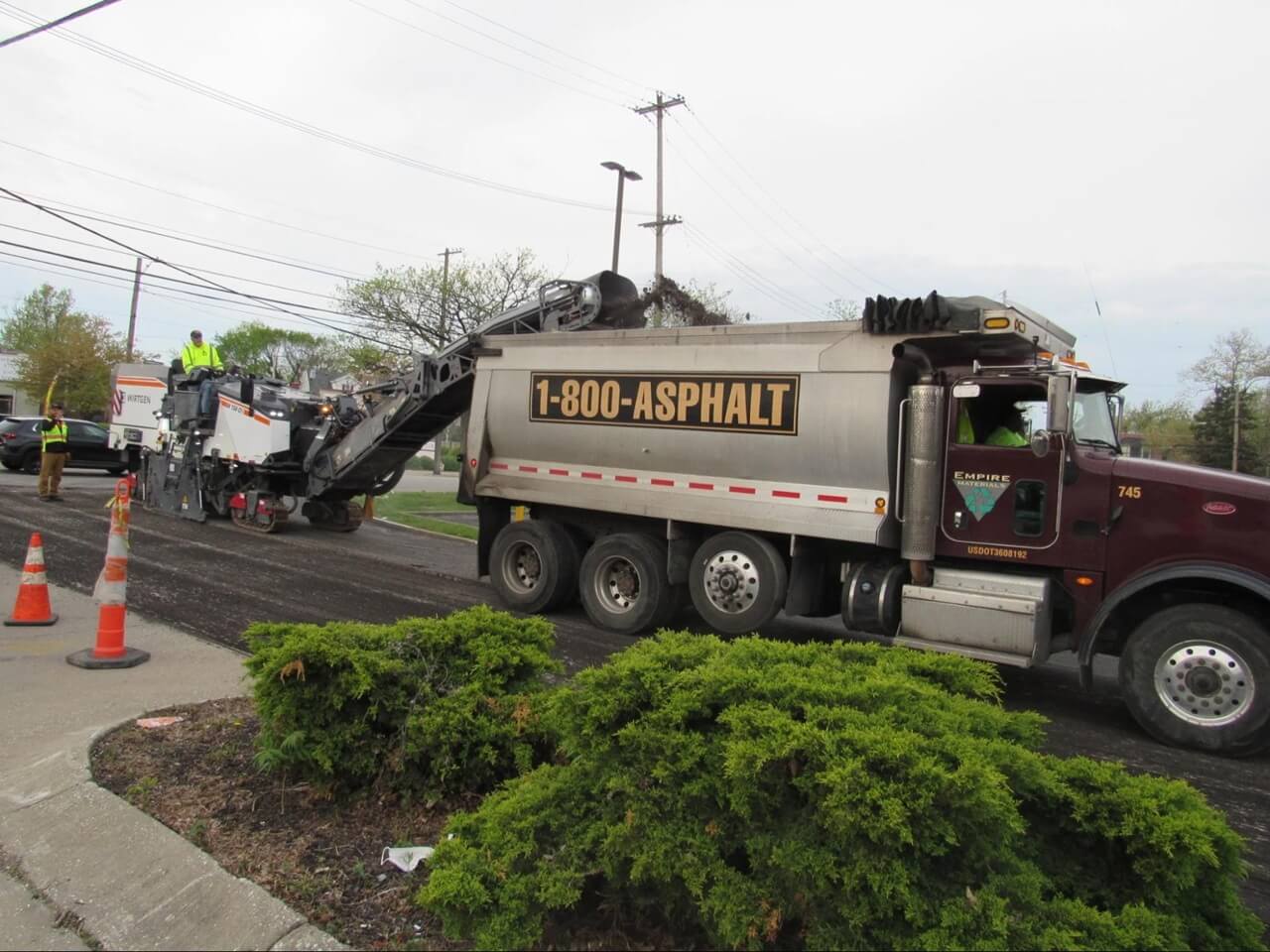
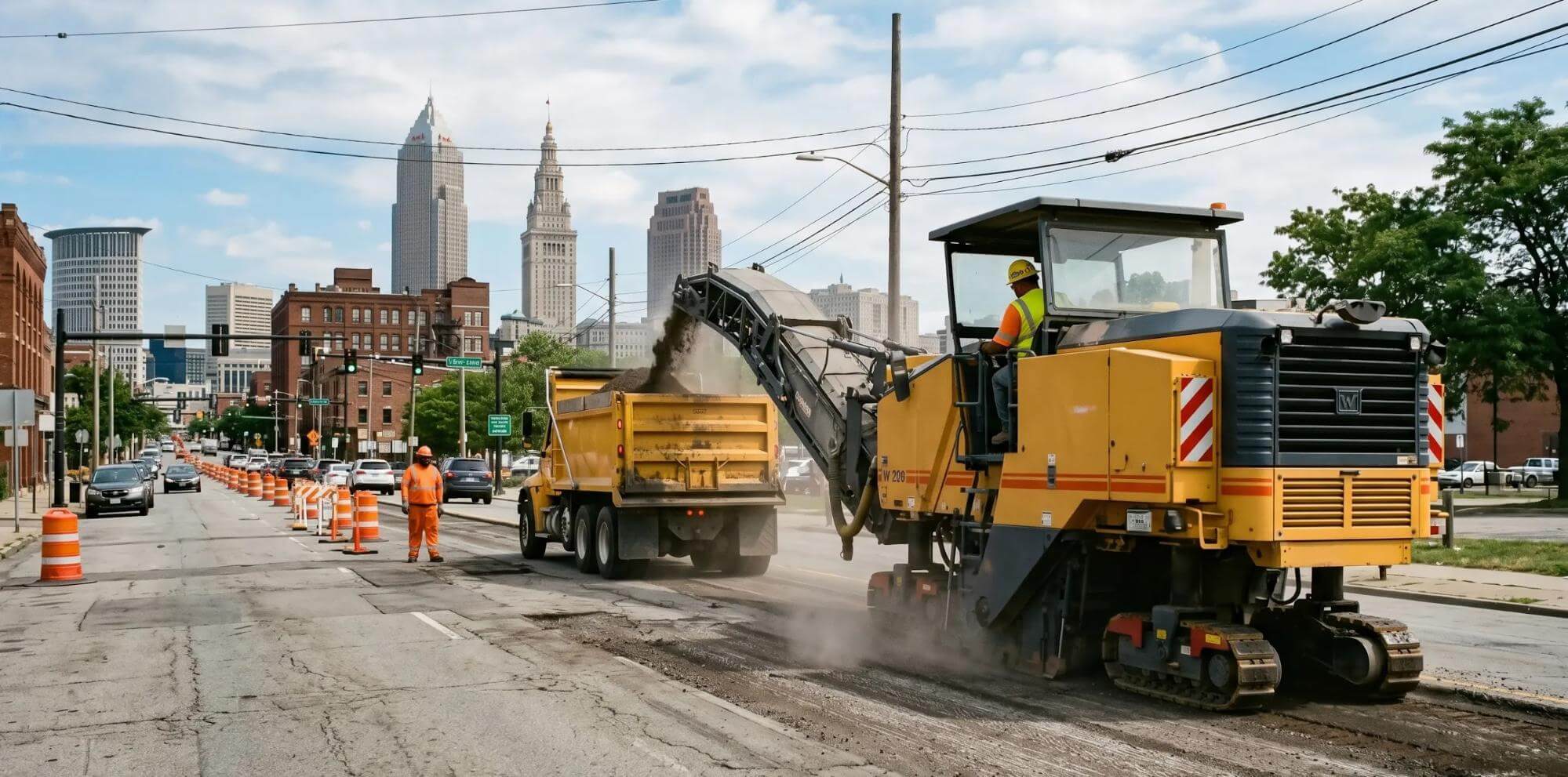
- Milling Machine Removes Existing Asphalt: Using a cold planer, the machine removes the asphalt layer to the specified depth, typically between 1 and 4 inches, depending on pavement condition and project requirements.
- Milled Material Conveyed Directly into Trucks: The milled asphalt is immediately conveyed into trucks for transport. Empire Paving recycles this material on-site, a key differentiator that reduces hauling costs and environmental impact. Research on the impact of milling operations and optimal timing between milling and repaving confirms that minimizing delays between milling and resurfacing is critical to maintaining structural integrity.
- Inspection and Base Repair: After milling, the surface is inspected for any base damage. Repairs are made as needed to ensure a stable foundation for the new asphalt.
- New Asphalt Laid and Compacted: Finally, fresh asphalt is laid over the milled surface and compacted to create a smooth, durable pavement. Learn more about our asphalt resurfacing services in Cleveland.
Equipment Used in Asphalt Milling Projects in Cleveland
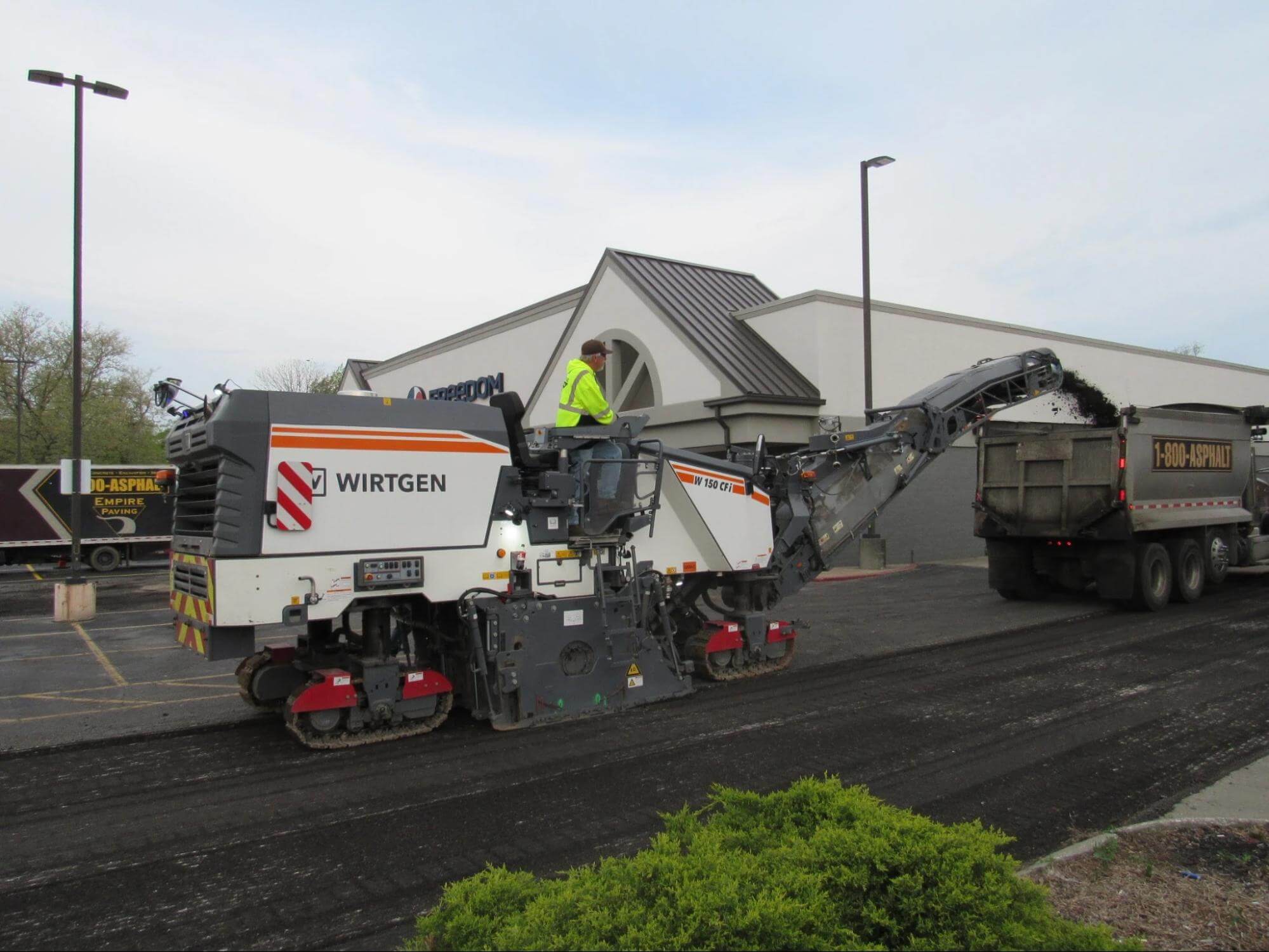
Specialized machinery is essential for efficient and precise milling. Common equipment includes:
- Cold Planers: These machines use rotating cutting drums to grind asphalt to the target depth without heating, protecting underlying layers.
- Conveyor Systems: Convey milled material directly into trucks to streamline removal and recycling.
- Recycling Equipment: Empire Paving’s on-site recycling setup processes milled asphalt for reuse, reducing waste and material costs.
Traffic Management During Milling
Asphalt milling often requires lane or section closures and detours to ensure worker safety and project efficiency. Key traffic management practices include:
- Scheduling work during off-peak hours to minimize disruption.
- Setting up clear signage and barriers around the work zone.
- Notifying residents and businesses in advance about closures and detours.
- Coordinating with local authorities for permits and traffic control plans.
Effective traffic management helps keep projects on schedule and reduces inconvenience to the community.
Why Milling Is Preferable to Simply Overlaying
While asphalt overlay involves placing new asphalt over the existing surface without removal, milling offers several advantages:
- Addresses Structural Issues: Milling removes damaged layers, fixing cracks, ruts, and drainage problems that overlays alone cannot resolve. According to the Federal Highway Administration’s guidance on thin asphalt overlays for pavement preservation, proper milling is essential to correct rutting and surface profile issues before resurfacing.
- Improves Bonding: A milled surface provides a uniform, textured base that helps new asphalt adhere better.
- Extends Pavement Life: Proper milling and base repair lead to longer-lasting pavement compared to overlays.
- Supports Sustainability: Milling allows for recycling of asphalt material, reducing environmental impact.
How Long Does an Asphalt Milling Project Typically Take?
Most small-to-medium milling projects in Cleveland take about 3 to 7 days. Factors influencing duration include:
- Project Size: Larger areas require more milling passes and hauling.
- Weather Conditions: Rain, snow, or extreme cold can delay work.
- Site Access and Permits: Logistics and permitting affect scheduling.
Planning and coordination with contractors help minimize disruptions and keep projects on track.
Empire Paving’s On-Site Recycling Advantage
Empire Paving stands out by recycling milled asphalt material directly on-site. This approach offers significant benefits:
- Cost Savings: Reduces hauling and disposal fees by reusing material immediately.
- Environmental Benefits: Lowers landfill waste and conserves natural resources.
- Project Efficiency: Streamlines material handling and reduces delays.
On-site recycling supports sustainable construction practices while delivering value to property owners.
Conclusion
Asphalt milling is a practical way to prepare worn pavement for a durable, cost-effective resurfacing while supporting recycling and sustainability. With proper planning and a qualified asphalt paving contractor like Empire Paving, Cleveland property owners can improve pavement performance, reduce long-term costs, and benefit from on-site recycling advantages. Contact your local milling contractor to discuss project specifics and scheduling.
Get Your Free Asphalt Milling Assessment with Empire Paving
Ready to improve your pavement’s durability and sustainability? Contact Empire Paving today for a free milling assessment. Our expert team will evaluate your property, explain the benefits of parking lot maintenance and milling, and provide a detailed project plan tailored to your needs.
Frequently Asked Questions
What safety measures are taken during an asphalt milling project?
Workers use personal protective equipment (PPE) such as hard hats, gloves, and high-visibility vests. Contractors set up signage and barriers, and equipment includes safety features. Operators are trained, and jobsite safety briefings are conducted regularly.
Can asphalt milling be performed in winter conditions?
Yes, cold milling equipment can operate in cooler weather. However, snow, ice, or extremely low temperatures may slow work or require rescheduling. Discuss seasonal feasibility with your contractor.
How does asphalt milling affect traffic during the project?
Milling often requires lane or section closures and detours. Contractors typically work during off-peak hours and notify residents and businesses in advance to minimize disruptions.
What is the difference between asphalt milling and asphalt overlay?
Milling removes the top layer to fix structural and drainage issues before resurfacing. An overlay places new asphalt over the existing surface without removal; overlays suit minor surface problems, while milling addresses deeper defects.
How can property owners choose the right contractor for asphalt milling?
Choose contractors with milling experience, proper licenses, insurance, and positive references. Compare detailed quotes, verify equipment availability, and ask for examples of similar projects.
What maintenance is required after an asphalt milling project?
After resurfacing, monitor for cracks or settlement, remove debris, ensure drains remain clear, and consider sealcoating once the new asphalt has cured to extend its life.