How Do Seasonal Changes Affect Asphalt Paving Costs?
Seasonal timing directly affects both what you pay for asphalt paving and whether a contractor can take your project at all. In Northeast Ohio, the paving season runs roughly from late April through October — and within that window, demand, material pricing, and contractor availability all shift significantly from one month to the next. Booking at the right time of year can save you money, reduce your wait, and result in better long-term pavement performance.
Why Season Matters for Asphalt Paving
Asphalt is a temperature-sensitive material. Hot mix asphalt leaves the plant at temperatures between 175°F and 275°F, and it must be compacted while still within that workable range. Once it drops below roughly 50°F ambient air temperature, the mix cools too quickly for crews to achieve proper compaction — and improperly compacted asphalt fails early.
This makes weather conditions a non-negotiable factor in every paving project. Beyond the technical requirements, seasons also drive demand cycles. Contractors in Northeast Ohio experience intense scheduling pressure during the peak months, which affects pricing, lead times, and project availability. Understanding how seasonal changes influence asphalt paving costs gives homeowners a real advantage when planning their projects.
Spring: Rising Demand and Weather Risks
April through May
Late spring is when the Northeast Ohio paving season reopens after winter. Ground temperatures climb back above the 50°F threshold, contractors bring their crews back online, and homeowners who have been waiting since fall begin submitting requests all at once.
The result is a fast-rising demand curve. Contractors who were available in early April often have packed schedules by mid-May. Pricing during this period tends to be moderate — not yet at summer peaks, but climbing quickly.
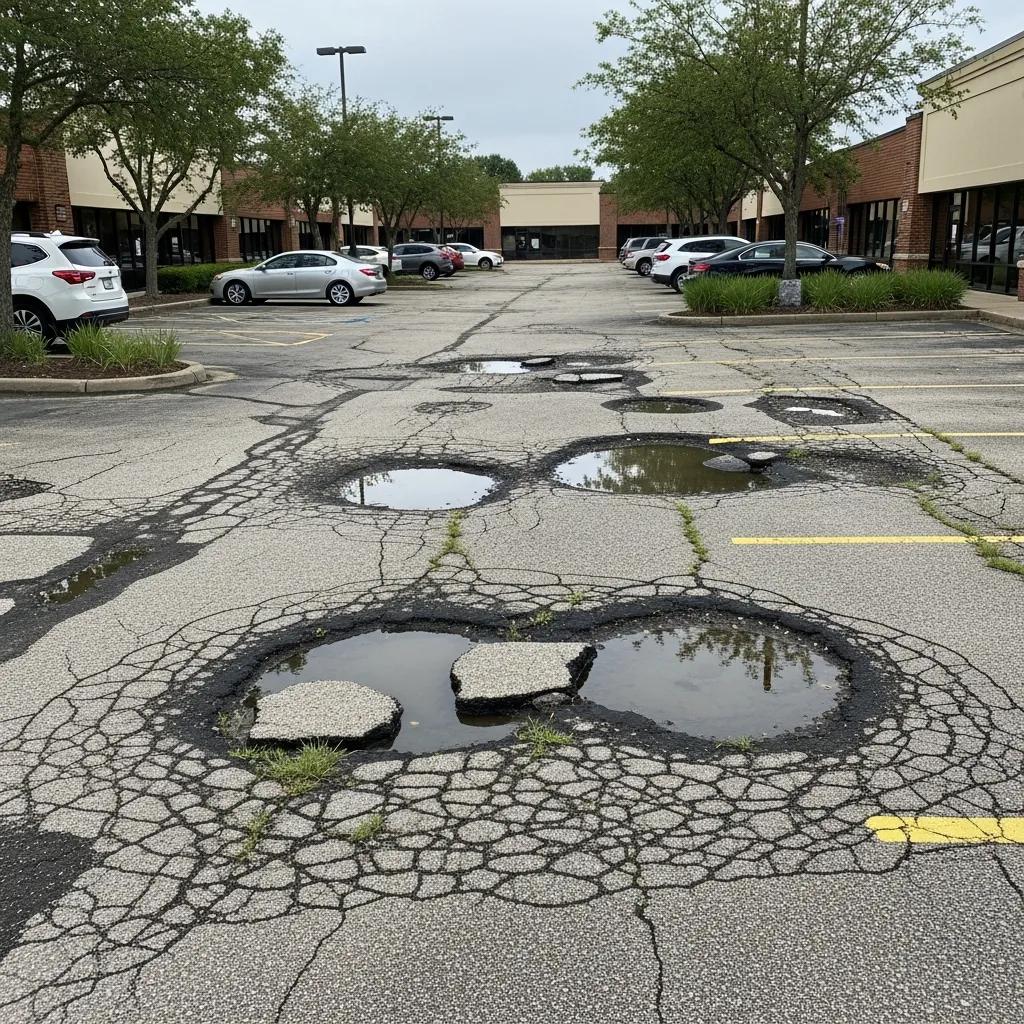
The main risk in spring is moisture. Early spring brings snowmelt and frequent rain, and paving over wet or frost-affected ground compromises the base layer. A saturated subgrade cannot provide stable support for new asphalt, which can lead to premature cracking and structural failure. If you notice signs that your asphalt surface needs repair or replacement after winter, spring is a good time to get an assessment — but schedule paving for a dry window when the ground has fully stabilized.
For homeowners, late spring — roughly mid-May in most of Northeast Ohio — offers a reasonable balance of workable conditions and still-accessible contractor schedules.
Summer: Peak Season, Peak Pricing
June through August
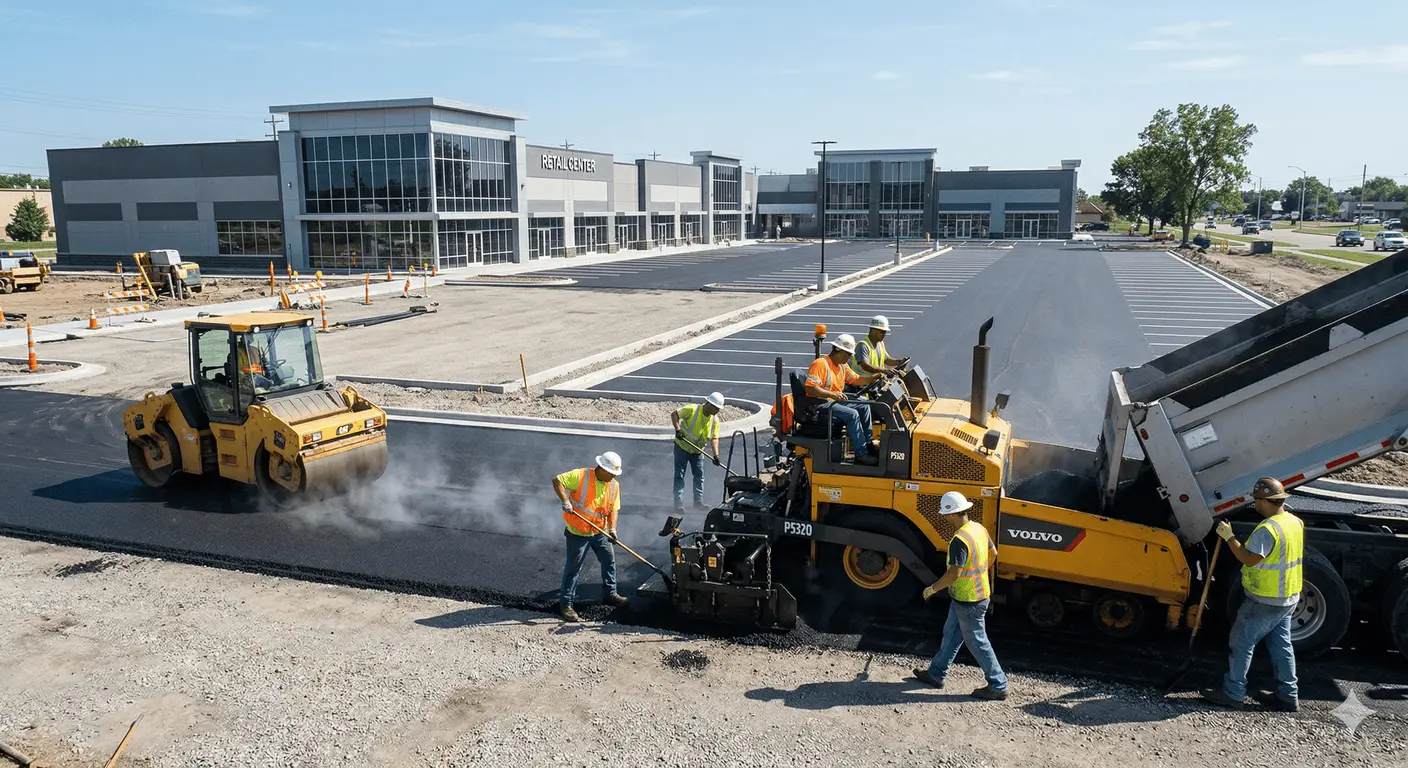
Summer is the busiest paving season. Warm, dry conditions are ideal for asphalt installation: the mix stays workable longer, compaction is easier, and curing proceeds without weather interruptions. Contractors run full crews and maximize production, and large commercial and municipal projects dominate scheduling.
For homeowners, summer availability can be the biggest challenge. Residential projects often get pushed behind larger commercial contracts during peak months. Wait times lengthen, and pricing reflects the high demand.
Peak season pricing typically runs 15 to 25 percent higher than off-peak periods. If your project is not urgent, scheduling in summer may cost more than waiting for fall. That said, summer is genuinely the most reliable window for quality installation — the extended warm days give asphalt the time it needs to compact and cure without temperature fluctuations working against it.
One note for extremely hot days: when ambient temperatures push above 95°F, freshly laid asphalt can become too soft for proper compaction. Experienced contractors address this by scheduling early morning starts and monitoring the mix closely throughout the day. This is one reason why choosing the right asphalt paving contractor matters — proper scheduling judgment directly affects the quality of the finished surface.
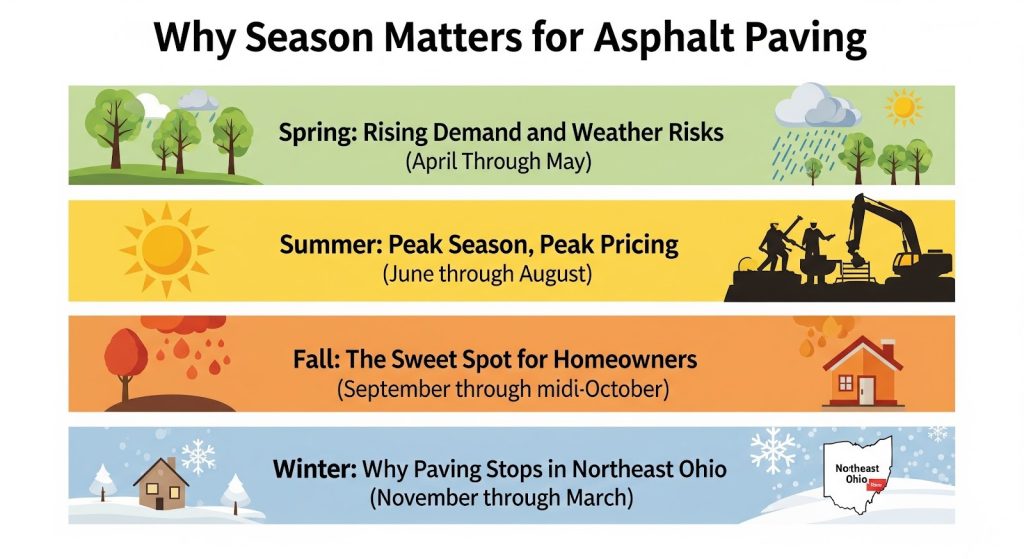
Fall: The Sweet Spot for Homeowners
September through mid-October
Early to mid-fall is widely considered the best season for residential asphalt paving in Northeast Ohio, and for good reason. Temperatures settle into the 60°F to 80°F range — ideal for asphalt workability and curing. Humidity drops. Rain becomes less frequent. And critically, contractor schedules begin to open up as the rush of large summer commercial projects winds down.
From a cost standpoint, fall often delivers the most competitive pricing of the active season. Contractors are motivated to keep crews working before the season closes, and homeowners willing to book in September or October frequently secure better rates and faster scheduling than those who called in June.
The deadline for fall paving in northern Ohio is typically mid-October. Once overnight temperatures consistently drop below 40°F, the risk of cold joints and inadequate compaction increases significantly. Planning your project for early fall — rather than hoping to squeeze it in before the first frost — gives you the best combination of quality conditions, pricing, and availability.
Fall is also an excellent time to address maintenance issues that develop after asphalt paving installation or to apply sealcoating before winter arrives. Protecting your pavement heading into the freeze-thaw season extends its lifespan considerably.
Winter: Why Paving Stops in Northeast Ohio
November through March
In Northeast Ohio, full asphalt paving projects are not performed during winter months. The combination of frozen ground, cold air temperatures, and the region’s heavy freeze-thaw cycle makes it technically impossible to achieve proper compaction and curing on new pavement.
Cold-laid asphalt loses significant structural strength when temperatures drop below 32°F before the material has cured. The base cannot be properly prepared when the ground is frozen, and any moisture trapped beneath fresh asphalt will expand and contract with temperature swings, causing early cracking and surface failure.
What contractors can do in winter is limited to emergency patching and temporary repairs — work intended to get a surface through the cold months until full repairs can be completed in spring. Understanding the factors behind premature cracking in asphalt paving helps explain why attempting to cut corners on seasonal timing leads to expensive problems.
Winter is, however, a productive time to plan. Getting quotes, confirming your budget, exploring flexible payment options for asphalt paving, and booking your spot on a contractor’s spring calendar puts you ahead of the seasonal rush when paving weather returns.
How Seasonal Demand Affects Contractor Availability
Contractor availability in Northeast Ohio follows a predictable pattern tied directly to the paving season. Understanding this pattern helps you plan more strategically.
In early spring, contractors are ramping back up and schedules have capacity. By late May, the best contractors are often booked several weeks out. Through June, July, and August, lead times for residential projects can stretch to four to six weeks or longer. In September, as large commercial projects complete, residential slots open up again. By mid-October, the season is effectively over for new installations.
The practical implication: if you want to work with a specific contractor — one with a strong track record, proper warranties on asphalt paving work, and verified quality — contact them early. The best contractors book up first. Waiting until you need the work done urgently limits your options and often means settling for whoever has availability.
According to paving industry guidance, peak season timing can add 15 to 25 percent to project costs compared to off-peak periods, simply due to demand. Booking in fall or early spring — before the rush — is one of the most practical ways homeowners can manage their paving budget.
Temperature Requirements for Proper Asphalt Installation
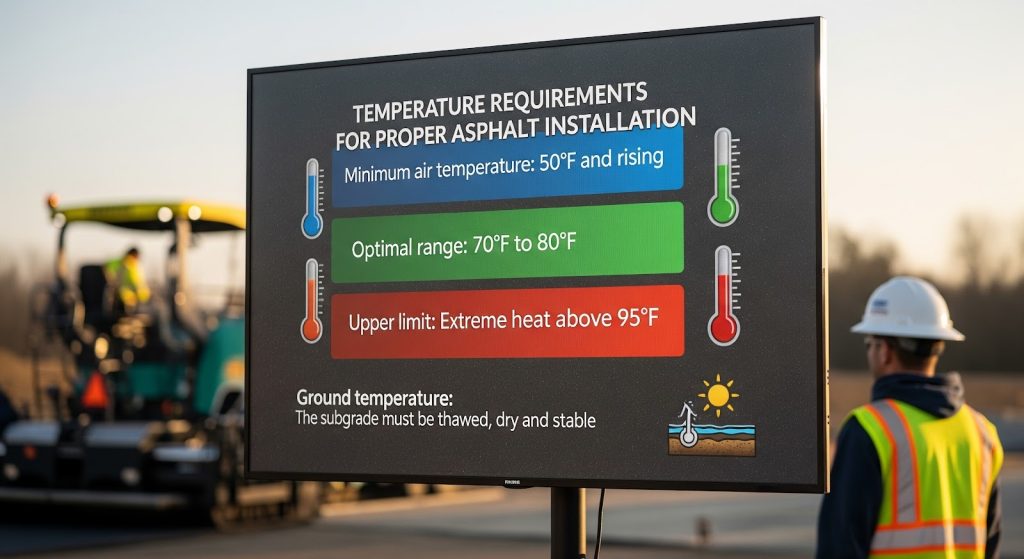
Knowing the temperature thresholds for asphalt installation helps you evaluate contractor recommendations and understand why scheduling decisions matter.
Minimum air temperature: 50°F and rising. Asphalt should not be laid when temperatures are below this threshold or trending downward, as the mix will cool too quickly for proper compaction.
Optimal range: 70°F to 80°F. At this temperature, hot mix asphalt remains workable long enough for crews to achieve the density required for a durable surface.
Upper limit: Extreme heat above 95°F can make fresh asphalt too soft to compact correctly. Early morning scheduling mitigates this risk in peak summer heat.
Ground temperature: The subgrade must be thawed, dry, and stable. Even if air temperatures are acceptable, paving over frost-affected or saturated ground undermines the entire structure.
These thresholds explain why weather conditions directly impact asphalt longevity and why experienced contractors are selective about when they work. A contractor willing to pave in marginal conditions to hit a deadline is a warning sign, not a convenience.
How to Time Your Project for the Best Value
Based on Northeast Ohio’s climate and the paving industry’s seasonal patterns, here is a practical guide for homeowners:
Best overall timing: Early to mid-fall (September to mid-October). Moderate temperatures, lower demand, more competitive pricing, and faster scheduling.
Best for urgency: Late spring (mid-May through June). Conditions are workable and contractor schedules are still accessible before the summer peak fully sets in.
Highest cost and longest wait: Mid-summer (July and August). Reserve this window for projects that cannot be deferred.
Plan, do not pave: Winter (November through March). Use this time to get quotes, review essential warranties when hiring an asphalt paving company, and secure your place on a spring schedule.
Also factor in that improper sealing shortens asphalt lifespan significantly. Whatever season you pave, plan to apply sealcoating approximately 90 days after installation — and schedule subsequent applications every two to three years to protect against UV damage, oxidation, and moisture infiltration.
Get a Free Estimate From Empire Paving
Empire Paving has served homeowners and commercial clients across Northeast Ohio for over 20 years. We understand the region’s climate demands — from spring thaw conditions to the freeze-thaw cycles that stress pavement every winter — and we schedule our work accordingly to deliver surfaces built to last.
We serve Cleveland, Akron, and communities throughout Cuyahoga, Summit, and surrounding counties. Whether you are planning a new driveway, a parking lot resurfacing, or asphalt repair before another Northeast Ohio winter, our team can assess your project and provide a detailed, no-obligation estimate.
Contact Empire Paving today to discuss your project and secure your place in our schedule before the season fills up.
Conclusion / TL;DR
- Asphalt paving in Northeast Ohio runs from late April through mid-October — temperature and ground conditions make winter installation impossible.
- Fall (September to mid-October) is the best season for homeowners — moderate temperatures, lower demand, better pricing, and faster contractor availability.
- Summer is peak season — ideal conditions but highest demand, longest wait times, and 15 to 25 percent higher pricing.
- Spring offers a middle ground — workable conditions from mid-May, but rain and ground moisture require careful timing.
- Winter is planning season — use it to get quotes, review warranties, and book your spring or fall slot early.
- Temperature thresholds matter — asphalt requires air temperatures above 50°F and a thawed, dry subgrade for proper compaction and curing.
- Book early regardless of season — the best contractors fill up fast, and last-minute availability usually means fewer options and higher cost.