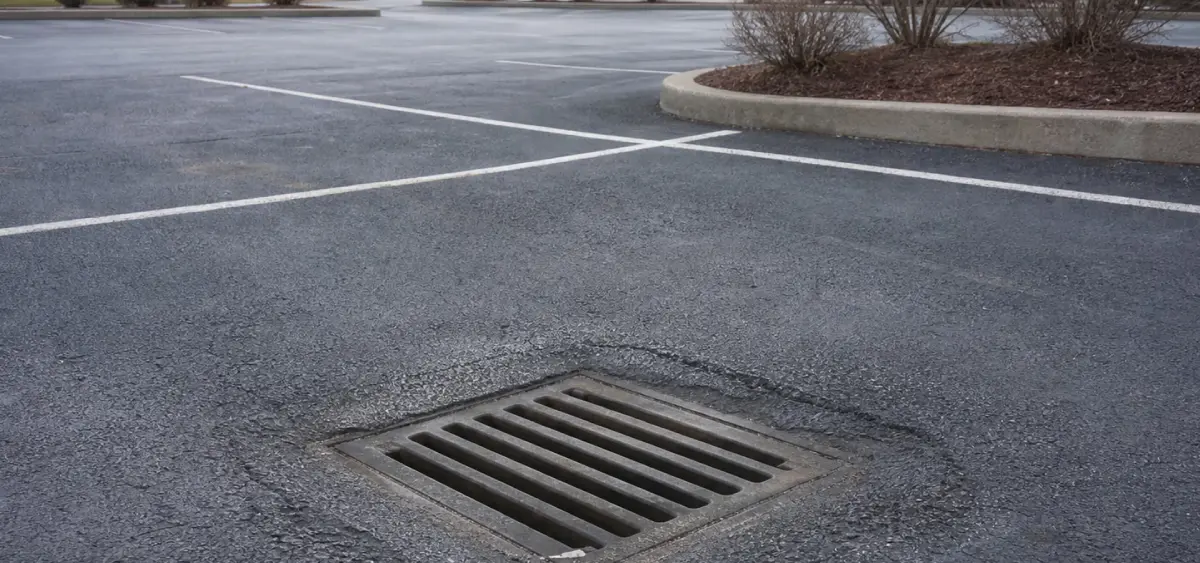
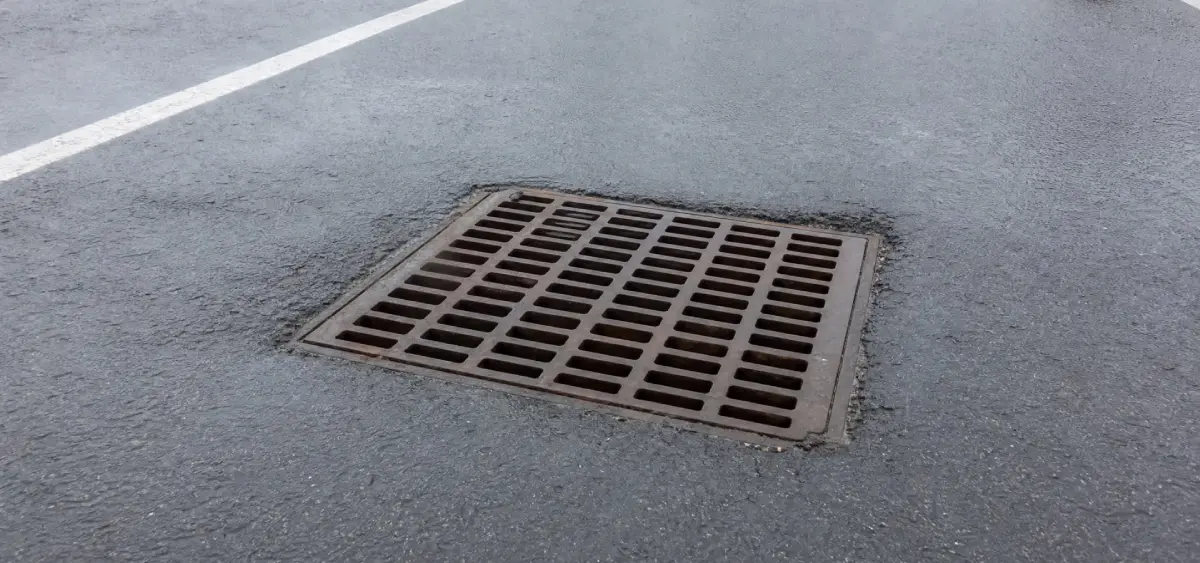
A failing catch basin rarely announces itself — it shows up as sinking pavement, a cracked grate, or standing water that just never seems to drain, until one of those signs becomes a slip-and-fall claim. Six signs cover nearly every catch basin failure a Cleveland property manager will encounter, and knowing them before a tenant, customer, or delivery driver does is the difference between a routine repair and a liability exposure.
The 6 Signs Your Catch Basin Is Failing
Each of these can appear on its own, but more than one at the same time usually means the failure has been developing for a while.
| Sign | What It Looks Like | If Ignored |
| Settling or sinking pavement around the basin | A visible dip or slope forming in the asphalt right next to the frame | Frame shifts further out of alignment, creating a trip hazard and worsening structural failure |
| Cracked, broken, or missing grate | Visible cracks across the grate, or a section broken away entirely | Immediate fall/injury hazard — this is the sign most directly tied to a liability claim |
| Standing water that doesn’t drain after rain | Water pooling for 30+ minutes after rain stops, well past normal drain time | Outlet pipe is likely blocked or the basin structure is compromised internally |
| Visible cracks in the basin walls or frame | Cracking visible around the frame’s edge or down into the visible structure | Structural failure progressing — water and soil begin bypassing the basin entirely |
| Erosion or a sinkhole forming near the basin | A soft or sunken area of ground/pavement adjacent to the structure | Water is escaping around the basin instead of through it, undermining the pavement base |
| Debris overflowing onto the lot surface | Sediment, leaves, or trash visibly piled at or above the grate line | Sump is full and no longer trapping debris — drainage capacity is already reduced |
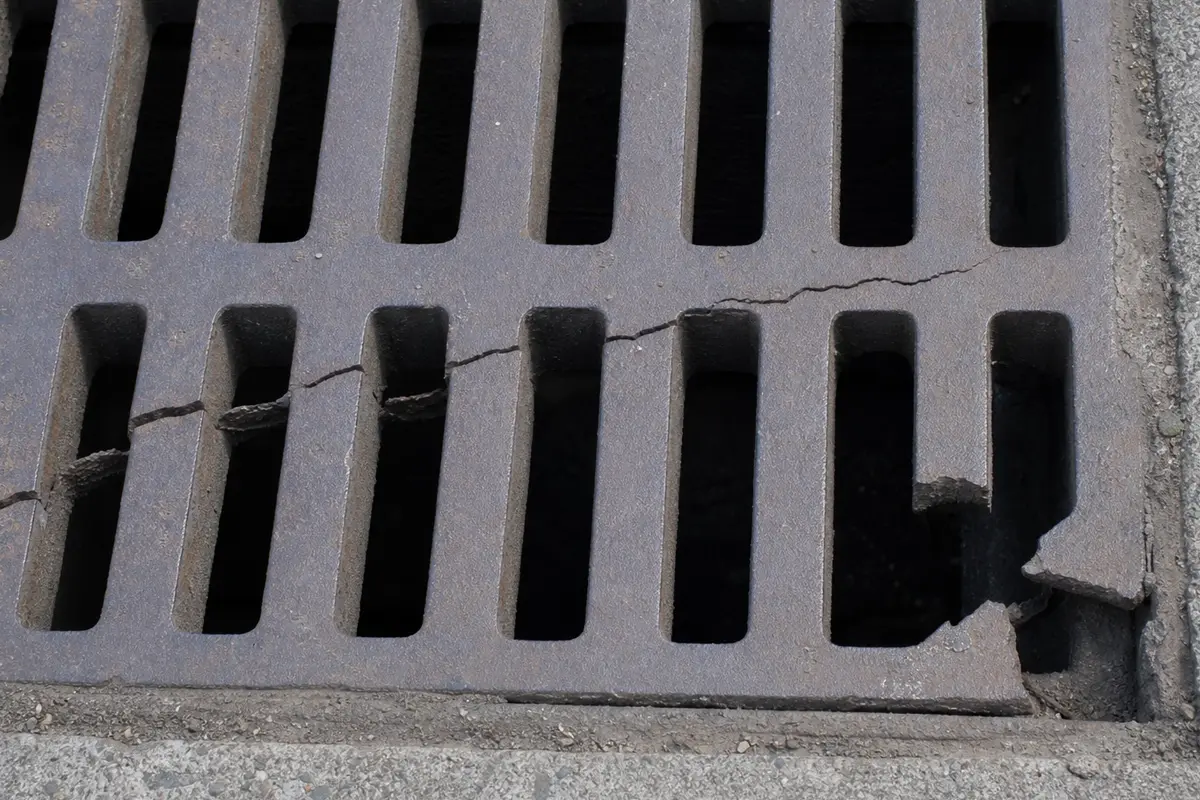
Why a Cracked or Missing Grate Is the Sign That Matters Most
Of the six signs, a cracked, broken, or missing grate carries the most direct legal exposure. Unlike a slowly forming sinkhole or gradual pavement settling — which develop over weeks or months and give an attentive property manager time to catch them during routine walks — a broken grate is an immediate, physical hazard sitting in a walkway or drive lane where anyone can step directly into it. It’s also the sign most likely to already be visible to anyone walking the property, which matters for what comes next.
The pattern worth remembering: gradual signs (settling pavement, slow-forming erosion) are early warnings you can act on before anyone gets hurt. Sudden signs (a broken grate, an overflow event) are active hazards that need same-day attention, not a spot on next month’s maintenance list.
Why This Is a Liability Risk, Not Just a Maintenance Issue
Under Ohio law, commercial property owners owe their highest duty of care to invitees — customers, tenants, delivery drivers, and other visitors present for a business purpose — which includes actively inspecting the property and promptly correcting known hazards, not just responding after someone reports a problem. A cracked or missing catch basin grate is exactly the kind of defective condition premises liability claims are built around, and the “it was obvious, they should have seen it” defense has real limits: courts have recognized exceptions where a property owner should have anticipated harm even from a visible hazard, particularly when foot traffic, lighting, or distraction make it easy to miss in practice.
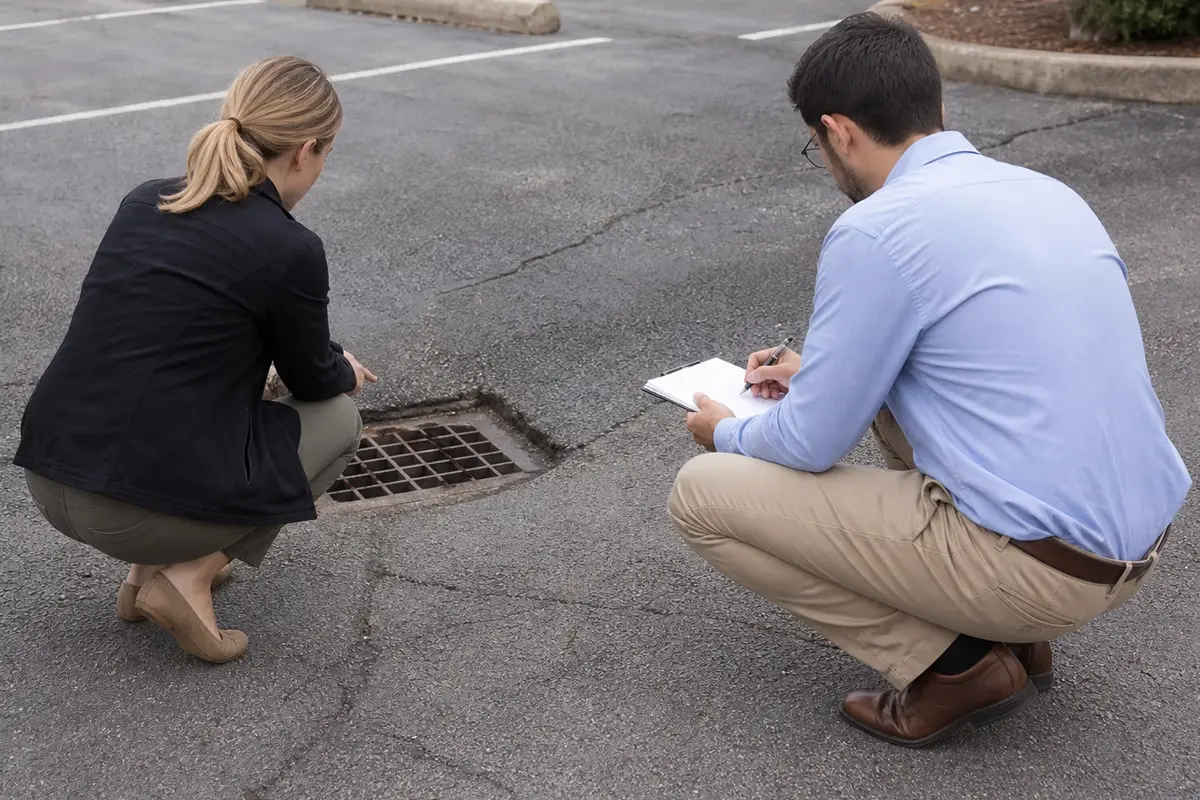
What Documented Inspections Actually Do For You
The single most useful thing a property owner can have if a claim ever arises isn’t a perfect drainage system — it’s a documented inspection history showing the basin was checked and any issues addressed promptly. Maintenance and inspection records are frequently the deciding evidence in these cases, for both sides: they can show a pattern of neglect if problems went unaddressed, or they can demonstrate reasonable care if inspections were regular and issues were fixed. A scheduled catch basin inspection and repair program builds that paper trail as a natural byproduct of routine maintenance, which matters well beyond the drainage function itself.
Building Catch Basin Checks Into Your Maintenance Schedule
These six signs are worth checking specifically during any routine property walk, not just when something looks obviously wrong. Our commercial parking lot maintenance checklist covers the full seasonal cadence for Cleveland-area lots, with catch basin inspection as one recurring line item alongside crack sealing, striping, and sealcoating.
Frequently Asked Questions
How often should a commercial catch basin be inspected?
At least annually, with additional checks after major storm events or as part of a broader seasonal parking lot maintenance walk. Properties with a documented history of drainage issues should inspect more frequently.
Is a cracked catch basin grate really a liability issue, or just a maintenance one?
It’s both, but the liability dimension is what makes it urgent rather than routine. A broken or missing grate is a known physical hazard, and under Ohio law, a documented failure to address a known hazard promptly is central to how premises liability claims get proven.
Who is responsible for catch basin repair on a commercial property?
Typically the property owner or the entity in control of the property (which may be a tenant under some lease structures) is responsible for maintaining catch basins located on private property, distinct from municipal storm sewer infrastructure. Lease agreements should be checked for specific maintenance responsibility language.
Does homeowners or commercial insurance cover a catch basin-related injury claim?
Most commercial general liability policies cover premises liability claims, though coverage details, deductibles, and any exclusions vary by policy. This is a question for your insurance provider or an attorney regarding your specific coverage.
A failing catch basin gives off warning signs well before it becomes a genuine hazard — the property owners who avoid a liability claim are the ones who act on the early signs, not the ones who wait for the grate to actually break.
Choose Empire Paving for Catch Basin Repair in Cleveland
Empire Paving inspects and repairs catch basins as part of full commercial paving and drainage service across Northeast Ohio — a documented assessment gives you both the fix and the paper trail that matters if a claim ever comes up.
Contact us today for a catch basin inspection before a small issue becomes a liability.
| Spotting any of these signs on your property?
Empire Paving provides catch basin inspections across Cleveland and Cuyahoga County — get a documented assessment before it becomes a liability. Schedule a Catch Basin Inspection | (216) 581-1000 |