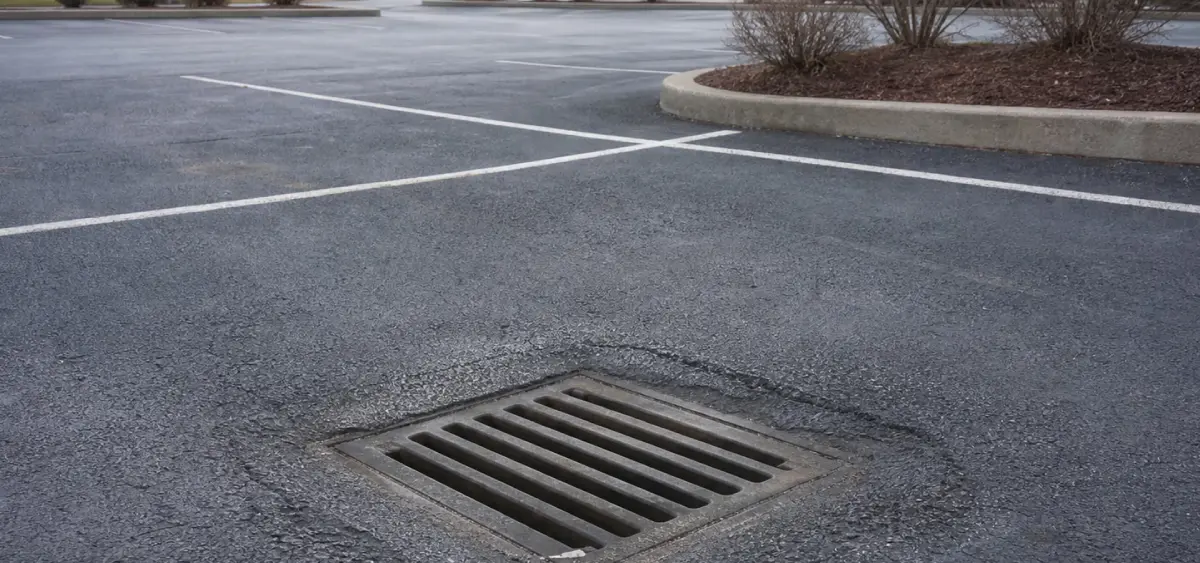
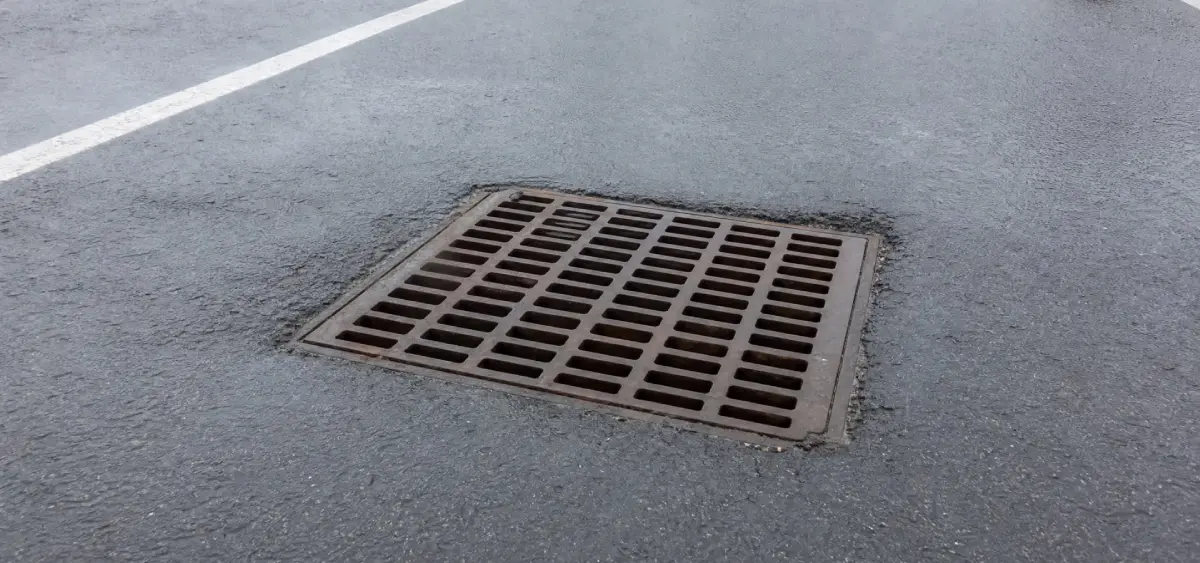
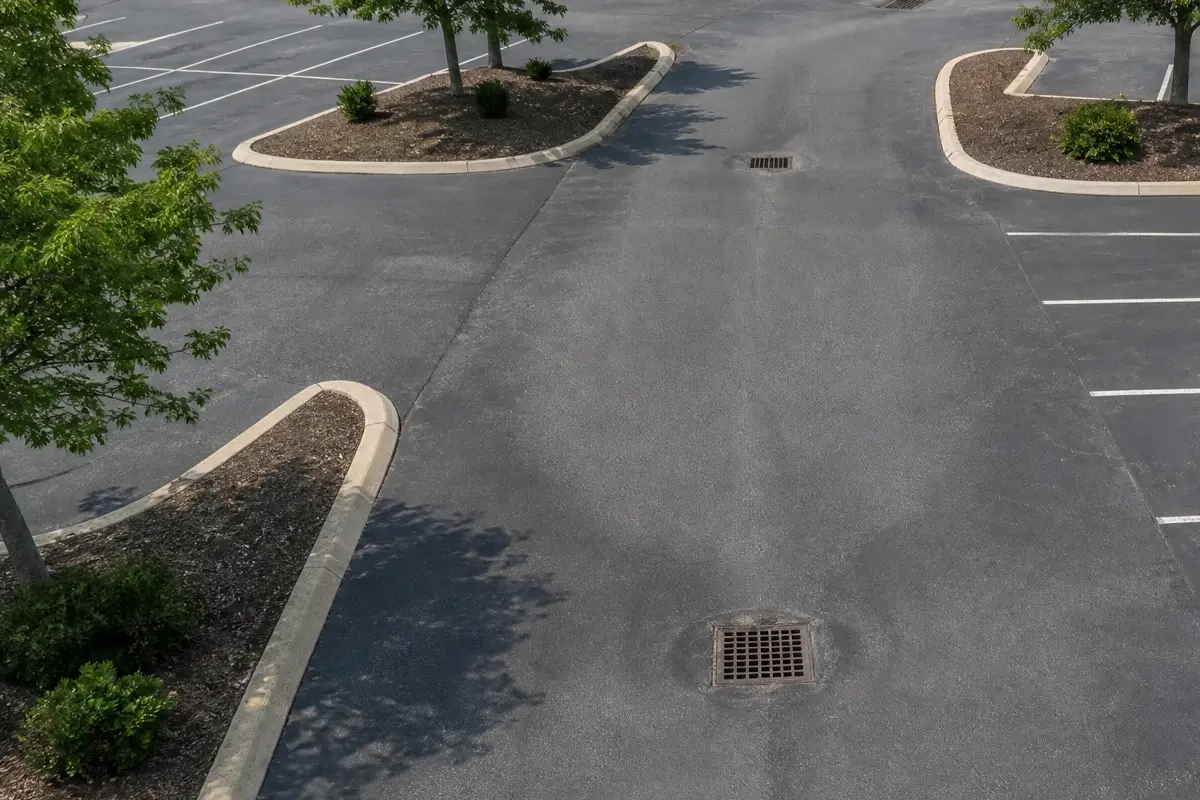
A catch basin is an underground drainage structure with a grate on top that collects surface water runoff from a parking lot or roadway and directs it into the municipal storm sewer system. If you manage a commercial property in Cleveland, you almost certainly have several of these on your lot already — most property managers just don’t know the name for the metal grate they’ve walked over hundreds of times. Understanding what it actually is and why it’s there is the first step to knowing when it needs attention.
The Basic Anatomy of a Catch Basin
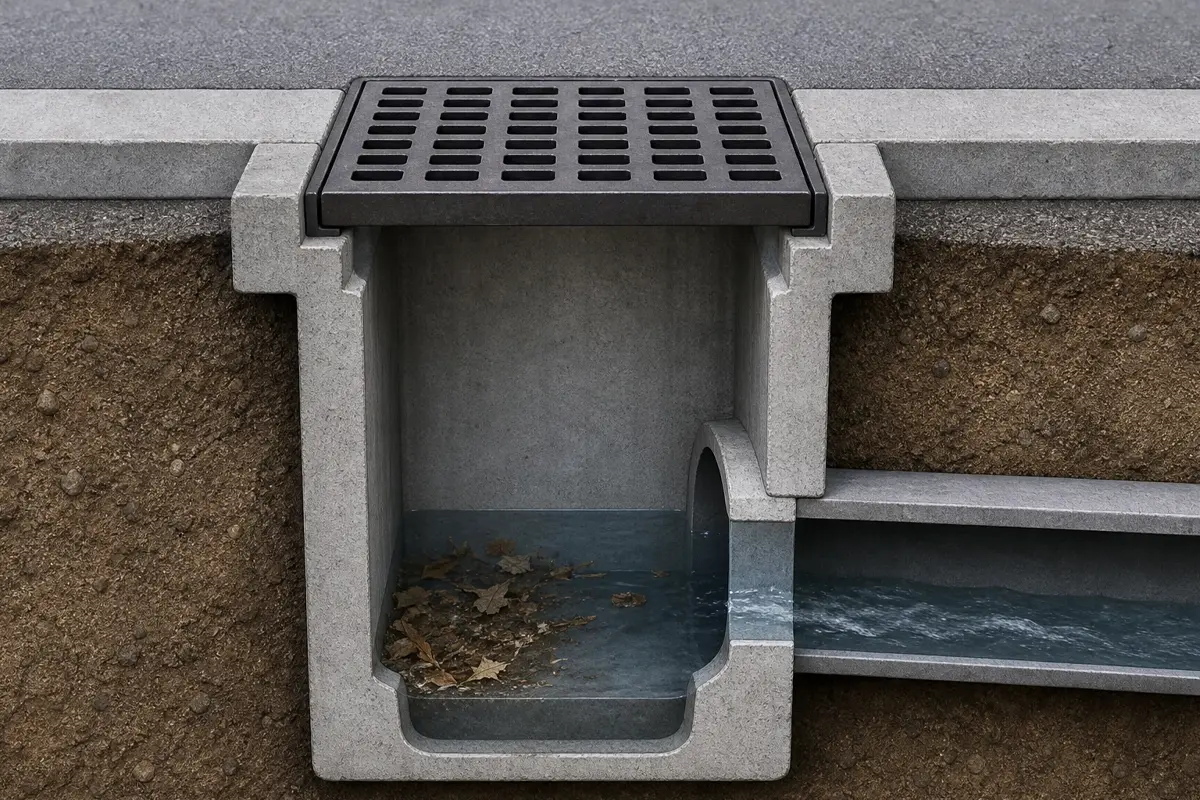
A catch basin looks simple from the surface, but it’s a small engineered system with several distinct parts, each doing a specific job.
| Component | What It Does |
| Grate | The visible metal cover with slotted openings that lets surface water in while blocking large debris and preventing a fall hazard |
| Frame | The rigid ring set into the pavement that holds the grate in place and transfers vehicle loads around the opening |
| Basin body | The underground chamber (concrete, plastic, or metal) that collects the water below the surface |
| Sediment sump | A section at the very bottom of the basin, below the outlet pipe, that traps sand, dirt, and debris before water moves on |
| Outlet pipe | The pipe connecting the basin to the storm sewer system, positioned above the sump so heavier debris stays behind |
That sediment sump is the part most people don’t know exists — it’s what makes a catch basin more than a hole with a pipe attached. By trapping heavier debris before it reaches the storm sewer, the sump protects the downstream pipe network from clogging, which is exactly why it needs periodic cleaning out.
Why Impervious Asphalt Makes Catch Basins Non-Negotiable
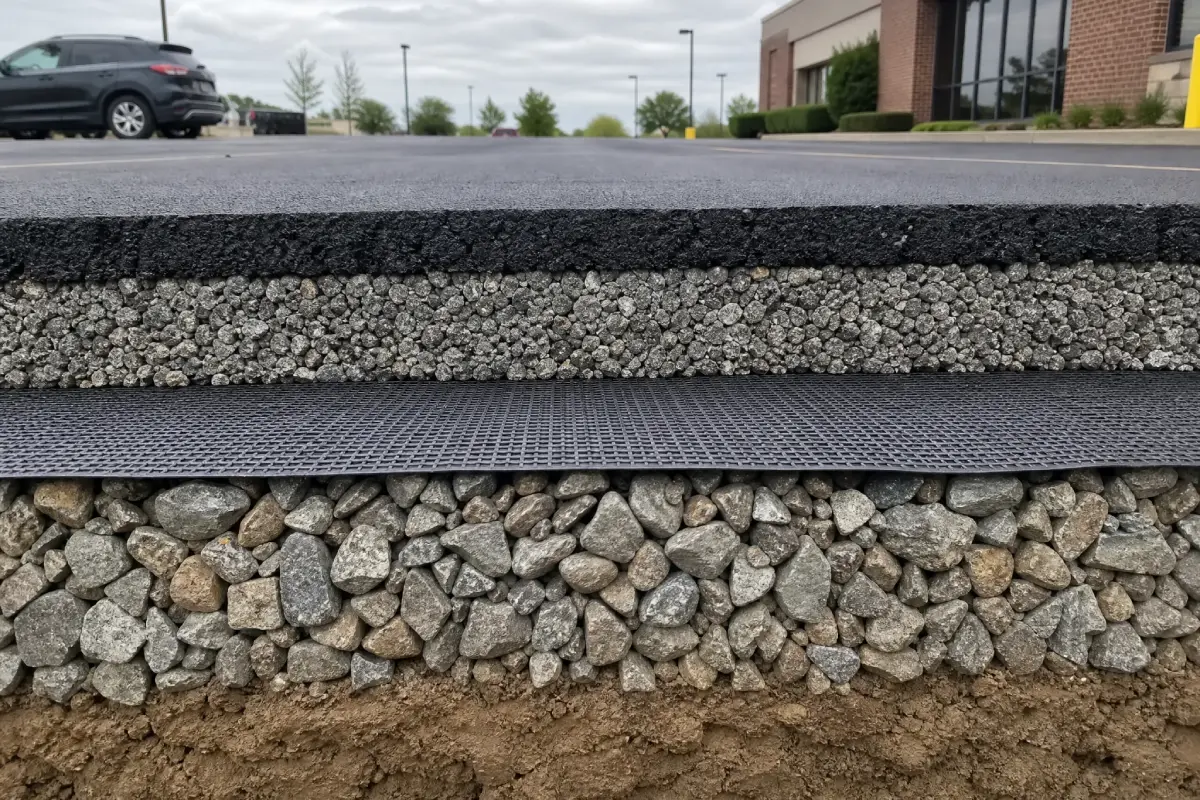
Asphalt is impervious — it sheds essentially 100% of the rain that falls on it, since nothing soaks through. On a natural, unpaved surface, rainfall gradually infiltrates the ground. On a paved parking lot, that same rainfall has nowhere to go except across the surface until it reaches an opening. Per EPA guidance on urbanization and stormwater runoff, impervious surfaces like paved parking lots prevent precipitation from soaking into the ground, forcing rain and snowmelt to run off rapidly rather than infiltrate — without a place for that water to go, it simply pools. Every catch basin on your property exists to give that runoff somewhere to go before it starts causing damage.
The direct consequence of skipping this: standing water on asphalt isn’t just a cosmetic problem. Water that sits on pavement seeps into surface cracks, and in Cleveland’s freeze-thaw climate, that trapped moisture expands and contracts through the winter — accelerating pavement deterioration far faster than the same lot would age if water simply drained away.
How Many Catch Basins Does a Parking Lot Need, and Where?
The right number of catch basins depends on lot size, grading, and impervious surface area, but they’re generally placed at the low points of the lot’s grading design, along main driving lanes where runoff concentrates, and near building perimeters to keep water away from foundations. A well-graded lot is designed so every section slopes toward a catch basin rather than toward a building or a neighboring property — get the placement wrong, and no amount of catch basin capacity fixes a drainage plan that’s fighting gravity in the wrong direction.
What Happens When a Catch Basin Fails
- Standing water: the most immediate sign — water pooling for more than 30 minutes after rain stops, well past when a functioning basin would have cleared it.
- Accelerated pavement deterioration: water sitting on asphalt seeps into the base and, combined with freeze-thaw cycling, shortens the pavement’s usable life.
- Erosion around the basin: sunken or heaved asphalt within a few feet of the frame typically signals sub-base settlement or a failing connection underneath.
- Foundation and property damage: runoff that isn’t captured and redirected properly can pool against building foundations or flow onto neighboring property.
Catch Basin Maintenance Is the Ongoing Part of Ownership
A catch basin isn’t a one-time install and forget — the sediment sump gradually fills with the sand, salt, and debris that Northeast Ohio winters push onto pavement, and a basin that’s mostly full of sediment can’t handle a heavy rain event when it matters most. For the seasonal cadence of when to inspect and clean catch basins alongside the rest of your lot, see our commercial parking lot maintenance checklist. If your basin needs repair, cleaning, or a brand-new install, our catch basin construction and repair services cover the full range — from routine cleaning to replacing a collapsed structure.
Frequently Asked Questions
What’s the difference between a catch basin and a storm drain?
A catch basin is the specific structure with a grate that collects surface water at a single point; a storm drain more broadly refers to the underground pipe network that carries that water away, which the catch basin connects into. In everyday conversation, people often use the terms interchangeably, but the catch basin is the entry point of the system.
Does every parking lot need a catch basin?
Any paved lot large enough to generate meaningful runoff needs some form of drainage structure, and for asphalt or concrete parking lots that’s almost always a catch basin system. The exact number and placement depend on lot size and grading design.
Can a catch basin be added to an existing parking lot?
Yes. A catch basin can typically be installed into an existing lot without repaving the entire surface, though the process involves cutting and patching the pavement around the new structure and tying it into the existing storm sewer connection.
How do I know if my parking lot has enough catch basins?
The clearest sign is standing water — if any section of your lot regularly holds water well after rain stops, that’s usually either a placement gap or a grading issue rather than something more basins alone would fix. A drainage assessment from a paving contractor is the most reliable way to confirm whether your lot’s existing catch basins are adequate for its size and drainage pattern.
A catch basin is a simple concept doing an essential job: giving water somewhere to go on a surface that can’t absorb it. Understanding the basic anatomy and placement logic is what turns a mysterious metal grate into something you can actually manage as part of your property.
Choose Empire Paving for Catch Basin Work in Cleveland
Empire Paving installs, repairs, and maintains catch basins as part of full commercial paving and drainage service across Northeast Ohio — one contractor for the pavement and the drainage system underneath it.
Contact us today for a free assessment of your parking lot’s drainage system.
| Not sure if your lot has enough catch basins?
Empire Paving provides free on-site drainage assessments for Cleveland-area commercial properties — we’ll walk your lot and show you exactly what’s working and what isn’t. Schedule a Free Drainage Assessment (216) 581-1000 |