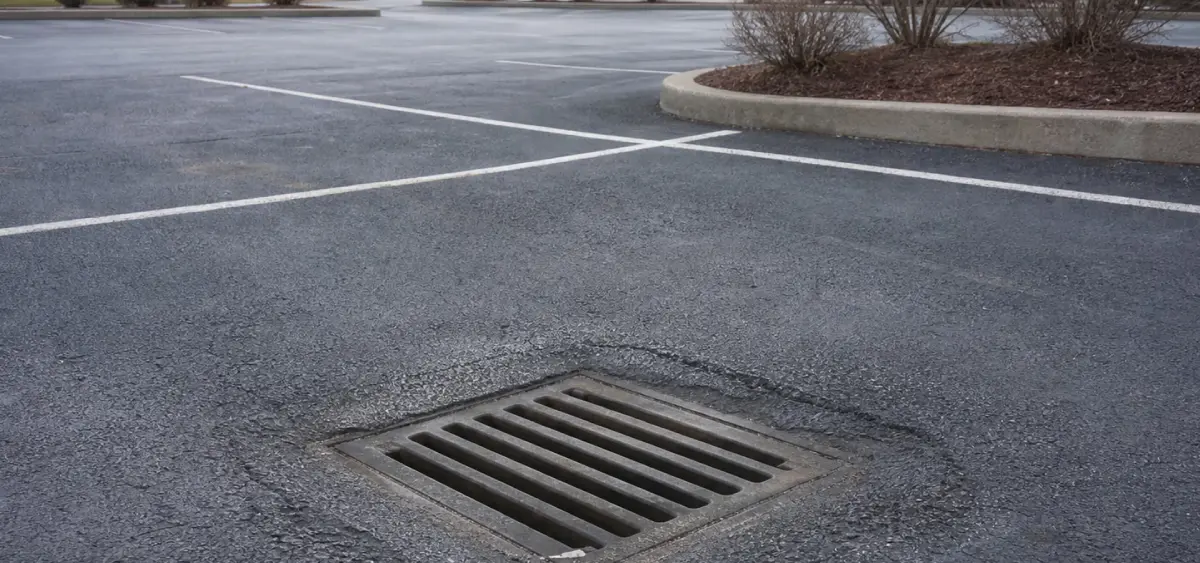
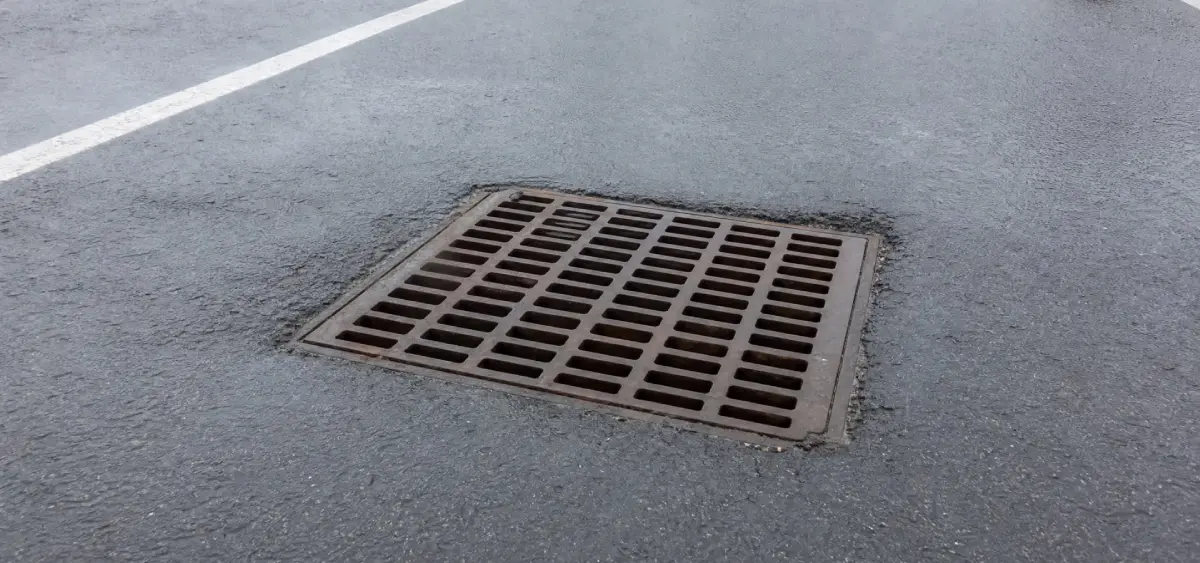
Quick Answer:
Standing water in a parking lot almost always traces back to one of six issues: blocked or failed catch basins, low spots where grade has been lost, pavement heaving from freeze-thaw cycles, an undersized drainage system, a blocked outlet pipe, or subgrade saturation. Each cause has a different fix — cleaning catch basins, infrared patching to restore grade, adding catch basins or larger pipe, jetting or replacing outlet lines, or installing drain tile. Empire Paving identifies the exact cause with a site assessment, then applies the right repair so water reaches the storm system instead of pooling on your pavement.
Why Does Standing Water in a Parking Lot Cause Problems?
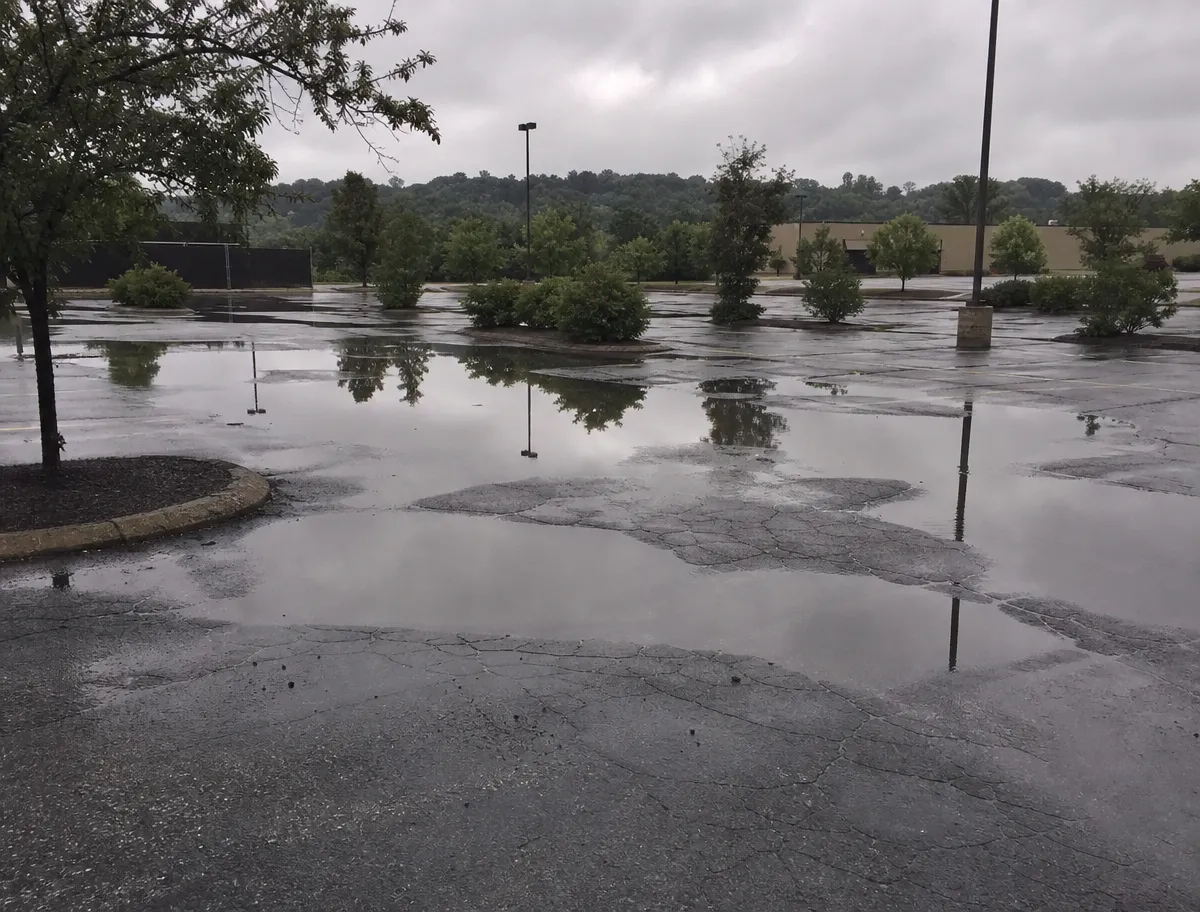
A puddle that lingers for a day or two after rain is more than a nuisance. Trapped water works into pavement cracks, weakens the base beneath the asphalt, and speeds up potholes, cracking, and rutting. In Northeast Ohio, freeze-thaw cycles turn that same puddle into ice, creating slip-and-fall hazards for employees, customers, and visitors — the kind of parking lot walking-surface hazard OSHA cites regularly. Standing water can also violate local stormwater requirements and, per the EPA’s stormwater guidance for parking lots, contribute to runoff pollution once it eventually drains. Left long enough, pooled water even becomes a breeding site for mosquitoes, adding a pest and public-health complaint to the list of problems.
For a commercial property, the consequences typically show up in three ways:
- Accelerated pavement failure — cracking, potholes, and base deterioration that shorten the lot’s usable life
- Liability exposure — slip-and-fall claims in wet weather and black ice risk once temperatures drop
- Rising repair costs — a small drainage issue ignored for a season or two almost always turns into a larger, more expensive fix
Empire Paving’s parking lot maintenance program is built to catch these failure points — from a clogged catch basin to a settling low spot — before they compromise the pavement structure.
How Do You Fix Parking Lot Drainage Problems?
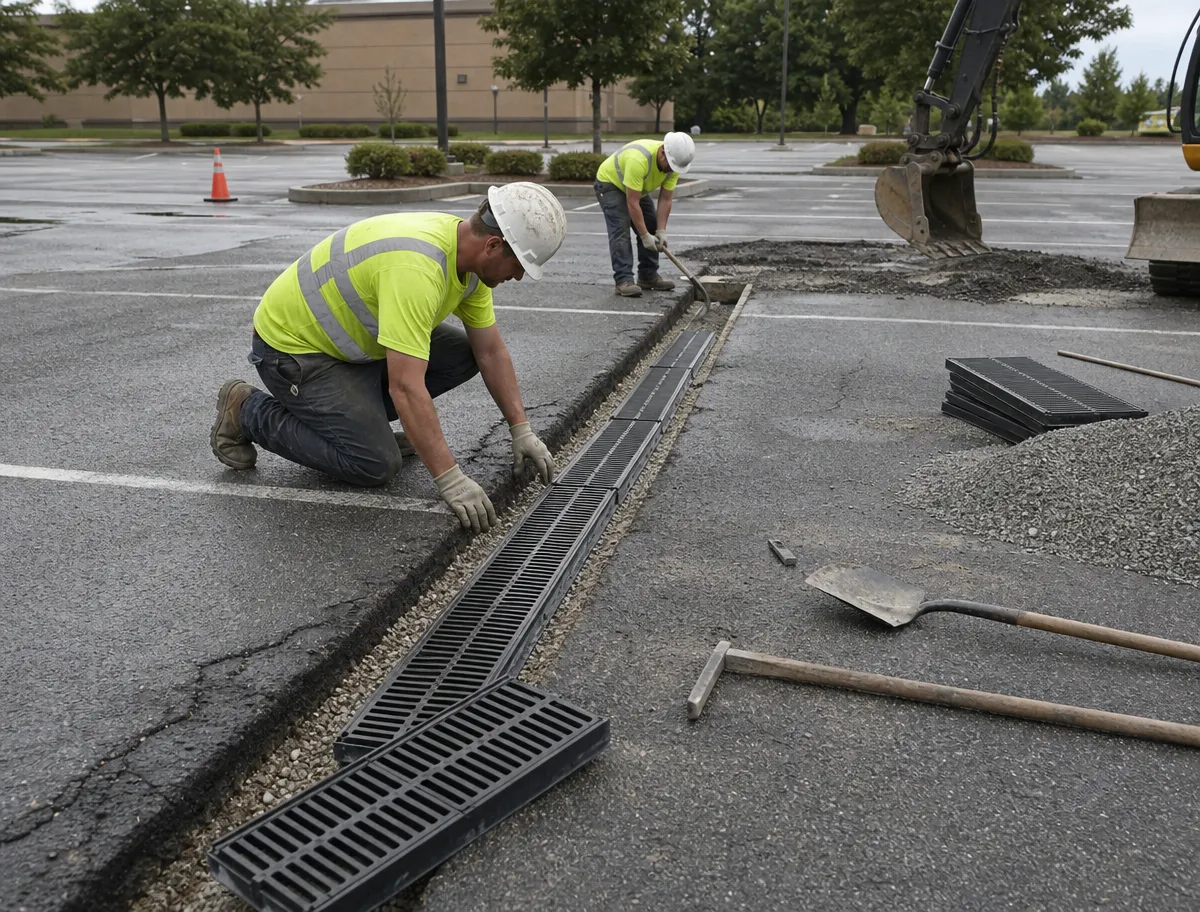
Fixing a drainage problem starts with correctly identifying which of the six common causes is at work — the repair for a blocked catch basin looks nothing like the repair for subgrade saturation. Properly designed pavement drainage is also central to preventing moisture-related pavement damage, per FHWA’s pavement drainage guidance, which is why an accurate diagnosis matters more than a quick patch. The table below covers all six.
| Cause | How to Identify It | How Empire Paving Fixes It |
| 1. Blocked or failed catch basins | Water pools directly around a grate; debris, sediment, or a collapsed structure blocks inflow. | Clean the basin and lines, or repair/rebuild a failed catch basin structure so water enters the system freely. |
| 2. Grade issues or low spots | A shallow depression holds water well after nearby pavement has dried. | Infrared repair or targeted patching to restore proper slope and re-establish positive grade toward drains. |
| 3. Pavement heaving (freeze-thaw) | Sections of asphalt lift or buckle after winter, creating new high points and low points. | Correct the grade with milling and patching so water sheds evenly instead of collecting behind the heaved section. |
| 4. Undersized drainage system | Ponding shows up lot-wide during moderate storms, even where the surface and catch basins look fine. | Add catch basins or increase pipe size so the system can handle actual runoff volume. |
| 5. Outlet pipe blockage | Catch basins fill and drain slowly, or back up, even though the inlet grates are clear. | Jet clean the outlet line to clear the blockage, or replace a damaged or collapsed section of pipe. |
| 6. Subgrade saturation | The base stays soft and spongy well after rain, and pavement rutting or alligator cracking appears nearby. | Install drain tile or French drains to pull groundwater away from the subgrade and stabilize the base. |
Most lots with widespread ponding have more than one of these issues working together — a settled low spot, for example, often sits right next to a catch basin that has slowly filled with sediment. Pavement drainage research consistently shows that resolving drainage adds years to pavement life, which is why Empire Paving treats a drainage assessment as step one, not an afterthought, on every repair project.
| Not sure which of these six issues is behind your ponding? Empire Paving’s drainage assessment pinpoints the exact cause and scopes the right fix — before you pay for a repair that doesn’t solve the problem. Schedule a drainage assessment with our team. |
How Can You Prevent Future Ponding and Damage?
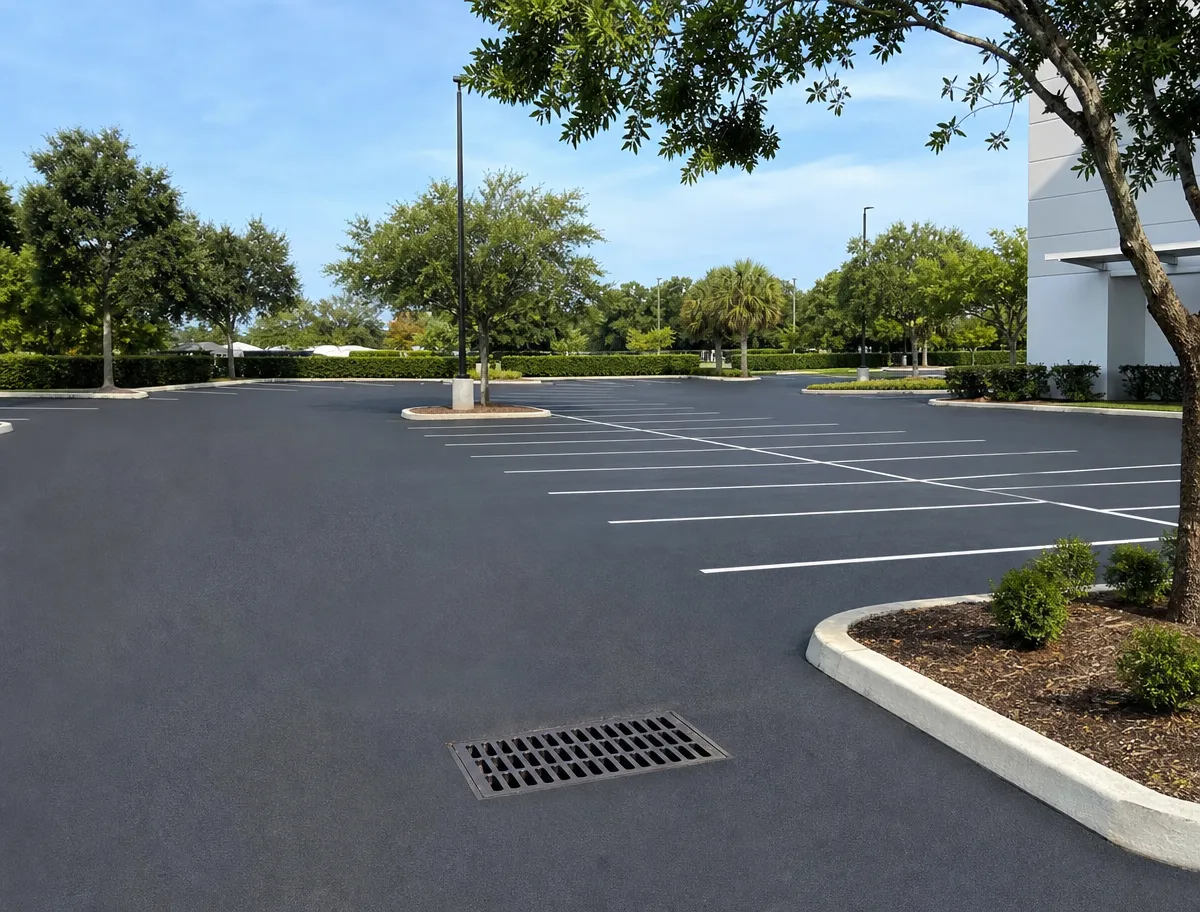
Prevention comes down to a maintenance schedule, not a one-time fix. Property managers who skip regular upkeep tend to watch a minor drainage flaw turn into a major repair within a season or two. A proactive plan follows a clear sequence:
- Schedule routine inspections to catch low spots, cracking, and early catch basin issues before storms arrive.
- Clear catch basins and outlet lines ahead of seasonal rain and snowmelt, when debris loads peak.
- Apply sealcoating and crack filling to block water infiltration into the base and subgrade.
- Complete full-depth repairs, infrared patching, or resurfacing wherever settling or heaving has already occurred.
- Reassess drainage capacity after any major renovation or added impervious area, since undersized systems often surface only after a lot is expanded or repaved.
Well-placed landscaping also plays a supporting role: research on green parking lot design and studies on trees and structural soils in stormwater management both show that shaded, permeable planting areas near a lot’s edges reduce the runoff volume your catch basins and pipes have to handle in the first place.
Frequently Asked Questions
What causes standing water in a parking lot?
Standing water most often comes from blocked or failed catch basins, low spots where grade has been lost, freeze-thaw pavement heaving, an undersized drainage system, a blocked outlet pipe, or subgrade saturation. Any one of these stops water from reaching the storm system and reroutes it onto the surface instead.
How do I know if my parking lot’s drainage system is undersized?
An undersized system usually shows up as lot-wide ponding during moderate storms, even where the surface looks level and the catch basins appear clear. If water backs up regularly during average rainfall rather than just heavy storms, the pipe or catch basin capacity likely can’t keep up with runoff volume.
Can a clogged catch basin really cause a whole section of parking lot to flood?
Yes. A single blocked catch basin removes an entire drainage point from the system, forcing all the water that point was designed to handle to find another path — usually pooling around the blocked grate or backing up across a wider section of pavement.
Is standing water in a parking lot a liability issue?
It can be. Pooled water creates slip-and-fall risk in wet weather and turns to black ice during freeze cycles, both of which raise liability exposure for property owners and managers under general premises-safety standards.
How does Empire Paving fix parking lot drainage problems?
Empire Paving starts with a site assessment to identify which of the six common causes is at work, then applies the matching fix — catch basin cleaning or repair, infrared patching or regrading, added catch basins or larger pipe, outlet line jetting or replacement, or drain tile installation for subgrade saturation.
TL;DR — Standing Water in Parking Lots at a Glance
- Standing water traces back to six common causes: blocked catch basins, low spots, freeze-thaw heaving, undersized drainage, outlet pipe blockage, or subgrade saturation.
- Pooled water accelerates pavement failure, raises slip-and-fall liability, and can violate local stormwater rules.
- Each cause needs a different fix — there’s no single repair that solves every drainage problem.
- A structured maintenance schedule, including regular catch basin cleaning, catches most issues before they become major repairs.
- Empire Paving diagnoses the exact cause with a site assessment before recommending any repair.
- Ready to stop the ponding for good? Schedule a drainage assessment with Empire Paving today.
Related Resources
- Storm Drain Installation
- Catch Basin Construction
- Asphalt Paving in Cleveland, OH
- Infrared Asphalt Repair in Ohio
- Commercial Parking Lot Maintenance in Cleveland, OH
- Parking Lot Pothole Liability in Ohio
Get a Free Drainage Assessment
Standing water in your parking lot signals an underlying drainage or structural issue, not just a cosmetic flaw. Whether the cause is a clogged catch basin, a settled low spot, or a subgrade that’s holding too much water, addressing it promptly protects your pavement investment and keeps your lot safe for everyone who uses it. Contact Empire Paving to schedule a drainage assessment and get a straightforward plan to fix it.
About Empire Paving
Empire Paving is a commercial asphalt, concrete, and drainage contractor serving Northeast Ohio and the Greater Cleveland area, including Cuyahoga County. Our team diagnoses and repairs parking lot drainage failures — from catch basin construction to full-depth pavement repair — so commercial properties stay safe and functional through every season. See our reviews and testimonials or learn more about our team.