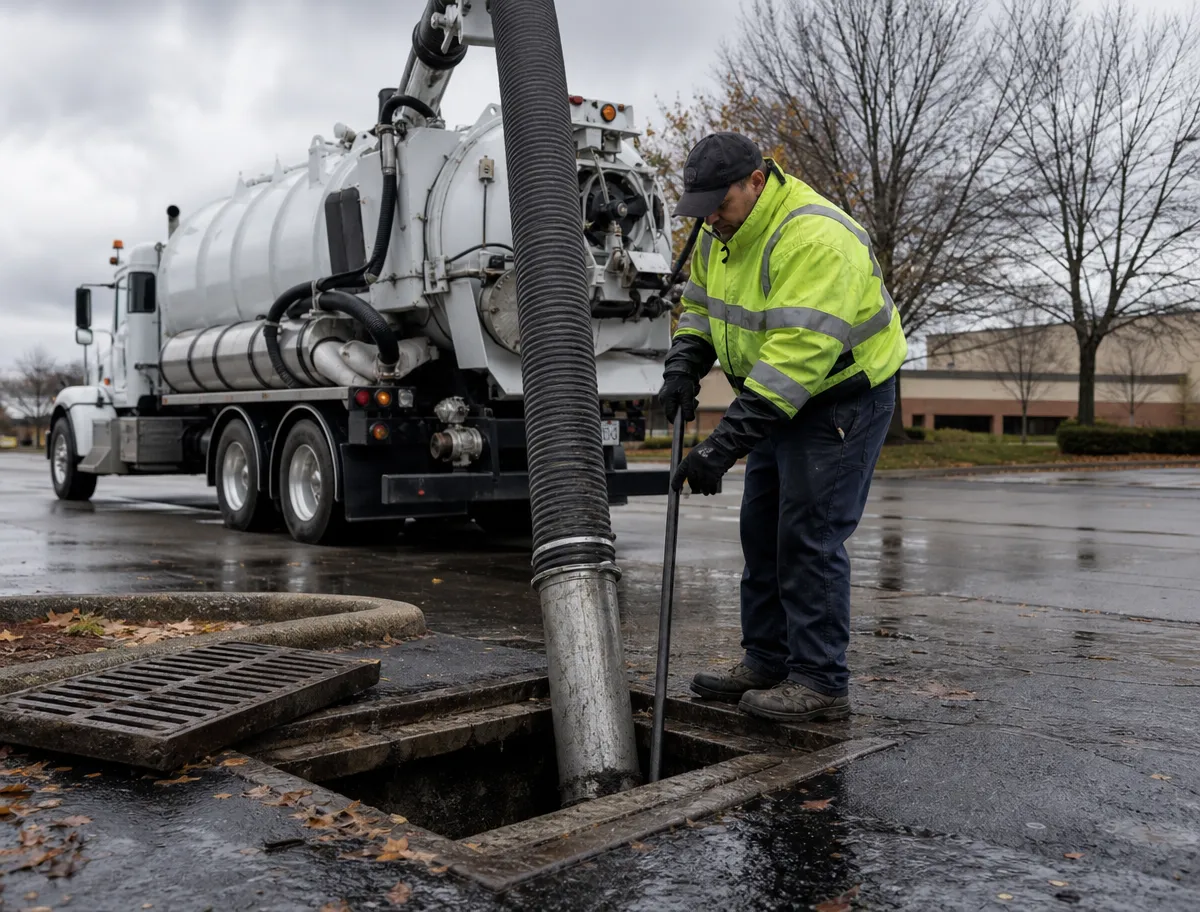
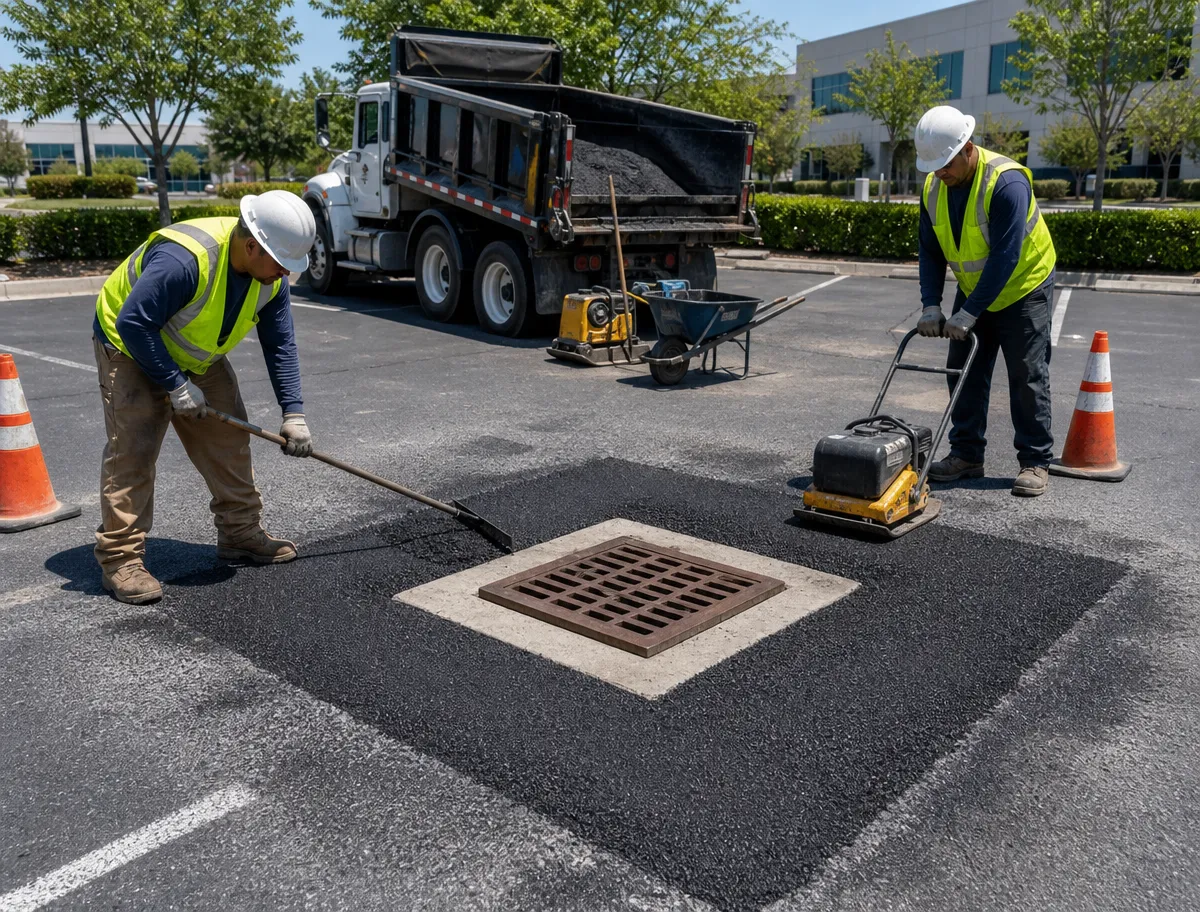
Quick Answer: Storm drain installation for commercial property in Ohio typically involves site grading, catch basin placement, connecting pipe runs, and an approved outlet, all built to meet Ohio EPA NPDES stormwater permit requirements and local municipal codes. Projects generally cost $5,000 to $25,000 or more depending on lot size and site complexity, with installation taking one to three weeks. Empire Paving manages the entire process from permit coordination and engineered design through excavation, backfill, and pavement restoration for commercial properties across Northeast Ohio.
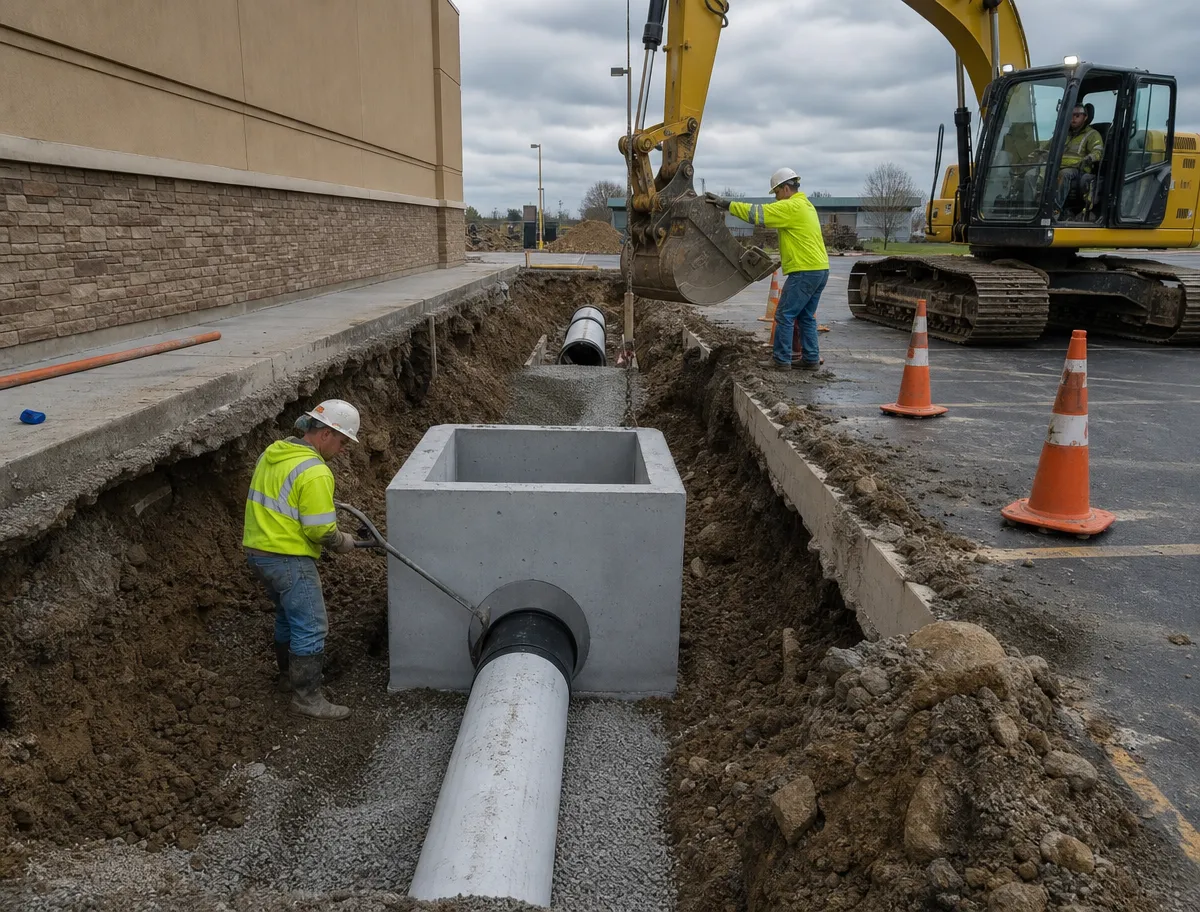
Commercial storm drain installation in Ohio requires grading, catch basins, storm pipe, and detention/retention structures, plus NPDES stormwater permit coverage under Ohio’s program using best management practices. Empire Paving, with 15 employees, handles compliance-driven installation from site assessment through pavement restoration, ensuring discharge points meet state approval.
Commercial storm drain installation costs scale with lot size, grading complexity, and pipe length, following patterns similar to parking lot paving pricing in Northeast Ohio. Compliance requires coverage under Ohio EPA’s NPDES stormwater permit program, since paved surfaces qualify as point-source runoff. Ohio EPA best management practices guide inlet placement, catch basin sizing, and discharge point approval throughout the design process.
What Are the Key Takeaways on Commercial Storm Drain Installation in Ohio?
- Storm drainage systems collect rainwater from parking lots, rooftops, and paved surfaces through inlets and pipes to discharge points.
- Ohio requires stormwater discharge permits under National Pollutant Discharge Elimination System regulations for commercial properties.
- Commercial drainage installation involves grading, catch basins, culverts, and channels to manage runoff from impervious surfaces.
- Empire Paving’s 15-person team provides comprehensive stormwater solutions for industrial, retail, and commercial sites throughout Ohio.
Why Does Poor Drainage Threaten Your Ohio Property?
Neglected drainage systems shorten pavement life, create safety hazards, and trigger regulatory compliance problems for commercial property owners. Standing water erodes asphalt and concrete from below, while icy patches and flooded walkways expose facility managers to liability claims. Northeast Ohio’s freeze-thaw cycles accelerate this damage far faster than in milder climates, turning small cracks into costly structural failures within a single winter.
Rainfall and melting snow generate the bulk of the problem. Runoff collects across parking lots, access roads, and rooftops — surfaces that cannot absorb water — and channels it toward whatever drainage path exists, or doesn’t. Without engineered collection points, that water pools on pavement, seeps into base layers, and undermines the structural integrity property owners depend on.
Why Is Cleveland Drainage Infrastructure Especially Vulnerable?
Much of Cleveland’s underground infrastructure, including catch basins and storm drains, dates back to the mid-20th century. Decades of use have left many of these systems undersized or deteriorating, fueling strong demand across the region for drainage repair and new storm drain installation for commercial properties in Ohio. Older systems simply weren’t built for today’s development density or rainfall patterns.
Does Drainage Cost Depend on My Parking Lot?
Yes. Drainage expenses shift based on lot size and the paving material selected for the surrounding surface.
Property owners should weigh these factors before budgeting:
- Lot size — larger paved areas generate more runoff volume, requiring larger collection systems
- Paving material — asphalt and concrete surfaces interact differently with drainage design and long-term maintenance needs
- Existing infrastructure age — older catch basins may need replacement rather than repair
Addressing drainage early protects pavement investment and keeps facilities compliant.
What Does Commercial Storm Drain Installation Involve?
Storm drain installation on commercial property in Ohio builds a connected network of inlets, pipes, culverts, and channels that carries runoff away from pavement and rooftops to an approved discharge point. Facility managers who skip proper planning risk pooled water, cracked asphalt, and drainage violations that can halt occupancy approvals. The work draws on principles similar to sewer line construction, adapted for the scale and load demands of parking lots, truck courts, and retail developments.
What Steps Are Included in a Commercial Installation Project?
Grading comes first, shaping the site so water flows toward collection points instead of low spots near building foundations. From there, crews install catch basins, storm pipe, and either detention or retention structures designed to hold and slowly release runoff. Backfill compaction and pavement restoration finish the project, sealing the system beneath a surface built to handle vehicle traffic.
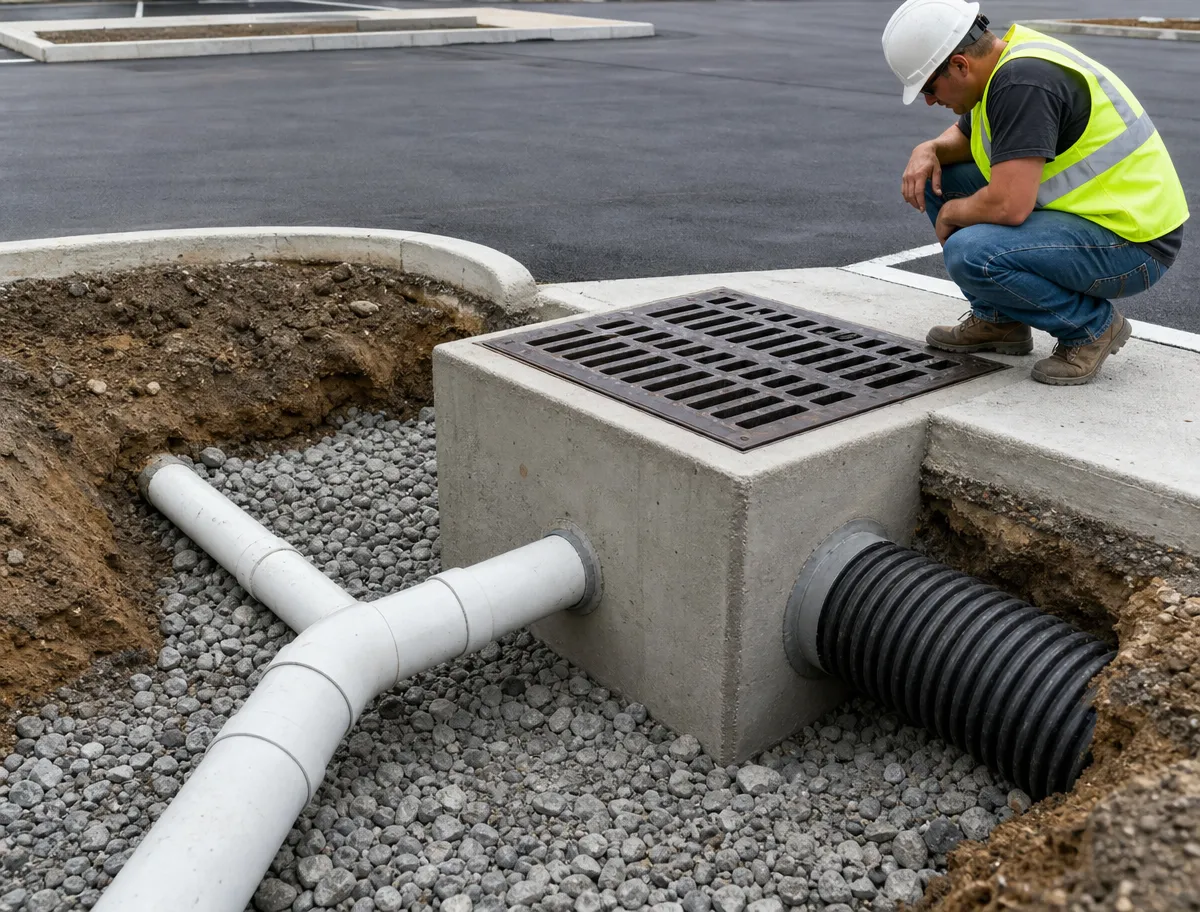
| Phase | What Happens |
| Site grading | Establishes slope so runoff moves toward inlets |
| Structural components | Catch basins, storm pipe, detention/retention structures |
| Trenching | Excavation for pipe runs, similar to sewer line trenching |
| Backfill & compaction | Stabilizes soil around buried infrastructure |
| Pavement restoration | Restores driving and parking surfaces to full strength |
How Is a Storm Drain System Different From a Sewer Line?
Sewer line work centers on digging trenches, laying pipe, and tying the new line into the municipal sewer main. Storm drainage shares the excavation and pipe-laying steps but routes rainwater runoff rather than wastewater. It depends heavily on grading and detention design to manage volume.
A qualified installation team manages every phase of a drainage project, from initial layout through final tie-in. Proper design and placement keep water moving efficiently, protecting pavement, foundations, and landscaping from the freeze-thaw damage and standing-water problems that shorten a property’s lifespan.
📞 Ready to Get Started? New storm drain infrastructure protects your pavement investment and keeps your property compliant with Ohio EPA regulations. Contact Empire Paving today for a drainage design consultation tailored to your commercial site.
How Much Should You Budget for Drainage Work?
Budgets for drainage work on a commercial site in Northeast Ohio hinge on lot size, material choice, and site complexity. Small commercial lots typically run $5,000 to $10,000, while larger properties needing extensive storm drain installation commercial property Ohio work can exceed $25,000. Drainage deserves its own line item in any paving budget, not a footnote buried inside surface costs.
Facility managers should also plan for traffic control and ongoing maintenance alongside drainage expenses. These three categories often get lumped into a single estimate, yet each carries distinct cost drivers and timelines.
Typical budget categories:
- Drainage: pipe length, catch basin count, soil conditions
- Traffic control: site access needs, business hours, signage requirements
- Maintenance: sealcoating frequency, inspection schedules
Material selection shapes the total spend, too. Asphalt keeps upfront costs lower; concrete adds durability at a higher price point. Both choices interact directly with drainage design, since grading and pipe layout shift depending on the surface material.
Why Are 2026 Drainage Costs Higher Than Previous Years?
Inflation is pushing paving and drainage project costs upward industry-wide, mirroring trends in commercial paving costs in Northeast Ohio. Current estimates point to a 5 to 10 percent increase in 2026 pricing compared to recent years. Developers and property owners planning ahead should build that margin into their budgets, particularly on larger sites where small percentage increases translate into thousands of dollars.
Does Lot Size Change the Drainage Budget Significantly?
Yes, substantially. Larger lots demand more extensive pipe networks, additional catch basins, and deeper excavation — all of which push project totals well past $25,000 in complex cases. Smaller lots generally stay closer to the $5,000–$10,000 range. Difficult site conditions can raise that figure regardless of overall square footage.
What Ohio EPA Rules Govern Stormwater Discharge?
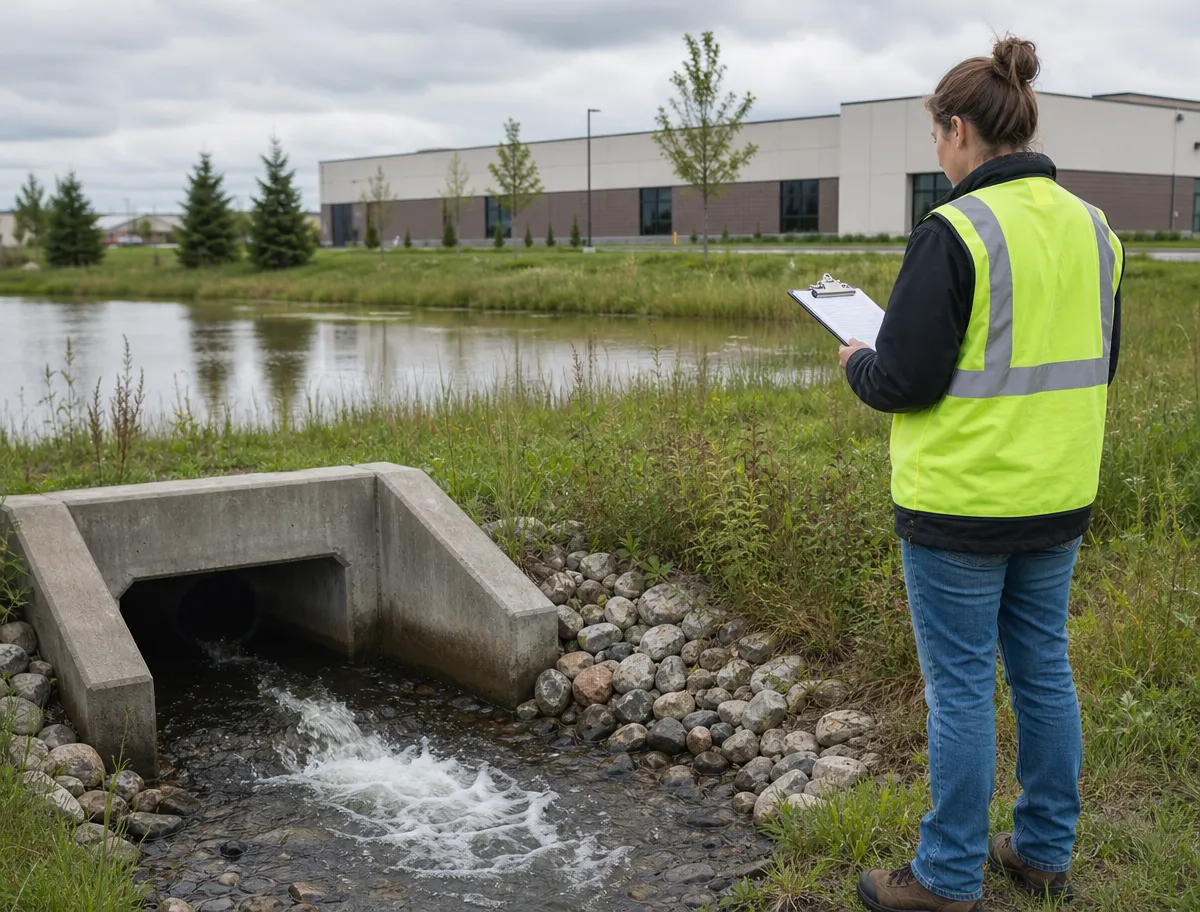
Ohio EPA classifies most commercial runoff as a point source discharge, which triggers coverage requirements under the Ohio EPA Stormwater Program‘s National Pollutant Discharge Elimination System permit. That single classification shapes nearly every decision facility managers make about storm drain installation for commercial property in Ohio. Skipping permit review isn’t a paperwork shortcut — it’s a direct path to fines, stop-work orders, and costly retrofits after the fact.
Regulators control discharge quality through best management practices, known industry-wide as BMPs and detailed in Ohio EPA’s Rainwater and Land Development Manual. These practices include grading strategies, filtration structures, and detention systems designed to slow and clean water before it leaves a site. Property owners who fail to plan for BMPs often discover the gap only after inspection, when correction costs far exceed the price of doing it right the first time.
Why Does Stormwater Need Regulation at All?
Runoff crossing parking lots, loading docks, and rooftops collects oil residue, sediment, and debris in volumes capable of degrading nearby streams and lakes, a concern the Northeast Ohio Regional Sewer District’s stormwater management program tracks closely. Ohio’s Lake Erie watershed makes this concern especially acute for Northeast Ohio developments. Left unmanaged, that polluted runoff becomes a liability that regulators and neighboring property owners notice quickly.
What Does Compliant Drainage Installation Actually Require?
Compliance starts with construction built to local code standards from day one, not adjustments made after an inspector flags a problem, and often involves coordination with county resources such as the Summit County Engineer’s services for developers for sites in that jurisdiction. A properly engineered system typically includes:
- Point-source permit coverage confirmed before excavation begins
- BMP integration into grading and pipe layout
- Pollutant-reducing structures matched to site runoff volume
- Code-verified installation that performs reliably for years
Property owners who treat these standards as foundational, rather than optional, avoid the enforcement headaches that follow poorly planned systems.
Who Should Handle Your Drainage Project in Ohio?
Experienced commercial contractors, not general handymen, should manage storm drain installation for commercial property in Ohio. Aging catch basins and storm drains across Cleveland — many built during mid-20th-century construction booms — keep failing under modern rainfall loads. Property owners who delay repairs risk flooded lots, cracked pavement, and costly compliance headaches.
Empire Paving fields a team of 15 employees dedicated to Cleveland-area commercial drainage and paving work. That team has handled institutional-grade projects, including paving at the Great Lakes Science Center on the waterfront and at the Cleveland Browns Training Facility in Berea. Projects of that scale demand engineering precision and tight coordination between multiple stakeholders — skills a small residential crew rarely brings to the table.
Why Does Aging Infrastructure Matter for Contractor Selection?
Cleveland’s mid-century storm drains and catch basins were not built for today’s rainfall volumes or pavement loads. Contractors familiar with this legacy infrastructure spot failure points before they turn into expensive emergencies.
Does Drainage Work End Once Installation Finishes?
No. Sealcoating and routine maintenance after drainage work protect surrounding pavement from water infiltration and extend its service life. Property managers who skip this step often face premature cracking near new drain lines.
Choosing a contractor with institutional project history, adequate staffing, and a documented maintenance plan reduces long-term risk substantially for any commercial site.
TL;DR — Storm Drain Installation at a Glance
- New storm drain systems route runoff from parking lots, rooftops, and paved areas through catch basins and connecting pipes to an approved discharge point.
- Ohio EPA requires NPDES stormwater permit coverage for most commercial drainage discharges, plus compliance with local municipal ordinances.
- Installation typically includes site grading, excavation, catch basin and pipe placement, backfill/compaction, and pavement restoration.
- Costs generally range from $5,000 to $25,000+ depending on lot size, pipe length, and site complexity.
- Timelines usually run one to three weeks depending on scope and permitting.
- Next step: Schedule a drainage design consultation with Empire Paving to plan a compliant storm drain system for your Ohio property.
Frequently Asked Questions
What does commercial storm drain installation in Ohio involve?
Installation requires grading, catch basins, storm pipe, and detention/retention structures, plus NPDES stormwater permit coverage under Ohio EPA’s program. Empire Paving’s 15-person team manages this process from site assessment through pavement restoration.
What determines commercial storm drain installation costs in Ohio?
Costs scale with lot size, grading complexity, and pipe length, following patterns similar to parking lot paving pricing in Northeast Ohio. Paving material and existing infrastructure age also factor into overall drainage expenses.
What compliance process applies to commercial storm drains in Ohio?
Paved surfaces qualify as point-source runoff, requiring coverage under Ohio EPA’s NPDES stormwater permit program. Ohio EPA best management practices guide inlet placement, catch basin sizing, and discharge point approval throughout design.
How long does commercial storm drain installation take?
Most commercial storm drain installations take one to three weeks from excavation through pavement restoration, depending on lot size, pipe length, and permitting timelines. Larger or more complex sites with extensive grading may take longer.
Does Empire Paving handle stormwater permit coordination?
Yes. Empire Paving coordinates NPDES stormwater permit requirements and municipal approvals alongside design and installation, managing the project from initial site assessment through final inspection.
Related Resources
- Storm Drain Installation Services
- Akron, OH Service Area
- Parking Lot Paving Cost in Ohio
- Parking Lot Pothole Liability in Ohio
- Commercial Parking Lot Paving in Cleveland, OH
- Industrial Asphalt Paving in Cleveland, OH
Get a Free Drainage Design Consultation
Storm drain installation for commercial properties in Ohio demands careful attention to regulatory compliance, proper engineering, and professional execution. Property owners who prioritize these elements protect their investments, ensure environmental responsibility, and avoid costly penalties. Empire Paving brings technical expertise and commitment to quality workmanship to every drainage project, helping Northeast Ohio businesses navigate the complexities of installation with confidence and reliability. Contact Empire Paving today for a free, no-obligation quote.
About Empire Paving: Empire Paving is a full-service paving and drainage contractor serving commercial properties throughout Northeast Ohio, including Cleveland, Akron, and the surrounding Cuyahoga and Summit County communities. The 15-person team handles projects from design coordination and permitting through excavation, installation, and pavement restoration. Contact Empire Paving today for a free drainage design consultation.